Quick Answer
Yes, clean cable management measurably improves airflow in a gaming PC case. Moving cables from the main chamber to the rear compartment removes physical obstructions from the intake-to-GPU airflow path, reducing turbulence and lowering GPU temperatures by three to eight degrees Celsius under sustained gaming load. This is a free thermal improvement that requires only time and basic cable ties.
The Physics of How Cables Block Airflow 💨
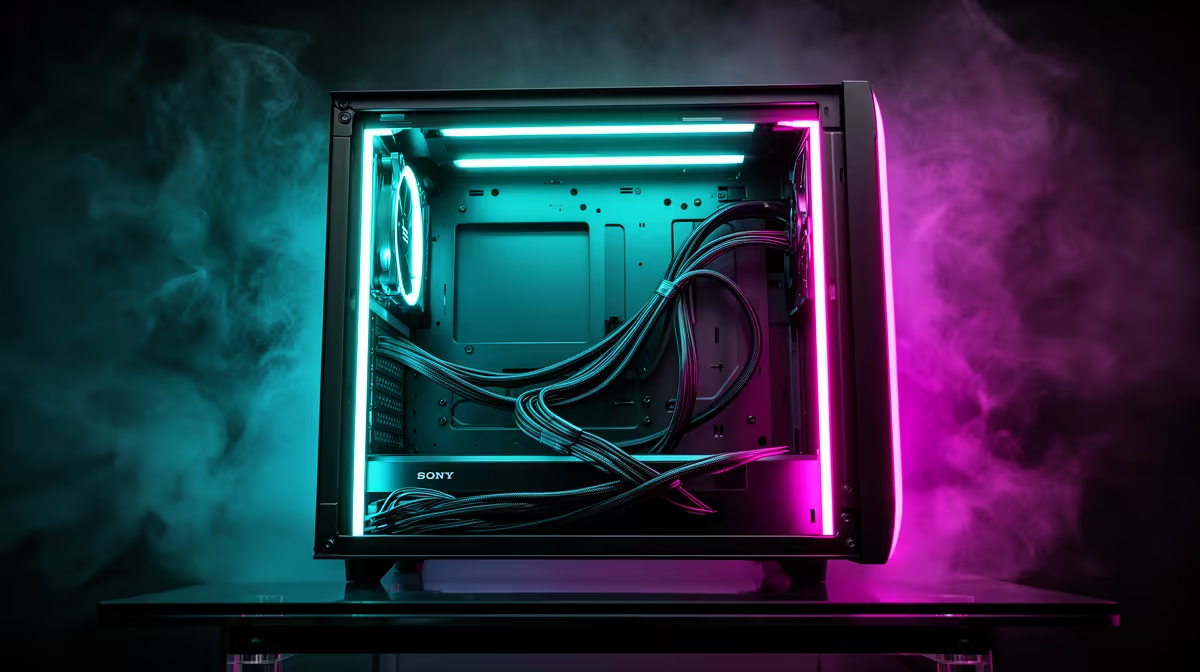
Airflow inside a PC case follows the path of least resistance from intake fans to exhaust fans. An unmanaged 24-pin ATX cable bundle sitting across the main chamber is typically 35 to 45mm in diameter. Positioned between the front intake fans and the GPU heatsink, it acts as a partial dam that forces incoming air to flow around it in turbulent patterns rather than streaming directly over the GPU fins in a controlled laminar path. Turbulent airflow is significantly less efficient at transferring heat away from surfaces than laminar flow. Removing that cable obstruction by routing it behind the motherboard tray restores the intended airflow path and immediately improves cooling effectiveness.
Practical Temperature Gains From Cable Routing 🌡️
In real-world testing on identical gaming systems, the temperature difference between a system with all cables routed behind the motherboard tray versus one with cables across the main chamber is consistently three to eight degrees Celsius at GPU junction temperature under a sustained 1440p gaming load. For a South African gaming setup where ambient room temperatures in summer reach 28 to 32 degrees Celsius, those three to eight degrees represent a meaningful fraction of the thermal headroom between normal operation and thermal throttling. A Radeon RX 9070 XT that throttles at 110 degrees junction temperature has more headroom at 82 degrees than at 88 degrees, which translates directly to more consistent frame timing over multi-hour gaming sessions.
Beyond Temperature: Why Cable Management Matters for Maintenance 🔧
Clean cable routing also makes future upgrades and maintenance significantly easier. Replacing a GPU, adding RAM, or cleaning dust from a tidy build takes ten to fifteen minutes. The same tasks in a cable-choked build can take an hour as you untangle and reroute cables around each step. South African builders who upgrade components every two to three years to manage the rand cost of large one-time upgrades particularly benefit from a tidy build that accepts incremental changes without full rebuilds. A build planned for clean routing from the start accommodates five years of upgrades without ever becoming a frustrating mess.
Use Velcro Ties, Not Zip Ties ⚡
reusable cable ties allow adjustment during the build and do not damage cable sleeves when removed. Zip ties are permanent: cutting them during a future upgrade risks nicking the cable insulation underneath. A 30-pack of velcro ties costs R60 to R120 at local electronics stores and is one of the best small investments for any PC build. Replace any existing zip ties with velcro during your next cable management session.
FAQ
How much does cable management improve airflow vs adding more fans?
Clean cable management and adding fans are complementary, not alternative approaches.
Do I need a case with rear cable routing channels for clean cable management?
A rear cable channel depth of at least 20mm makes clean routing practical.
Can poor cable management cause permanent damage to components?
Indirectly yes. Sustained operation at temperatures three to eight degrees Celsius above optimal accelerates electromigration in silicon and reduces the long-term reliability of GPUs and voltage regulators. While a single gaming session at elevated temperature causes no immediate damage, years of operation above optimal temperature shortens component lifespan statistically.
Ready to build clean and cool?
Browse gaming cases at Evetech with dedicated rear cable management compartments and grommets designed to make airflow-optimised builds straightforward.