Quick Answer
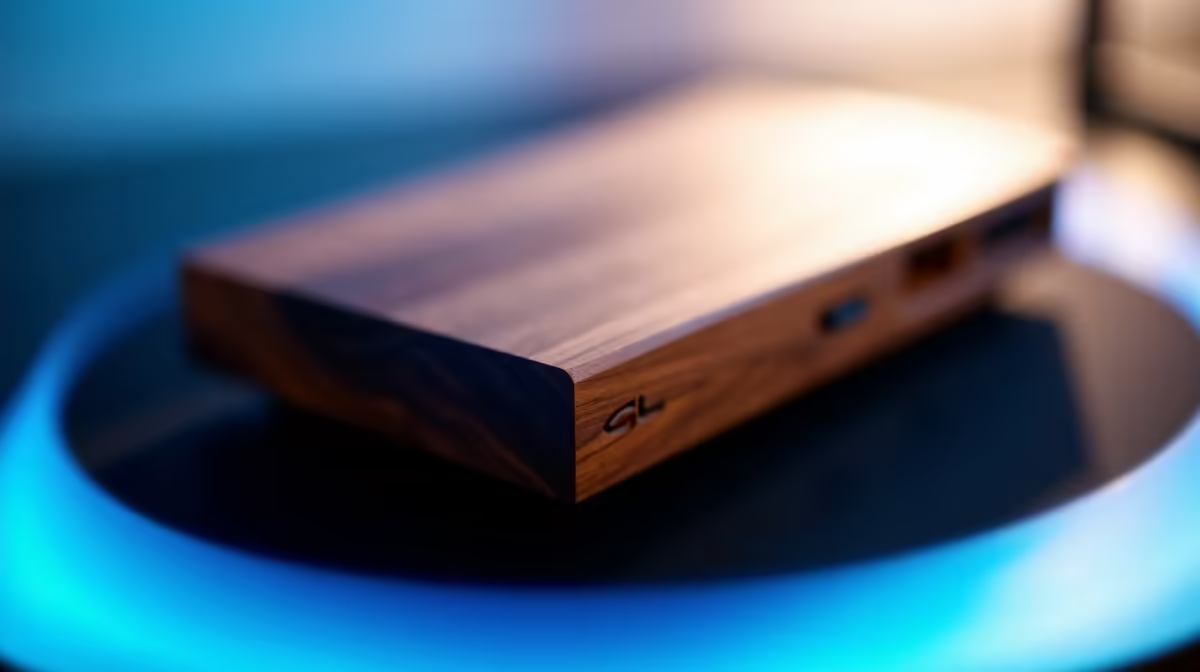
Yes. FSC-certified wood panels on a PC case do not hurt airflow when applied to cosmetic surfaces rather than intake or exhaust zones. Properly engineered wood-panel cases route all primary airflow through mesh or perforated metal sections, with wood elements on the side, top cap, or front fascia surround where no significant air movement occurs.
How Case Engineers Place Wood Without Blocking Flow 🌱
A core principle of wood-panel case design is that the wood is structural and aesthetic, not thermal. The internal chassis is steel or aluminium, providing rigid mounting for fans, radiators, and motherboard trays. Wood panels attach to the exterior of that chassis, typically replacing the ABS plastic or painted steel cosmetic panels of a conventional case. The critical airflow paths, including the front intake behind the mesh bezel, the top exhaust vent, and the rear exhaust cutout, remain in their original positions on the metal chassis. Some designs use slatted or perforated wood for the front section, achieving an open area of 40 to 55% and performing comparably to medium-density mesh panels in airflow terms.
Sustainability Beyond the Material 🔄
FSC certification confirms responsible timber sourcing, but sustainability extends to the build life cycle. Natural wood resists the UV yellowing and surface crazing degrading ABS plastic panels over five to seven years, especially in South Africa's high-UV conditions across Gauteng, the Free State, and the Northern Cape. A case retaining its visual integrity for ten or more years reduces the frequency of replacement purchases and the associated manufacturing footprint. For a creator or professional planning to keep their case across three or four component upgrade cycles, the longevity advantage of quality wood panels is a real sustainability contribution beyond the certification label.
What to Look for in a Wood-Panel Case for SA Conditions 🔍
Wood panels on a PC case should be sealed with a durable finish at the factory: a UV-stable lacquer or oil-wax treatment. Unsealed raw wood in high-UV or high-humidity conditions absorbs moisture, causing panel warping that affects fit and clip mechanism over time. Coastal buyers in Durban or Port Elizabeth facing year-round humidity above 60% should apply a thin layer of furniture wax to exposed wood edges every twelve months. Panel thickness between 6mm and 10mm provides the right acoustic damping contribution without adding excessive weight that stresses side panel hinges.
Avoid Direct Sunlight on Wood Panels ⚡
Position your wood-panel case away from windows receiving direct afternoon sun. UV exposure accelerates surface fading and can cause micro-cracks in the wood finish over 18 to 24 months. An opaque window film or a simple desk orientation change costs nothing and extends panel appearance for years.
FAQ
Does wood on a PC case make the system louder or quieter?
Slightly quieter. Dense natural wood absorbs and dampens vibration frequencies from spinning fans and pump heads more effectively than thin steel or plastic panels. The effect is typically 1 to 3 dBA in transmitted vibration, useful in creator setups where microphone pickup is a concern.
Can wood-panel cases support E-ATX motherboards?
Yes. The wood panels are cosmetic additions to a standard steel chassis that retains all standard form factor support. E-ATX compatibility is determined entirely by the chassis, not the wood elements.
How do I clean wood panels on a PC case without damaging them?
Use a slightly damp microfibre cloth with a small amount of diluted wood-safe cleaner. Avoid alcohol-based sprays, which strip wood finishes, and abrasive cloths that scratch lacquered surfaces. Dry dusting every few weeks is sufficient for regular maintenance.
Want a sustainable, great-looking case for your creator or workstation build?
Evetech stocks premium PC cases including wood-panel designs suited to South African desk setups. Explore the full case range and find a chassis that fits both your components and your aesthetic.