Quick Answer
Yes, magnetic daisy-chain fans meaningfully reduce cable clutter in a gaming PC. By linking fan units through magnetic connectors rather than individual cables, a three-fan radiator setup that normally requires three separate cable runs needs only one output cable to the controller or motherboard header.
The Cable Reduction in Practice 🔌
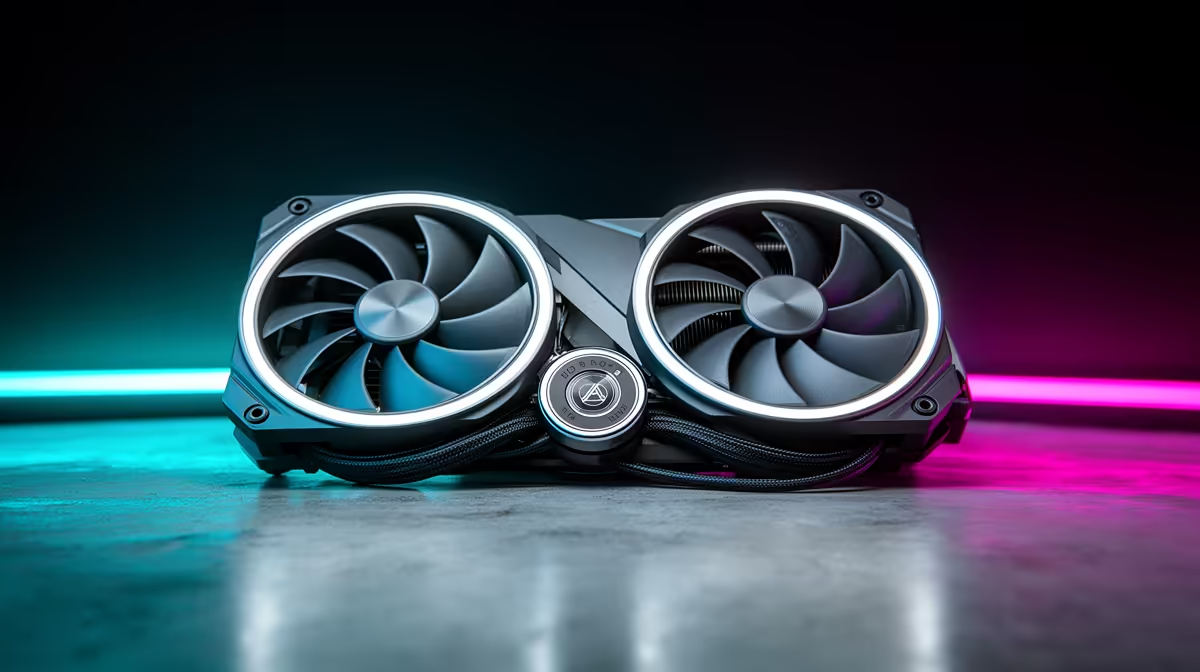
A standard 360mm AIO installation with three individual fans produces three 4-pin PWM cables, each needing to route from the radiator mounting position to a fan hub or individual motherboard headers. In a mid-tower case with front-mounted radiators, these three cables cross a significant distance and contribute to cable density in the space between the motherboard tray and the front panel. With a magnetic daisy-chain system, the three fans clip together and only the final connector in the chain exits as a single cable. The visible cable reduction inside a windowed mid-tower is immediate and significant, particularly on radiator positions where cable routing to the back panel is difficult.
Which Ecosystems Offer Magnetic Daisy-Chaining? 🖥️
The two most established magnetic fan ecosystems in SA are Corsair's iCUE LINK and Lian Li's Uni Fan systems. iCUE LINK uses QX fans that connect through a proprietary magnetic bus on the fan body, combining ARGB, PWM and tachometer signals through one magnetic link per fan. Lian Li Uni Fan uses a similar approach and has been available in SA longer, with individual fan prices starting around R450 to R600 per unit. Both ecosystems are closed: you cannot mix magnetic fan types between brands, and replacement fans must come from the same ecosystem. For new builds where you are selecting all fans fresh, this ecosystem lock-in is manageable; for upgrades to existing builds with mixed fans, it requires a full fan replacement to benefit.
Is the Price Premium Justified? 💰
Magnetic daisy-chain fan sets carry a premium of roughly 60 to 100% over equivalent-performance standard fans. A set of three static pressure 120mm fans for a radiator in a non-daisy-chain format costs around R350 to R650 for the set. Three Lian Li Uni Fan AL120 units cost around R1,200 to R1,500 for the set. The premium buys cleaner cable management and often superior ARGB lighting uniformity, but not meaningfully better airflow. For builders doing a budget-conscious build under R15,000 total, standard fans with careful cable management via velcro ties achieve a satisfactory result. For a showcase R25,000-plus windowed build, daisy-chain fans are a sensible inclusion.
Use the Included Hub, Not Individual Headers ⚡
Magnetic daisy-chain ecosystems include a controller hub that connects to a single USB internal header and provides power plus signal to the entire chain. Always use this hub rather than trying to connect individual fans to separate motherboard headers, as some ecosystems require the hub for correct ARGB synchronisation and speed reporting.
FAQ
Do magnetic daisy-chain fans work with any AIO cooler?
Yes, in the sense that they can be used as radiator fans on any standard 120mm radiator mount. Ecosystem-specific AIOs like Corsair iCUE LINK AIOs integrate the daisy-chain system natively, while non-ecosystem AIOs use the fans as standalone units connected through the hub.
Can I use daisy-chain fans as case fans alongside standard fans?
Yes. Daisy-chain fans on the radiator connect to their controller hub while standard case fans connect to separate motherboard fan headers independently. The two systems operate in parallel without interfering with each other.
What happens if one fan in the chain fails?
If a fan in the middle of the chain fails, it can interrupt the signal to fans further down the chain depending on the ecosystem design. Some systems detect individual fan failures and report them through the companion software. Check the manufacturer's failure mode documentation for your specific ecosystem.
Tired of tangled fan cables inside your build?
Explore Evetech's range of magnetic daisy-chain fan systems for cleaner builds without sacrificing cooling performance.