Quick Answer
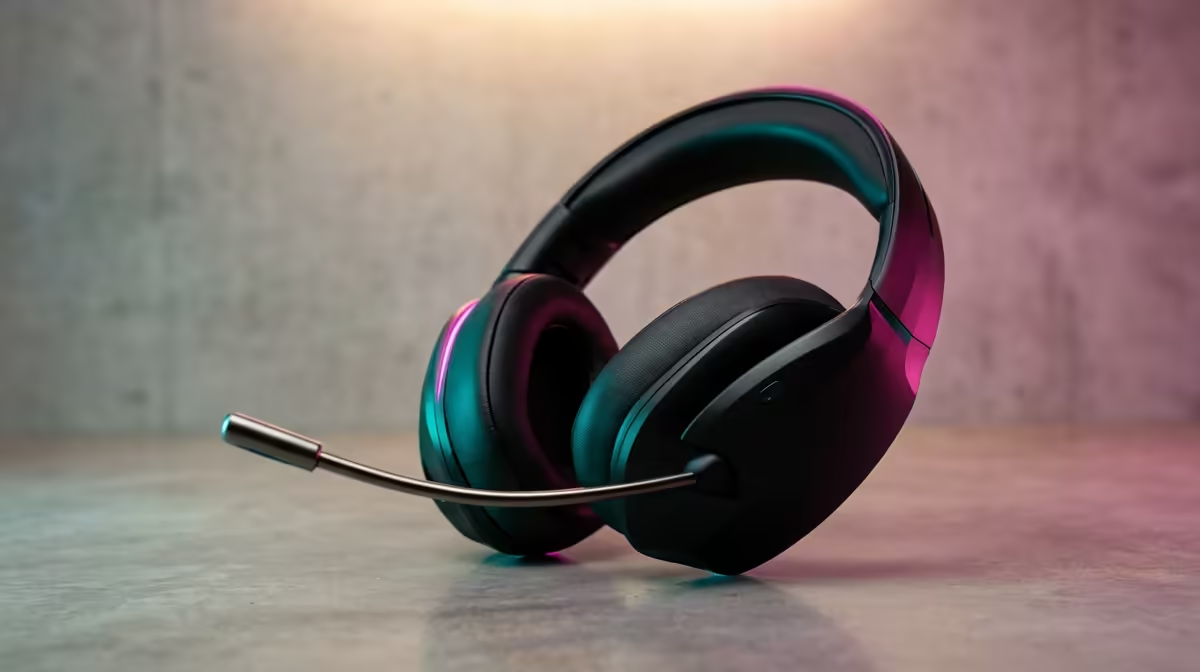
Yes, a dual-wireless gaming headset can handle gaming audio and phone calls simultaneously. The headset maintains a 2.4 GHz connection to your PC or console and a separate Bluetooth link to your phone, mixing both audio streams so you hear game audio and incoming calls through the same headset.
How Simultaneous Dual-Wireless Works 🎧
Dual-wireless headsets contain two independent radio modules. One handles a proprietary 2.4 GHz link to a USB dongle plugged into your PC or PlayStation, delivering low-latency lossless audio for gaming. The second module runs Bluetooth 5.2 or higher and maintains a persistent pairing with your Android or iOS phone. When a call arrives, the headset mixes the call audio into the gaming stream at slightly higher volume, often ducking game audio automatically. You speak through the same boom or built-in mic, and the headset DSP routes your voice to the phone call and in-game voice chat depending on which app holds the active mic. The Razer Barracuda Pro and SteelSeries Arctis Nova Pro Wireless both implement this, priced from R3,500 to R5,500 at Evetech.
Latency and Audio Quality During Mixed Use 🔊
Game audio stays on the 2.4 GHz link at 2 to 4 ms latency regardless of the active phone call. The Bluetooth side runs at higher latency, around 25 to 80 ms depending on the codec, but this is imperceptible on voice calls where human conversation tolerates latencies up to 150 ms without sounding off. The practical experience is seamless: a teammate calls your phone mid-match, the game audio drops slightly, the call comes through clearly, and game audio returns to full volume when you hang up. Some headsets require the companion app (Razer Synapse, SteelSeries GG) to configure the mix ratio between game and call audio, which is worth setting up before you need it urgently.
Situations Where It Falls Short 🔧
Simultaneous dual-wireless works cleanly for voice calls but has limitations. Streaming music from a phone app through Bluetooth while gaming on 2.4 GHz usually works but is more prone to audio glitches if the Bluetooth codec negotiation is interrupted. Video call apps like Zoom or Teams on a second device sometimes claim exclusive microphone access and disconnect the gaming mic. In a home-office setup in Cape Town or Johannesburg where video meetings happen throughout the day, a dedicated USB microphone on the PC is a more reliable solution for meetings, while the headset handles gaming separately. Some headsets only enable dual-wireless after a firmware update via the companion app, so update before testing.
Set Phone to High Priority Bluetooth Device ⚡
In your headset companion app, designate your phone as the priority Bluetooth device. This prevents the headset from dropping the phone connection when it momentarily loses signal in a thick-walled SA double-brick house. A persistent Bluetooth pairing ensures calls connect within one to two seconds rather than requiring manual reconnection.
FAQ
Does dual-wireless drain the battery faster?
Running both radios simultaneously draws more power than a single connection. Expect battery life to drop by roughly 15 to 25% when both 2.4 GHz and Bluetooth are active compared to the quoted single-mode figure. Plan for daily charging if you use dual-wireless for extended sessions.
Will my phone calls sound worse through the headset mic?
For standard GSM or VoLTE calls, audio is compressed to wideband voice quality by the network regardless of mic quality. WhatsApp, Telegram, and other VoIP apps use full Bluetooth microphone quality, so clear calls depend more on the app than the headset.
Can I use this setup on Xbox instead of PC?
Xbox uses a proprietary wireless protocol, and most third-party 2.4 GHz headsets do not support it natively. The dual-wireless feature works on PC and PlayStation. Xbox gamers usually pair via Bluetooth only, losing the low-latency 2.4 GHz link.
Want to manage gaming and phone calls through one headset?
Check out the dual-wireless headset range at Evetech and compare feature specs before you decide.