Quick Answer
No, 15W USB-C Power Delivery is not enough to replace a dedicated power cable for a gaming monitor. Most gaming monitors draw 40W to 120W, so 15W covers data and low-power accessories only. It can, however, eliminate the cable between your monitor and a laptop or phone for charging those devices while the monitor handles its own power separately.
What 15W USB-C Actually Delivers on a Monitor 🔌
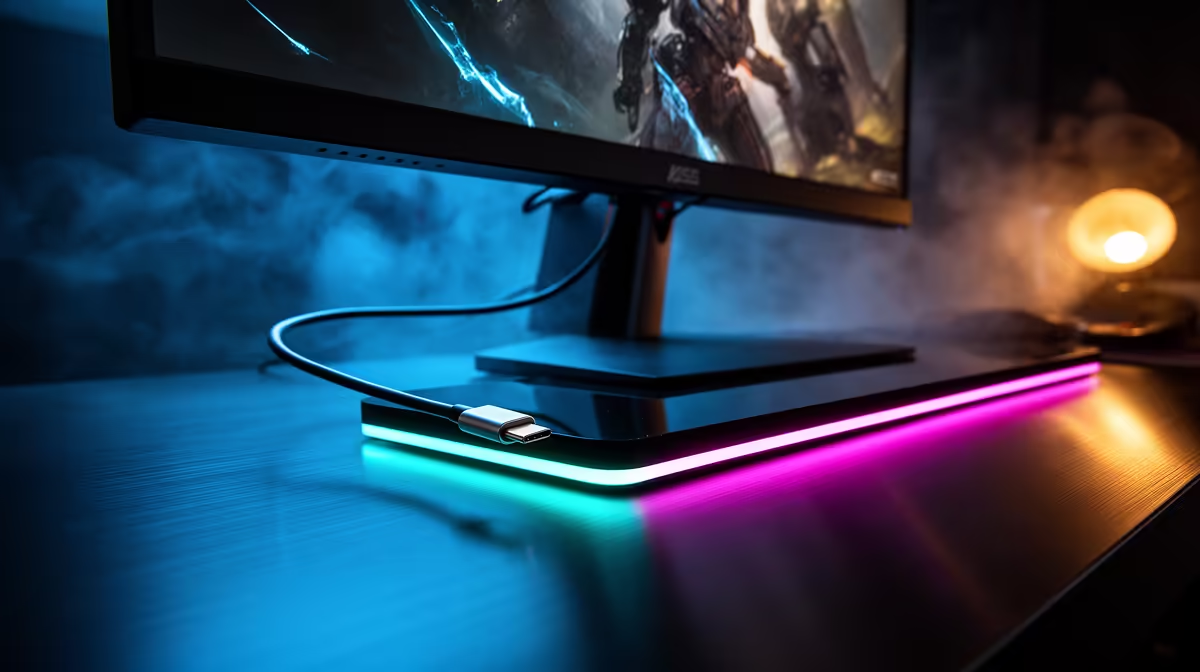
USB-C ports on gaming monitors serve two purposes: video input and limited passthrough charging. A 15W rating, defined under USB PD 2.0 as 5V at 3A, charges a smartphone comfortably and keeps a thin-and-light laptop topped up during light tasks. A 14-inch ultrabook typically draws 30W to 45W under load, so 15W will slow-charge or maintain battery at idle but cannot sustain a productivity session without a separate charger. What it does replace is the USB-A or separate charging cable between your desk and phone. Monitors with DisplayPort or HDMI plus a 15W USB-C port let you run video over DisplayPort while charging a device over USB-C with one cable less on the desk. For SA users connecting a MacBook Air or a mid-range Lenovo ThinkBook to a gaming monitor, this setup is genuinely useful even at 15W.
Where Higher PD Wattage Makes a Real Difference 💡
Monitors specifying 65W, 90W, or 140W USB-C PD can act as true docking stations: one cable carries video, data, and enough power to fully charge a laptop under load. This is the cable-reduction scenario most worth paying for. If your budget allows a monitor in the R7,000 to R12,000 range, check specs for USB-C with 65W or higher PD before purchase. Many 27-inch QHD gaming monitors in that tier include 65W PD, which handles most 15-inch gaming laptops at light to moderate use.
Cable Management Reality for a South African Desk Setup 🖥️
A typical dual-purpose work-and-gaming desk in SA runs a monitor power cable, an HDMI or DisplayPort cable, a USB hub cable, and one or two charging cables. A 15W USB-C port on the monitor cuts one charging cable. A 65W USB-C port cuts the monitor cable and the laptop charger in one. For pure gaming rigs with a desktop GPU, USB-C PD rating is largely irrelevant since power delivery to the PC is handled by the PSU. Prioritise PD wattage only if you also connect a laptop regularly.
Check PD Spec Before Buying ⚡
When comparing monitors online, look for USB-C PD wattage listed in the connectivity section, not just the presence of a USB-C port. A port labelled USB-C 3.2 without a wattage figure typically means data only, with no power delivery at all.
FAQ
Will a 15W USB-C monitor port charge my gaming laptop?
Very slowly, if at all under load. Gaming laptops commonly draw 120W to 230W. A 15W source will drain the battery during a gaming session and only maintain or trickle-charge when the laptop is idle or in sleep mode.
Can I use the USB-C port for video and charging at the same time?
Yes, if the monitor supports USB-C Alt Mode DisplayPort. The same cable carries the video signal and delivers power simultaneously, which is the primary cable-reduction benefit.
Do gaming monitors in South Africa commonly include USB-C?
Increasingly yes. Monitors in the R5,000 to R9,000 range now frequently include at least one USB-C port, though PD wattage varies. Models stocked at Evetech list connectivity specs on the product page.
Want a cleaner desk with fewer cables?
Explore Evetech's gaming monitor range and filter for USB-C models with Power Delivery to find the right setup for your workspace.