The Ryzen 7 9800X3D is a gaming powerhouse, but it does not need an expensive board to shine. The trick is finding the cheapest motherboard that still feeds it power and features cleanly.
Quick Answer
The 9800X3D runs well on a mid-range B-series AM5 board; you do not need a flagship X-series model. A solid B650 board with a decent VRM and PCIe 4.0 covers gaming fully, typically from around R3,000 to R4,500 in SA, leaving budget for a better GPU.
What The 9800X3D Actually Needs
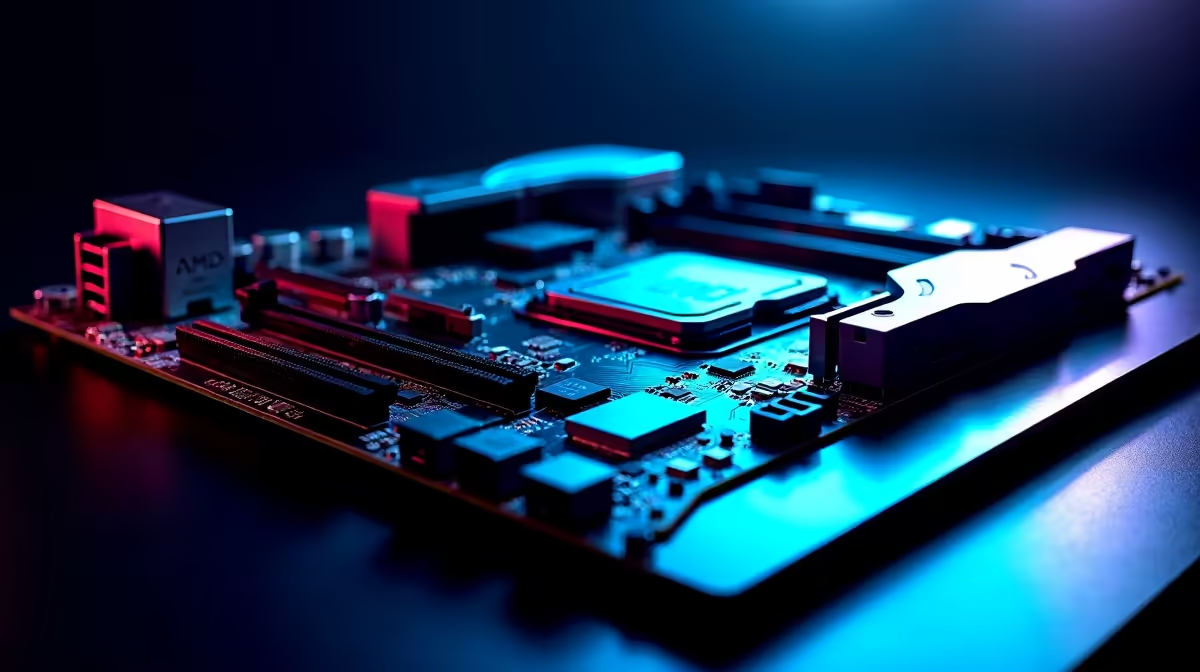
This chip is a strong gamer that does not draw extreme power, so a board with a competent VRM handles it without trouble. A mid-range B650 model offers ample power delivery, dual M.2 slots, and PCIe 4.0, which is everything a gaming build requires. Paying for a top X670E board mostly buys connectivity gamers rarely use.
Confirm the board ships with a BIOS that supports the chip, or that the retailer can flash it. Memory support up to DDR5-6000 is the practical sweet spot for this CPU's gaming performance.
Where The Savings Go Best
Spending R3,000 to R4,500 on a capable B650 board instead of R7,000 on a flagship frees real money for a stronger GPU, which lifts gaming frame rates far more than premium board features ever would. Prioritise a board with a heatsinked M.2 slot and reliable DDR5-6000 support.
FAQ
Do I need an X670E board for the 9800X3D?
No. A mid-range B650 board fully supports the chip for gaming. The flagship chipsets mainly add connectivity that most gamers never use.
What RAM speed pairs best with the 9800X3D?
DDR5-6000 is the practical sweet spot, balancing performance and stability for this CPU's gaming strengths without paying for marginal faster kits.
Will any AM5 board run the 9800X3D out of the box?
Most current boards do, but confirm BIOS support or arrange a flash. Verify this before buying an older-stock board to avoid a boot issue.
Pair the 9800X3D with a mid-range B650 board and DDR5-6000, then put the board savings toward a stronger GPU for the biggest gaming gain.