Console vs PC for Competitive Gaming in SA: Cost and Edge
Quick Answer
PC gives a competitive player more control over frame rate, display settings and mouse input. Console gives you fixed hardware, a consistent player base for each title and a lower-complexity setup.
Mouse aim does not beat every controller player. Some games use strong aim assistance, some separate input pools and some competitive scenes standardise on console. Choose from the game, tournament rules and input you have trained, then price the frame-rate target.
Start With the Game's Competitive Rules
Check the platform used by the league, local events and team you want to join. A fast PC has no value for a console-only competition.
Read whether cross-play is enabled and whether matchmaking separates controller and mouse users. Input-assistance rules can change between ranked, private and tournament modes.
Look at anti-cheat requirements and server availability for South Africa. Platform population affects queue times as much as raw hardware.
Do this before buying a 240Hz monitor for a game capped at a lower frame rate on your chosen platform.
Frame Rate Helps When the Whole Chain Supports It
Higher frame rate can reduce the time between a game update and a new image. The benefit reaches you only when the CPU, GPU, display and settings sustain it.
Use frame-time tests, not one average number. A PC that swings from 240fps to 90fps can feel worse than a stable capped result.
Console performance modes can offer 120Hz output in supported games. Check the specific title and display compatibility.
On PC, lower settings can improve visibility and consistency. Competitive image quality is a tool, not a beauty contest.
Mouse and Controller Reward Different Skills
A mouse provides direct, high-speed aiming and broad sensitivity choices. Keyboard layouts expose many commands.
A controller gives analogue movement, familiar triggers and comfort on a sofa. Aim assistance can be part of a game's balance, and elite controller players build years of muscle memory.
Switching input can cost performance for months. Test both in your main game before treating mouse purchase as an instant advantage.
Some PC competitions allow controllers, giving you PC frame-rate control without abandoning your input.
Display Latency Starts With the Right Mode
Use a monitor or TV with a low-latency game mode and the refresh rate your platform can output. Disable processing that adds delay.
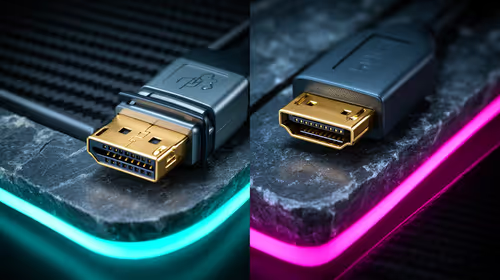
Confirm the port and cable. A display may support its top refresh on DisplayPort but a lower mode over one HDMI input.
VRR can smooth frame variation within its range. It does not repair server delay or a poor network.
Measure response from a trusted display review when possible. A 1ms label can refer to one transition or test method rather than the whole experience.
Network Quality Can Erase a Hardware Edge
Use Ethernet where practical. Check latency, jitter and packet loss to the actual game server during your playing hours.
A faster frame rate cannot compensate for unstable Wi-Fi or a congested route. Fix the connection before buying another GPU.
Console and PC both benefit from a stable router, sensible traffic management and a nearby server. Neither platform owns a universal network advantage.
Keep downloads and cloud synchronisation away from match time when they saturate the line.
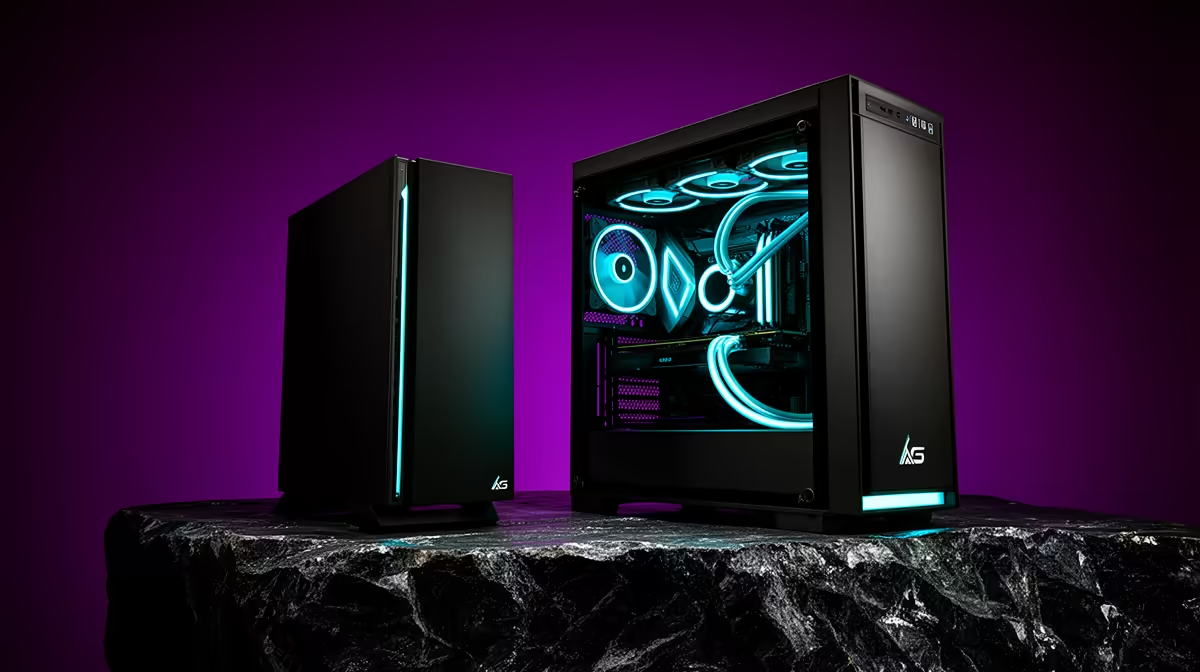
Build the PC for Minimum Frames
Choose the processor from tests of your game at competitive settings. High-refresh esports can become CPU-limited long before the graphics card reaches full load.
Use dual-channel memory with enough capacity for the game, voice chat and anti-cheat tools. Put the game on an SSD.
Select a GPU that sustains the target at your chosen resolution. An oversized GPU paired with a weak CPU wastes the budget in CPU-bound titles.
Cooling and power delivery must hold clocks during a long match, not just a one-minute benchmark.
Price the Console Setup Honestly
Use the current local price for the exact console, then add the display and controller you need. Do not invent a July 2026 console price from a PC-only price pack.
Check whether online competitive play requires a current platform tier for that game. Free-to-play rules can differ.
Add a wired or wireless headset and any approved competitive controller only when your league permits it.
The console can be much simpler because the included pad and existing TV may cover the whole start.
Price the PC Setup Honestly
Browse gaming controllers when you plan to compete on PC with a pad, then use the peripheral best-seller page for input and headset comparisons.
For the PC itself, include a monitor that sustains the frame target, plus mouse, keyboard and audio. Reuse good equipment rather than buying a branded set for appearance.
As of July 2026, the named GameSir Nova Lite tri-mode wireless controller in the approved Evetech snapshot is R449. It is one local PC-control example, not a claim that it matches every console or tournament.
Save dated quotes for the complete basket.
Input Lag Is a Chain
Controller or mouse polling, game engine, CPU time, GPU queue, display scan and network all contribute to the result you feel.
PC can expose more tuning controls, including frame caps and low-latency modes. Poor settings can also make it worse.
Console reduces the number of variables and lets developers target known hardware. Use the performance mode and low-latency display path.
Avoid universal claims that one platform always has lower input lag. Measure the exact game and setup.
Competitive Value Includes Practice
Put coaching, match review and consistent practice ahead of a small hardware upgrade when your system already holds the target.
A comfortable mouse shape, stable chair and clear audio can improve long sessions more than another 20fps above an already high rate.
The console player who practises on the tournament platform has an edge over a PC player preparing on different rules.
Spend where the current weakness appears in replays and measurements.
Choose the Platform That Reaches the Match
PC is the stronger tool when your game rewards mouse precision, high refresh and adjustable settings, and when the competition accepts that platform.
Console is the cleaner buy when the league, friends and existing display already fit it. Its fixed target can make practice consistent.
Write your must-haves in order: game ecosystem, input, stable frame rate, display and network. The platform that satisfies those within budget gives you the real edge.
FAQ
Does mouse aim always beat a controller?
No. Game rules, aim assistance, player skill and matchmaking input pools shape the result.
What refresh rate matters for competitive play?
Use the highest rate your game, platform and display can sustain with stable frame times. Consistency matters more than the label.
Is PC input lag always lower?
No. PC offers more tuning, while the whole input, engine, render and display chain decides the measured delay.
Check your game's platform and input rules, measure the frame and network limits in your setup, and spend on the weakest link that affects real matches.