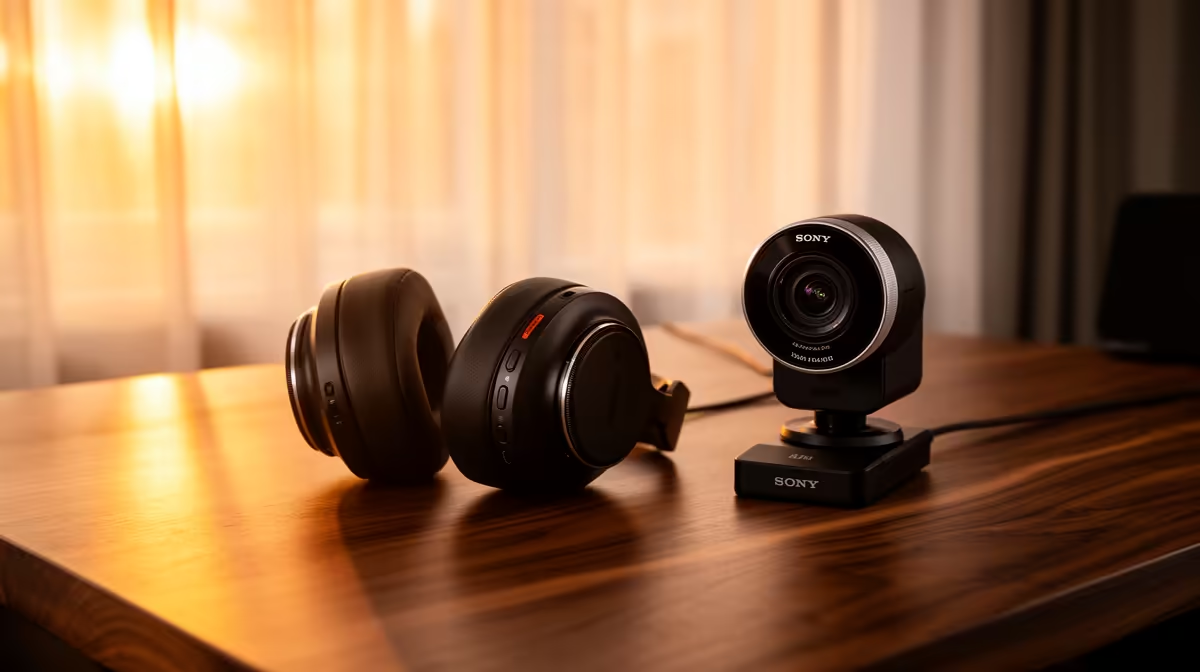
Most work-from-home calls still sound like they were recorded in a bathroom with a potato. The colleagues politely say nothing, but the muffled audio and pixelated image signal that the setup has not been revisited since it was thrown together out of necessity. Cost considerations for upgrading work-from-home video call equipment in South Africa start with understanding which item fixes the most common complaint first, and then building outward from there in a sequence that makes sense for a South African budget.
Quick Answer
A full WFH upgrade covering audio, camera, and lighting runs roughly R2,500 to R6,000 in South Africa. Audio is the highest-return first purchase. A R1,200 to R1,500 USB microphone fixes the muffled, echoey sound that colleagues notice far more often than webcam quality.
🎙️ Start With Audio: The Highest-Return Upgrade
The most common complaint on a work call is not visual. Bad audio strains the listener's concentration, makes it harder to follow nuance in language, and creates a sense of low professional presentation that a sharp webcam image cannot compensate for. Laptop built-in microphones pick up keyboard clicks, chair movement, and room resonance equally alongside the voice, blurring everything together.
A dedicated USB cardioid microphone in the R1,200 to R1,500 range changes that picture immediately. The directional capsule focuses on the speaker's voice while rejecting a significant portion of the room's ambient noise. Colleagues hear a cleaner, more focused voice rather than a voice competing with an HVAC system or traffic from outside a Joburg apartment.
Placement matters as much as the purchase. A microphone sitting on the desk four metres from the speaker sounds not much better than the laptop. Positioned on a small desk stand or lightweight boom arm about 20cm from the face, the same microphone sounds noticeably more present and clear. Factor in R300 to R600 for a basic arm or stand at this stage.
Total audio investment to get meaningful results: R1,500 to R2,100.
📹 Camera: Where the Spend Often Exceeds the Return
The webcam sits where most people put their first rand, and it is often the least impactful upgrade for calls specifically. Video conferencing platforms compress the outgoing stream significantly, which means the difference between a R800 1080p webcam and a R3,500 professional-grade camera is mostly invisible to the recipient by the time the platform has done its compression.
A 1080p webcam priced between R800 and R1,500 produces a clean, sharp image that noticeably outperforms any built-in laptop camera. Autofocus that stays on the face rather than hunting is the practical feature to look for, along with good low-light performance for home offices that are not brightly lit.
The step up to 4K is genuinely useful if the calls are being recorded for distribution or if the setup doubles as a content creation station. For pure meeting use, the 4K premium buys very little of what the recipient actually sees.
Total camera investment for solid call quality: R800 to R1,500.
💡 Lighting: The Most Visually Immediate Upgrade
The fastest visible transformation on a video call comes from adding a proper key light, not from replacing the webcam. A laptop-lit face from below by a screen in a dimly lit room looks visually uncomfortable. A single key light positioned slightly above and to the side of the monitor lifts the face into even, flattering illumination that reads as professional and attentive.
A small bi-colour LED panel priced around R700 to R1,200 does exactly what a key light needs to do in a home office setting. Bi-colour adjustment from around 3200K warm to 5600K daylight allows the light to match the ambient tone in the room, whether that is warm interior lighting in the evening or cooler natural light through a window.
The light should mount on a small stand or clip arm placed just outside the video frame. A ring light at the monitor works but creates a circular catchlight in the eyes that reads as broadcast rather than professional call. A small panel light off to the side is the more grounded choice for office settings.
Pro Tip ⚡
Before buying a key light, test a lamp with a warm bulb placed to your side and slightly above eye level. If the call image improves noticeably, a proper LED key light will improve it further with more control. It confirms the investment is worth it for your specific room before you spend.
🔆 Accessories That Round Out the Setup
Cable management is a small spend with outsized visual impact. Around R150 to R300 in desk clips and sleeves tidies the microphone and webcam leads visible in the background. A USB hub in the R300 to R600 range solves the port juggling that comes with adding a mic, webcam, and light to a laptop with limited connections.
Acoustic treatment makes a meaningful audio difference at no cost if the furniture is already in place. Soft furnishings and a bookshelf positioned behind the microphone absorb the room reflections a directional capsule cannot fully reject. That is a room arrangement decision, not a product purchase, but it changes what the mic captures significantly.
🧠 Sequencing the Spend Across Months
Not everyone commits R5,000 to a WFH upgrade in one purchase. The natural sequence is: microphone first, lighting second, webcam third.
Audio first because it improves the experience for every person on every call. A R1,500 mic and basic stand costs less than a premium webcam and creates a more immediate positive impression on colleagues.
Lighting second, as the cheapest visible upgrade. A R800 key light paired with the new microphone produces a genuinely polished result that most professionals can absorb in a single month.
The webcam last, once the two highest-impact items are already delivering. In many cases a R1,200 1080p webcam completes the setup without requiring the premium tier. Sequenced over three months, the full upgrade runs R2,500 to R3,800.
Frequently Asked Questions
What does a complete WFH upgrade cost in South Africa?
Roughly R2,500 to R6,000 across microphone, webcam, and key light, depending on how far up each tier you go. The lower end of that range buys solid performance at every component level. The upper end adds features like 4K camera output, XLR microphone connectivity, and higher-powered lighting that suit creators as much as call-focused workers.
Which single upgrade has the most impact on how colleagues experience a call?
Audio, consistently. A USB microphone at R1,200 to R1,500 removes the muffled, reverberant quality of a built-in laptop mic and replaces it with a clear, directional voice. Most people on the other side of a call notice poor audio more than they notice video quality, making the mic the highest-priority first purchase.
Is a 4K webcam worth the premium over a 1080p model for meetings?
Not usually, for calls alone. Video conferencing platforms compress the outgoing stream to bandwidths that make the 4K advantage invisible on the receiving end. A well-positioned 1080p webcam in good light delivers all the visual quality a meeting needs. The 4K premium is worth it if the same camera is used for content recording where the full resolution is actually preserved.
Can the spend be spread out without losing impact?
Yes. Buying the microphone first, then adding a key light a few weeks later, then completing with a webcam is a logical sequence that keeps each purchase below R2,000. Each item improves the experience independently, so there is no waiting period where two thirds of a purchase is sitting idle until the third item arrives.
Does a docking station improve call quality?
Not directly. A dock simplifies plugging the microphone and webcam into a laptop with limited ports, and it reduces the connection juggling that comes with a multi-peripheral setup. It adds no audio or video quality itself, so it is a comfort and convenience purchase rather than a quality one.
Ready to fix your work-from-home calls starting with the most impactful upgrade first?
Browse the USB microphones, webcams, and LED key lights at Evetech to build a professional call setup that fits your South African home office budget.