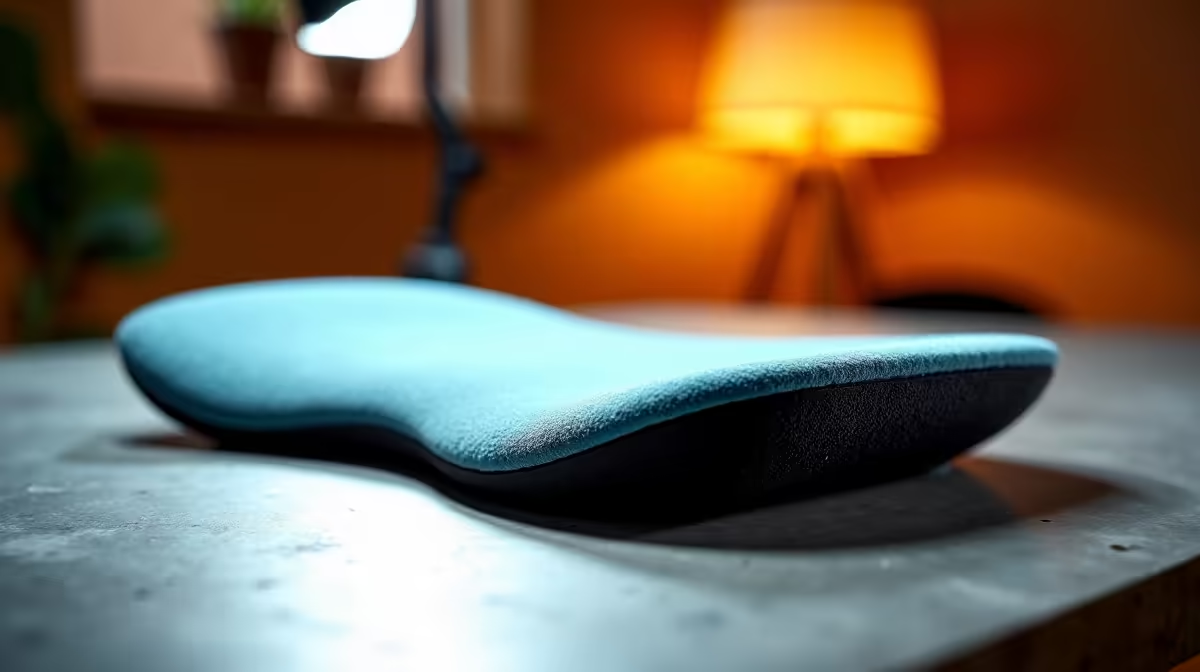
South African summers are unkind to desk setups. Afternoon temperatures in Cape Town, Durban, and Joburg regularly sit above 30 degrees, and a cushioned memory foam palm rest that feels comfortable in winter can become a sweaty, sticky frustration by February. The material that sits under your wrists for hours is worth choosing deliberately, because not all foam -- and not all covers -- handle heat the same way.
Quick Answer
In a hot SA home office, look for a palm rest with a breathable mesh or perforated fabric cover rather than sealed leatherette. A cooling-gel layer under the foam pulls warmth from the wrist, and a washable cover keeps the rest hygienic through the full summer season. Bare foam without any breathable covering heats up within minutes.
🌡️ How Foam Handles Summer Heat
Standard memory foam is a closed-cell material. The cells that give it its slow-return squish also trap air -- and trapped air means trapped heat. Place a bare foam palm rest in a 30-degree home office with no air conditioning, and the surface temperature under your wrist climbs noticeably within fifteen to twenty minutes of contact. That warmth feeds back into your hand, which makes you unconsciously shift or lift the wrist to escape it.
The physics are straightforward: foam is an insulator. It does a good job of cushioning because it absorbs energy slowly, but that same quality makes it hold onto your body heat rather than letting it dissipate. A palm rest sitting on a wooden desk with no airflow underneath accumulates heat from two directions -- the wrist above and the warm desk surface below.
This is not a problem unique to cheap products. A premium high-density foam rest without breathability features will heat up just as quickly as an entry-level one. The difference comes from the cover material and any thermal additions beneath the foam layer, not the foam grade alone.
🔆 Cover Materials: What Actually Breathes
The cover is the most important variable for summer comfort, and the options behave very differently.
Perforated mesh is the strongest performer in hot conditions. The open weave allows air to circulate between your wrist and the foam surface, which means the moisture from your skin moves away rather than pooling. A quality mesh-topped palm rest stays notably cooler over a two-hour session than any sealed cover at the same temperature.
Woven fabric sits a step below mesh but still substantially ahead of sealed options. The fibres wick moisture and dry faster than leatherette. In a home office with a ceiling fan or an open window, fabric-covered foam is comfortable through most of a South African summer without active cooling.
Leatherette looks sharp on a desk and cleans quickly, but it behaves like a heat trap. The sealed synthetic surface prevents any evaporation, so sweat sits between the wrist and the cover. Beyond the discomfort, that moisture accelerates the breakdown of the foam underneath. A leatherette palm rest that looks pristine on the outside can have degraded foam well before the twelve-month mark if used in summer conditions.
✨ Cooling-Gel Layers: Worth the Price Difference
Some palm rests include a layer of cooling gel sandwiched between the foam core and the cover. The gel conducts heat away from the skin more efficiently than foam alone, drawing warmth from the wrist and distributing it through the layer rather than sending it straight back up.
The effect is most noticeable in the first thirty to forty minutes of use. Over a long session in a very hot room, a gel layer will eventually reach ambient temperature and lose its initial cool-to-the-touch sensation, but it stays cooler than foam without gel for the duration of a typical working session. Paired with a breathable mesh cover, a gel-infused rest is the best thermal setup currently available in this product category.
The cost premium for gel-infused options over plain foam is typically R150 to R300 depending on size and brand. For a Johannesburg or Coastal Durban home office where summer afternoons push past 30 degrees regularly, that difference pays back quickly in sustained comfort.
Pro Tip ⚡
If you already own a plain foam rest with a leatherette cover, a small desk fan directed at wrist height does more for summer comfort than any upgrade short of replacing the rest entirely. Moving air removes the stagnant heat layer even when the cover itself cannot breathe.
🔌 Keeping the Rest Hygienic Through Summer
Summer use creates a hygiene challenge that the cooler months do not. Sweat contains oils, salts, and the same organic compounds that degrade foam over time. A palm rest used through a SA summer without any cleaning routine will develop odour, accelerated foam compression, and eventual surface discolouration.
The maintenance protocol is not demanding, but it needs to be consistent. A quick wipe with a barely damp cloth and a small amount of mild soap every two weeks stops the buildup before it becomes a problem. The key word is damp -- the goal is to clean the cover surface, not soak the foam underneath. Memory foam that absorbs excess moisture takes days to dry fully, and in that time the conditions for mildew are ideal.
A removable cover makes this much easier. The best designs let you pull the cover off, hand-wash it separately, and reattach once it is fully dry. This is worth looking for when buying, especially if you are in a humid coastal city where even indirect moisture lingers.
When the foam itself loses its rebound -- pressing the rest and finding it stays compressed rather than returning to shape -- it has reached the end of its useful life. In regular daily use in warm conditions, that point typically arrives between twelve and twenty-four months.
Frequently Asked Questions
Does bare memory foam really overheat in a South African summer?
Yes. Closed-cell foam insulates the wrist against both cold and heat, which means in a 30-degree home office it reflects your own body heat back upward. The effect builds over twenty minutes of contact and leaves the wrist feeling clammy and warm. A breathable cover breaks this cycle by allowing moisture and heat to escape from the surface.
Which cover keeps a palm rest coolest across a long day?
Perforated mesh is the most breathable option, allowing airflow through the weave rather than just across the surface. Woven fabric is the second-best choice and easier to find across most local ranges. Both outperform leatherette, which seals the surface completely and prevents any evaporative cooling even when the room temperature drops in the evening.
What does a cooling-gel layer add, and is it worth the extra cost?
A gel layer under the foam conducts heat away from the wrist rather than insulating it. It feels noticeably cool on first contact and maintains a lower surface temperature than plain foam for thirty to forty minutes. For extended sessions in a hot home office, that thermal difference justifies the R150 to R300 price gap over a non-gel equivalent.
How quickly does trapped sweat degrade foam quality?
Trapped moisture accelerates foam breakdown by breaking down the cell structure and encouraging microbial growth. In a hot climate with daily use and no cleaning routine, noticeable compression and odour can develop within four to six months. A washable cover and a fortnightly wipe routine extend useful life to well past a year.
Is leatherette ever a good choice in a warm home office?
Not for summer-heavy use. Leatherette looks clean and resists spills effectively, but its sealed surface holds heat and sweat against the wrist. If your home office has consistent air conditioning that keeps the room below 22 degrees, the thermal disadvantage is minimal. In an uncontrolled room environment during SA summer, fabric or mesh is the better daily-use choice.
Ready to stay comfortable through the full South African summer?
Browse the palm rest range including gel-infused and mesh-covered options, and pick a set that keeps your wrists supported and cool from October through March.