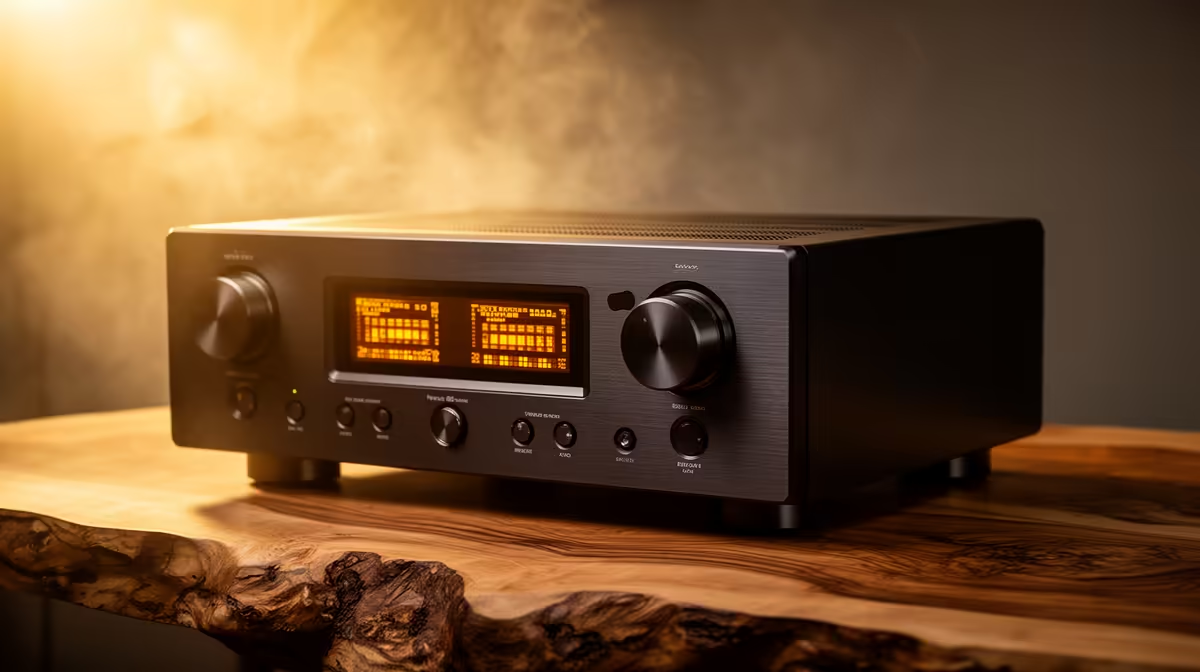
A data science student should choose an AVR unit only for a separate home-audio or presentation system, not for notebooks, models or datasets. A receiver switches and amplifies audio-video sources; it does not add processor performance, memory, storage or machine-learning acceleration.
Define the audio-video room before comparing receiver features
List the television or projector, speakers, computer outputs, required resolution and refresh rate, audio formats and normal seating. Check whether the student actually needs several sources or surround sound. For data work, separately profile the intended libraries, datasets and remote-compute options.
A priced AVR suitable for this student scenario is not verified in the supplied product data. The ASUS ExpertBook P1503 at R9,858 is a verified laptop reference, not a receiver or guaranteed data-science workstation. The Logitech Z407 at R1,404 is a separate speaker reference. Confirm live software, ports and audio compatibility independently.
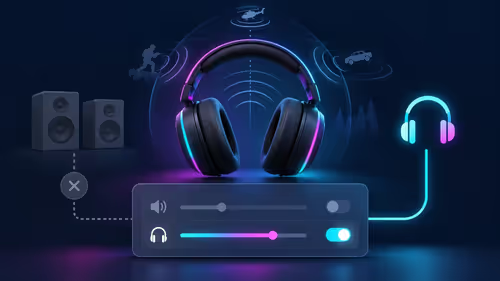
Use supported cables, leave ventilation around powered equipment and verify display passthrough before final placement. Protect datasets through approved storage, document environments and keep notebooks in tested backups. Compact speakers or headphones are simpler for ordinary study audio.
Buy an AVR only when a measured multi-source room needs its switching and amplification. Direct the student budget toward compute, memory and storage first.
Place the AVR where ventilation remains open and cables cannot be kicked, then practise a controlled shutdown during a simulated interruption.
Equipping data science study? > Compare Evetech laptops against the actual libraries, datasets and course tools.