Every time a new memory standard appears on the horizon, the same worry surfaces: am I about to buy something already on the way out? For anyone building or upgrading this year, the honest read is that DDR5 in 2026 is the active, fully-supported mainstream standard, sitting exactly one generation ahead of DDR6, which is not expected to reach the mainstream until around 2027. Whether that one-generation gap should change your plans depends entirely on how long you keep the build and what you actually run on it.
Quick Answer
DDR5 in 2026 is current, mature and the standard every new mainstream platform uses. DDR6 is the next step, with mainstream adoption pointing at around 2027, so a DDR5 system is one generation behind the future, not behind the present. For most builders it is the right choice today; the only case for waiting is a long-horizon build where you can comfortably hold out for early, expensive DDR6.
Where DDR5 actually stands in 2026
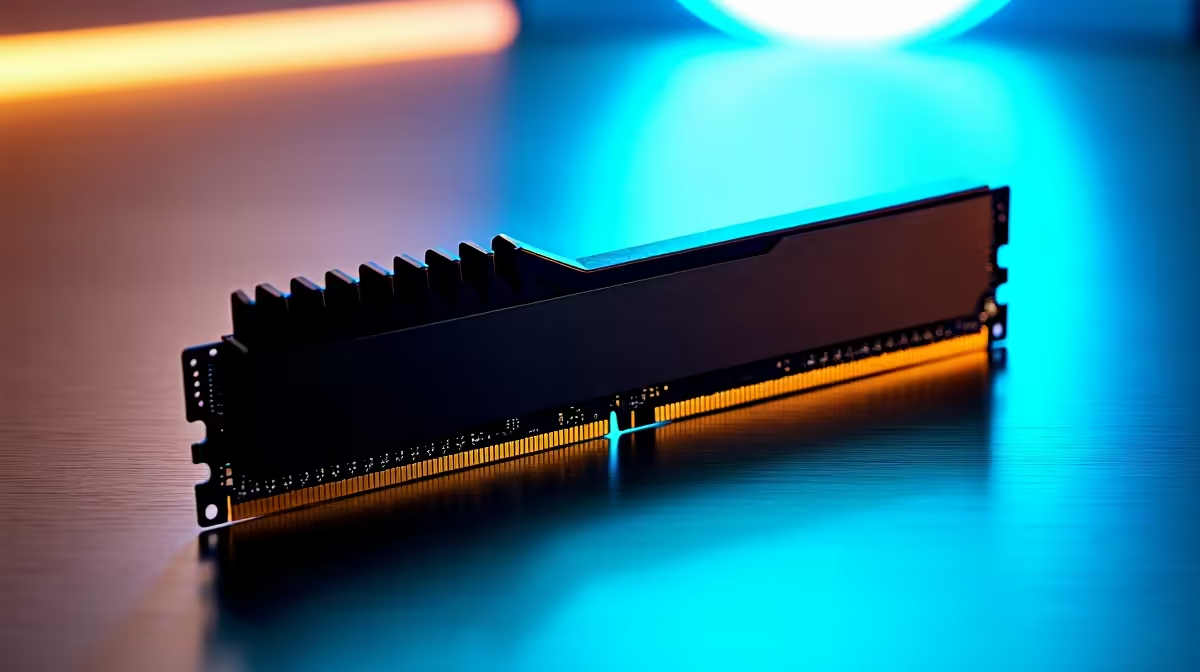
It helps to separate "current" from "newest". DDR5 is current: it is what today's CPUs and motherboards are built around, it is widely available at sensible prices, and it has matured well past its rocky early days. Speeds have climbed, capacities are generous, and compatibility headaches have largely faded. A DDR5 build in 2026 is a known, reliable quantity.
DDR6 is the newest standard on the roadmap, but newest is not the same as available or sensible. New memory generations follow a familiar arc: they launch on a small number of high-end platforms, command a steep premium, and take time before motherboards, CPUs and kits settle into mainstream pricing. That mainstream point for DDR6 is pointing at roughly 2027, and even then early adoption carries the usual launch tax. The current DDR5 memory range reflects how settled and broadly stocked the standard already is.
Does the one-generation gap matter for you?
This is the real question, and the answer hinges on two things: how long you keep the build, and what you do with it.
Build longevity
If you typically build and keep a system for three or four years before a major overhaul, DDR5 is a comfortable choice. By the time you next upgrade, DDR6 will be mature and affordable, and you will move to it naturally as part of a new platform. You lose nothing by being on DDR5 in the meantime, because your current platform would not accept DDR6 anyway, the two are not cross-compatible on the same board.
If you tend to keep a build for a very long time, six years or more, and you want to delay the next platform jump as far as possible, there is a thin argument for waiting for an early DDR6 platform. But that means paying launch premiums and accepting first-generation quirks, which often outweighs the longevity benefit.
Your workload
For gaming, memory generation is rarely the bottleneck. Games respond far more to your GPU and CPU than to a jump in memory standard, and DDR5 already supplies plenty of bandwidth for high-frame-rate play. A gamer gains little from holding out for DDR6.
Memory-heavy professional work tells a slightly different story. Large datasets, heavy multitasking, content creation and certain simulations benefit from memory bandwidth and capacity, and DDR6 will eventually push both higher. Even so, DDR5 at high speeds and large capacities handles these workloads strongly today; the DDR6 advantage is incremental, not transformative, and it does not exist on shelves at mainstream prices yet.
The cross-compatibility reality
One technical point settles a lot of the anxiety: DDR6 will not drop into a DDR5 motherboard, and vice versa. The standards use different physical and electrical designs, so adopting DDR6 means a new motherboard and a compatible CPU, not just new memory sticks. This is why "future-proofing" by waiting is weaker than it sounds. You are not preserving an upgrade path on your current board; moving to DDR6 is a full platform change whenever it happens. That makes buying the right, mature DDR5 now and planning a clean platform jump later the more sensible strategy.
So, skip DDR6 or wait?
For the overwhelming majority of builders in 2026, build on DDR5 now and do not wait. It is current, mature, well-priced and fully supported, and it covers gaming and professional work comfortably. You will move to DDR6 in time, as part of your next platform, when it is affordable and proven.
Wait only if you are committed to an unusually long build life and are genuinely willing to pay early-adopter prices for marginal gains, a narrow case that applies to very few people. Match your decision to the best-selling memory options and the speed and capacity your platform supports, rather than to a standard that is not yet on the shelves at sensible prices.
Frequently Asked Questions
Is DDR5 obsolete in 2026?
Not at all. DDR5 is the current mainstream standard that today's CPUs and motherboards are built around. It is mature, widely available and well-priced. DDR6 is the next standard, but it is not expected to reach mainstream adoption until around 2027.
Will DDR6 fit in my DDR5 motherboard?
No. DDR6 uses a different physical and electrical design, so it will not work in a DDR5 board, and DDR5 will not work in a DDR6 board. Moving to DDR6 requires a new motherboard and a compatible CPU, making it a full platform change.
Should a gamer wait for DDR6?
No. Games are far more sensitive to the GPU and CPU than to memory generation, and DDR5 already provides ample bandwidth for high-frame-rate gaming. A gamer gains little from holding out for DDR6 and would only pay early-adopter prices for it.
When will DDR6 actually be worth buying?
Mainstream DDR6 adoption is pointing at around 2027, and like any new standard it will be expensive and limited at launch before settling into sensible pricing. For most people the right time is during their next platform upgrade, once it is mature and affordable.
Does DDR5 speed matter more than waiting for DDR6?
For most builds, yes. Choosing a well-matched, high-speed DDR5 kit your platform supports delivers real, available performance today, whereas waiting for DDR6 means delaying for a standard that is not yet on shelves at mainstream prices.
DDR5 is the current, sensible standard for a 2026 build, and DDR6 is a next-platform concern, not a reason to wait. Pick the right speed and capacity from the DDR5 memory range and build with confidence today.