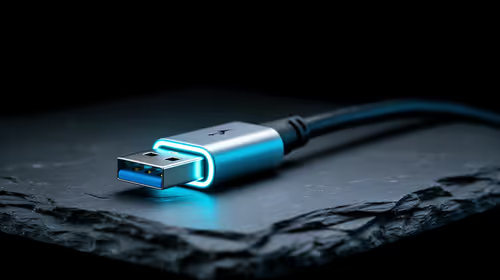
You’ve just unboxed a beast of a 4K monitor and a powerful new GPU. The excitement is real. But then you face one final boss... the cable. In the battle of DisplayPort vs HDMI 2.1, which one will unlock the glorious, high-refresh-rate 4K gaming you paid for? Choosing the wrong one can bottleneck your entire rig. Don’t worry, we’re here to help you pick the best cable for 4K gaming and get the most from your hardware.
Understanding HDMI 2.1: The Console & TV Champion
For years, HDMI has been the go-to cable for home entertainment. HDMI 2.1 is its most powerful version yet, and it's a massive leap forward. Its main claim to fame is a huge bandwidth of 48Gbps. This allows it to carry a 4K signal at a smooth 120Hz, which is the sweet spot for PlayStation 5 and Xbox Series X gamers.
If your gaming den doubles as a movie theatre, HDMI 2.1 is your guy. It supports features like eARC (Enhanced Audio Return Channel) for high-quality sound systems and is standard on virtually all modern TVs and PC monitors. For console gamers, the choice is simple… HDMI 2.1 is the way.
Understanding DisplayPort: The PC Purist’s Pick 🔧
While HDMI was connecting TVs, DisplayPort was built from the ground up for computers. It’s the native choice for most graphics cards and is packed with PC-centric features. The most common version, DisplayPort 1.4, offers 32.4Gbps of bandwidth. While that's less than HDMI 2.1 on paper, it uses highly efficient data compression (DSC) to easily push 4K at 144Hz and even higher.
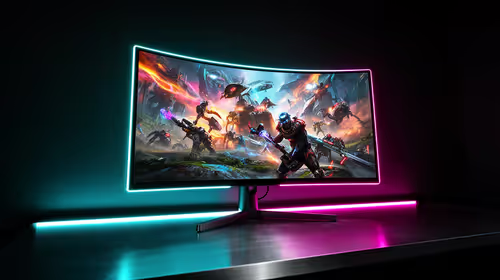
DisplayPort also supports awesome features like Multi-Stream Transport (MST), which lets you daisy-chain multiple monitors from a single port on your GPU. This makes it a favourite for professionals and anyone running a multi-screen setup, especially those using immersive curved monitors for an expanded field of view.
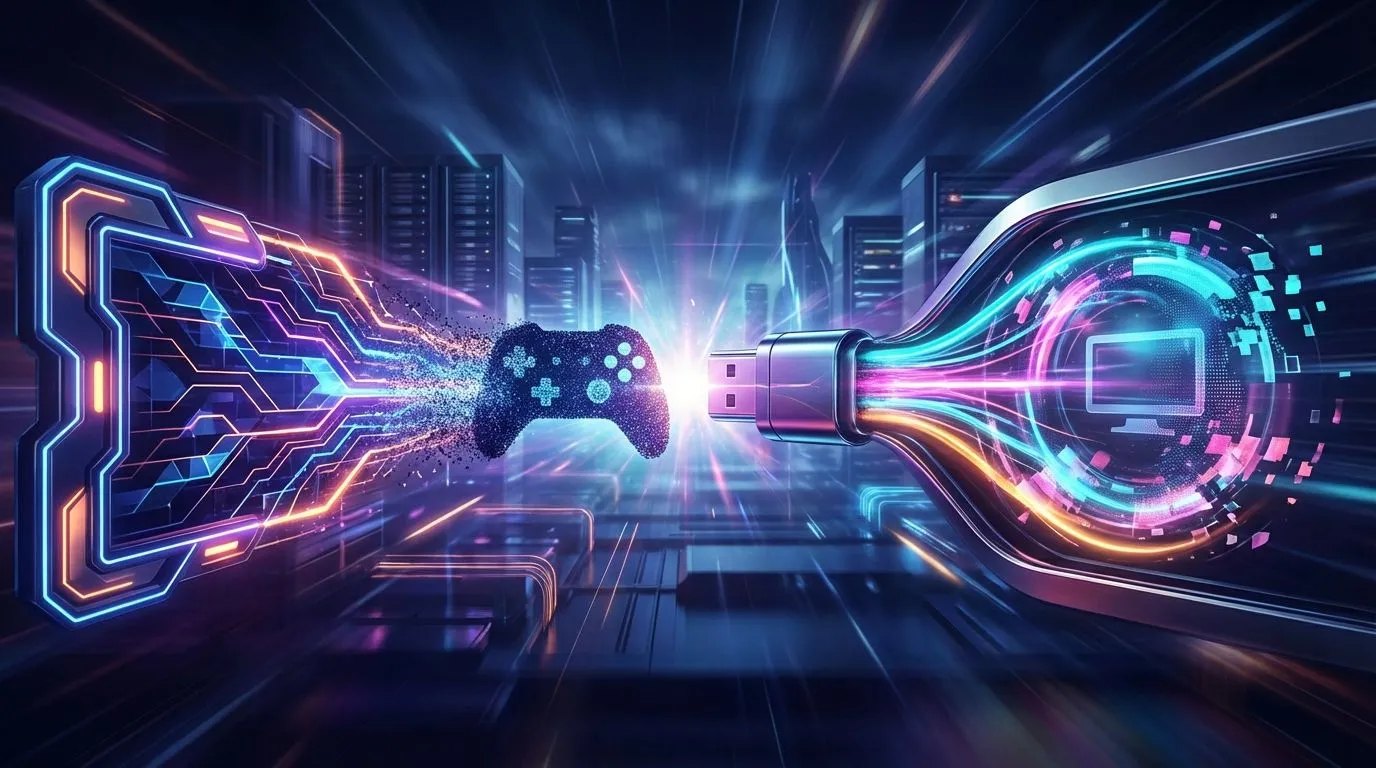
DisplayPort vs HDMI 2.1: The 4K Gaming Showdown
So, when it comes to the crunch, which one wins? The DisplayPort vs HDMI 2.1 debate depends entirely on your setup. Let's break it down.
Key Differences at a Glance:
- Bandwidth: HDMI 2.1 technically has more raw bandwidth (48Gbps) than DisplayPort 1.4 (32.4Gbps). However, DisplayPort 2.1 exists (though it's still rare) and boasts a staggering 80Gbps.
- PC Gaming: DisplayPort is generally favoured. It has a locking mechanism to prevent accidental unplugging and better support for ultra-high refresh rates and features like NVIDIA G-Sync on a wider range of 5K and 4K monitors.
- Console Gaming: HDMI 2.1 is the non-negotiable standard for PS5 and Xbox Series X to get 4K at 120Hz.
- Variable Refresh Rate (VRR): Both standards support VRR (like FreeSync and G-Sync) to eliminate screen tearing, but you must ensure your monitor and GPU support the same standard over the chosen cable.
Essentially, for a pure PC gaming rig, DisplayPort 1.4 is often the more practical and powerful choice for today's hardware.
Check Your Ports! ⚡
Before you buy a new cable, double-check the ports on your GPU and monitor. The best cable in the world is useless if you can't plug it in! Most modern gaming GPUs have both DisplayPort and HDMI outputs, but high-end gaming monitors sometimes favour one over the other for their top performance specs.
Does Monitor Type Affect the Choice?
Yes, but only slightly. For the vast majority of all gaming monitors, the PC vs console rule holds true. An ultrawide monitor will benefit from DisplayPort's bandwidth, while a big-screen 4K TV used for gaming will rely on HDMI 2.1. Even niche setups with portable monitors often use USB-C with DisplayPort Alternate Mode, showing the standard's versatility in the PC space.
The Verdict: The Best Cable for Your 4K Gaming Rig 🚀
So, who wins the DisplayPort vs HDMI 2.1 battle? It's a tie, because they serve different masters.
- Choose HDMI 2.1 if: You are a console gamer (PS5/Xbox Series X) or you're connecting your PC to a high-refresh-rate 4K OLED TV.
- Choose DisplayPort 1.4 (or higher) if: You are a dedicated PC gamer seeking the highest possible refresh rates, using multiple monitors, or want to ensure maximum compatibility with G-Sync.
Ultimately, the best cable for 4K gaming is the one that fully supports the features of your GPU and your monitor. Don't forget that a high-quality, certified cable is one of the most important monitor accessories you can buy to guarantee a stable, flicker-free image.
Ready to Unleash True 4K Power?
The right cable is crucial, but it all starts with the screen. A high-refresh-rate 4K monitor is the ultimate upgrade for any serious South African gamer. Explore our incredible range of gaming monitors and find the perfect panel to conquer your world.