Quick Answer
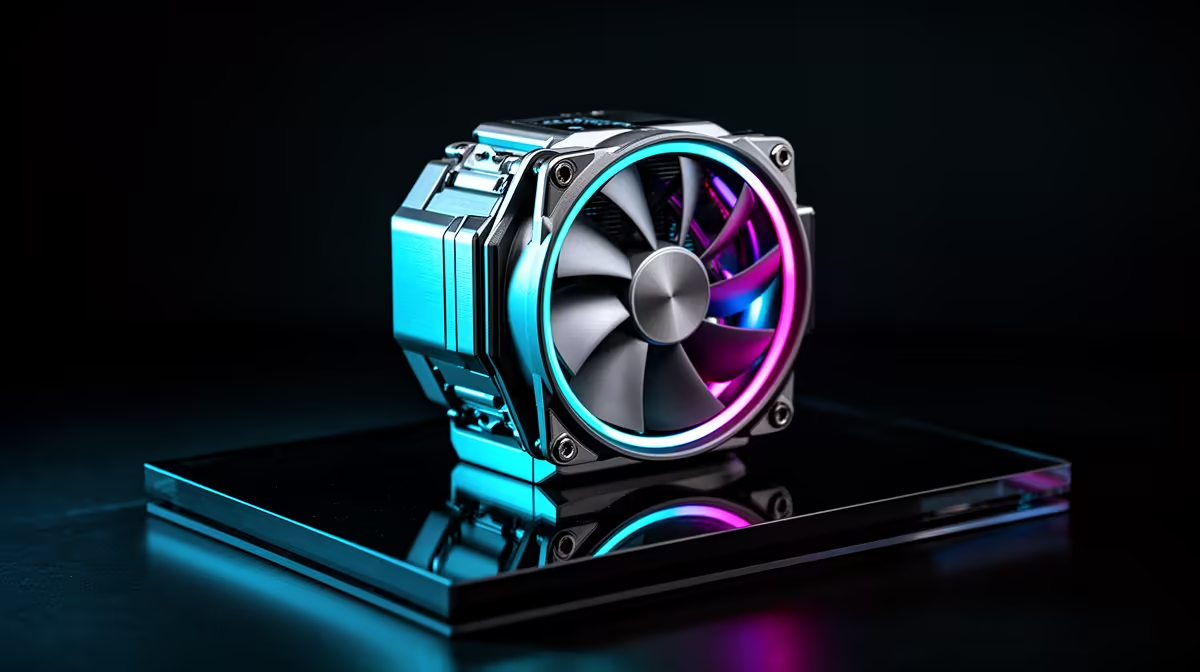
Metal-framed AIO fans improve cooling stability primarily by reducing flex and vibration at high RPM, which maintains consistent blade pitch and airflow across the fan's speed range. The thermal performance difference over quality plastic-framed fans is modest, around 2 to 4 degrees Celsius, but metal-framed fans last significantly longer and maintain consistent performance at the elevated temperatures found inside a warm SA PC case in summer.
Why Fan Frame Material Affects Airflow Consistency 💨
At 2,000 RPM or above, a lightweight plastic fan frame can flex subtly from centrifugal forces, altering blade tip clearance against the shroud. This flex reduces static pressure and creates turbulence at the blade tips, degrading airflow through a radiator's dense fin stack. Metal frames, typically aluminium or reinforced steel used in fans like the Noctua NF-A14 industrialPPC or Phanteks T30, maintain their geometry under high-speed operation. For an AIO running at maximum speed during a SA summer stress test at 30 degrees Celsius ambient, this dimensional stability translates to consistently better radiator throughput.
Thermal Longevity and Heat Resistance 🌡️
Plastic fan blades can warp over years of exposure to heat inside a SA PC case, where internal temperatures routinely reach 40 to 50 degrees Celsius. Warped blades create imbalance, accelerating bearing wear and introducing vibration noise. Metal blades and frames are dimensionally stable at these temperatures, meaning a quality metal-frame fan installed today should perform identically five years from now. The Noctua NF-A14 industrialPPC-2000 is rated to 60 degrees Celsius operating temperature and carries a six-year warranty, reflecting its industrial-grade construction.
Cost Versus Benefit for SA Builders 💰
Metal-framed radiator fans cost R400 to R600 per unit locally. Replacing stock fans on a 360mm AIO with three metal-frame units adds R1,200 to R1,800 to the build. For a creator or heavy workstation user running eight or more hours daily, the longevity benefit justifies the cost. For a weekend gamer, quality plastic-frame fans from Lian Li or be quiet! offer excellent performance at a lower cost. The sweet spot is a 360mm AIO that already ships with quality reinforced plastic or metal-frame fans, avoiding the aftermarket swap entirely.
Balance New Fans Before Installing on Your Radiator ⚡
A quick spin-up test on your desktop before mounting reveals any fan with a manufacturing imbalance. Hold the fan by its frame and power it briefly; a balanced fan feels smooth with no clicking or wobble. Replacing an imbalanced fan before installation saves a full dismount later when that vibration noise develops inside the case.
FAQ
Can I replace the fans on my existing AIO cooler with metal-frame fans?
Yes, most AIO radiators use standard 120mm or 140mm fan mounting holes. Metal-frame replacements like the Noctua NF-F12 industrialPPC or Phanteks T30 are drop-in compatible as long as you match the fan size to the radiator.
Are metal AIO fans noisier than plastic fans at the same RPM?
Not inherently. Fan noise depends primarily on blade design, tip clearance, and bearing quality rather than frame material. Metal-framed fans from Noctua and Phanteks are engineered for low noise even at high RPM, and their rigid frames reduce resonance-induced noise that can affect plastic fans over time.
Do metal fans affect the weight of my AIO radiator mount significantly?
Three metal-frame 120mm fans add approximately 100 to 150 grams over equivalent plastic-frame fans. For a top-mounted radiator this is negligible, but for a heavy 360mm radiator in a case with borderline mounting strength, confirm the case's top panel is rated for the combined weight of radiator, coolant, and fans.
Want to upgrade your AIO's fans or find a cooler with premium fan hardware?
Evetech stocks individual case and radiator fans alongside complete AIO coolers. Browse the cooling accessories section on the Evetech site for current stock.