Open the box of a micro:bit or Arduino kit and you have a clever little board, a USB cable and no obvious way to make it do anything. That is by design, because these boards do not program themselves. You write the code on a computer and send it to the board, which raises the practical question every SA parent and teacher asks first, what device does the child actually need to get started?
Quick Answer
Yes, you need a laptop, desktop or tablet to use micro:bit and Arduino kits, because you write code in editors like MakeCode or the Arduino IDE and then flash it to the board over USB or Bluetooth. An entry-level laptop around R8,000 runs these free tools without trouble, and a tablet works for micro:bit but is more limited for Arduino.
How These Kits Actually Work
A microcontroller board is a tiny computer with no screen, keyboard or built-in way to take in new instructions on its own. To make it blink an LED, read a sensor or drive a motor, you write a program on a separate device, then transfer that program to the board. That transfer is called flashing or uploading.
The board then runs your code independently, even unplugged from the computer if it has its own power. But every time you want to change what it does, you go back to the computer, edit the code and flash it again. That loop, write, flash, test, repeat, is the heart of learning to code with hardware, and it is why a companion device is non-negotiable.
What Device You Actually Need
The good news for SA families is that the requirements are light. These are learning tools, not demanding software, so you do not need a powerful machine.
For micro:bit
The micro:bit is the more flexible of the two. The MakeCode editor runs entirely in a web browser, so any laptop, Chromebook or desktop with a modern browser works. You can flash over USB, and many micro:bit boards also support flashing over Bluetooth from a tablet or phone using the companion app. That makes a tablet a genuine option for younger learners doing micro:bit projects.
For Arduino
Arduino leans more on a proper laptop or desktop. The classic Arduino IDE installs on Windows, macOS and Linux, and uploads happen over USB. There is a web-based editor too, but for the full experience, library management and the wide range of tutorials out there, a laptop with USB ports is the smoother path. Tablets are awkward here because of the USB upload requirement and limited app support.
For families building a wider home STEM setup, browsing the smart home and electronics range gives a sense of the sensors and add-ons these boards can eventually drive.
Choosing The Right Laptop For STEM
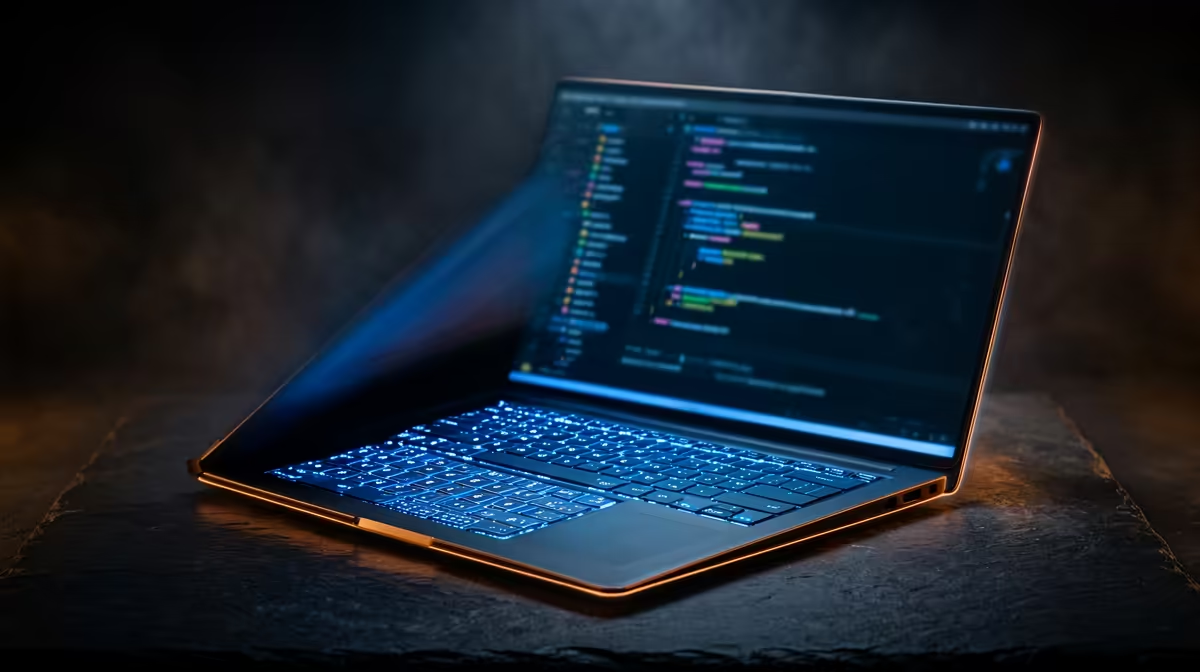
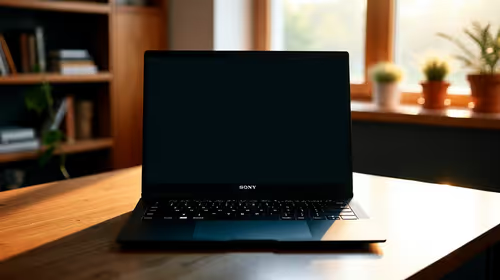
You do not need to overspend. An entry-level laptop in the region of R8,000 comfortably runs MakeCode in a browser and the Arduino IDE, since neither tool is heavy. What matters more than raw power is having the right ports and a comfortable screen for a child to work on.
Look for at least one standard USB-A port, or budget for a simple adapter, because many Arduino boards and some micro:bit cables use full-size USB. A screen of a sensible size makes reading code easier for young eyes, and decent battery life helps if the learning happens at the kitchen table rather than a fixed desk. Beyond that, any reliable entry-level machine does the job, and it doubles as a homework and schoolwork laptop.
Can a Chromebook work?
For micro:bit, yes, because MakeCode runs in the browser and Chromebooks handle USB flashing well. For Arduino, support is more limited, so a Windows or macOS laptop is the safer choice if Arduino is the main goal. If a child will explore both, a standard laptop covers all bases.
A laptop bought for coding rarely stays a coding-only machine, so it makes sense to pick one that handles everyday schoolwork too. The right cables, adapters and electronics accessories round out a starter kit, especially the USB adapter some boards need.
Getting Started On A Budget
The software itself costs nothing. MakeCode and the Arduino IDE are both free, so the only real outlay is the board, a kit of components and a device to program from. Many SA homes already have a laptop that does the job, which means a starter kit is often the only purchase needed to begin. If you are buying fresh, an entry-level laptop plus a beginner kit is a complete, lasting setup that grows with the learner.
Who This Suits
A primary-school child starting with micro:bit can begin on a tablet or any browser-capable laptop. An older student moving into Arduino, sensors and more involved projects is better served by a proper entry-level laptop with USB ports. Either way, the device requirement is modest, and the skills it unlocks, real coding tied to real hardware, are well worth the small setup.
Frequently Asked Questions
Can I program a micro:bit without a computer?
You need some device, but it does not have to be a laptop. Many micro:bit boards support flashing over Bluetooth from a tablet or phone using the companion app, so a tablet works well for micro:bit projects.
Does Arduino work on a tablet?
It is awkward. The Arduino IDE and the standard USB upload process are built around laptops and desktops, and tablet support is limited. For Arduino, a Windows, macOS or Linux laptop is the practical choice.
How powerful does the laptop need to be?
Not very. Both MakeCode and the Arduino IDE are lightweight, so an entry-level laptop around R8,000 runs them without issue. Ports and a comfortable screen matter more than processing power.
Is the coding software free?
Yes. MakeCode for micro:bit and the Arduino IDE are both free to download and use. Your only costs are the board, the kit of components and a device to program from.
Will a Chromebook run these kits?
For micro:bit, yes, since MakeCode runs in a browser and flashing over USB works. For Arduino the support is thinner, so a standard Windows or macOS laptop is safer if Arduino is the focus.
A capable, affordable laptop is all most learners need to start with micro:bit and Arduino. Explore our entry-level laptops and the smart electronics range to build a STEM setup that grows with your child, in stock at Evetech.