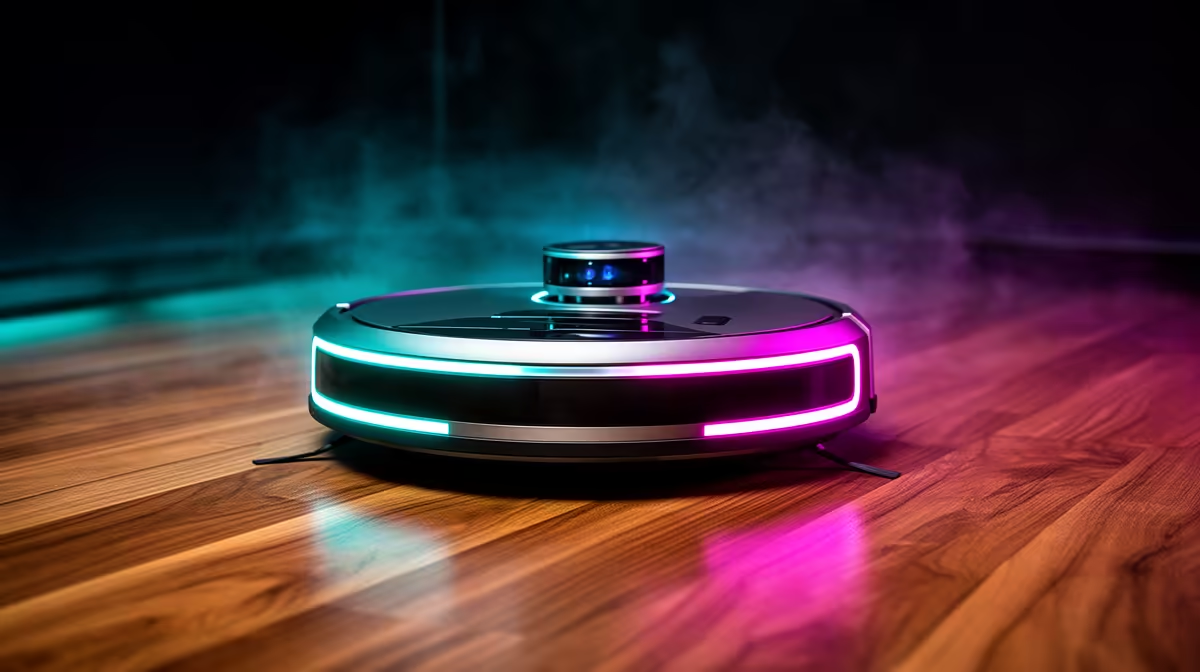
A LiDAR robot vacuum spins a laser to map your home, which lets it navigate fast and clean in pitch darkness. Camera-based models, the vSLAM type, read the room with a lens instead and cost less, but they need ambient light to find their way. Whether the laser is worth paying extra for comes down to two things: how complicated your floor plan is, and whether you run cleans at night.
Quick Answer
You need a LiDAR robot vacuum if you have a multi-room or cluttered home and want reliable cleaning in the dark, since LiDAR maps faster and works without any light. If your space is simple and you only clean during the day, a cheaper vSLAM camera model will serve you well and save money.
How the Two Navigation Methods Differ
LiDAR sits a small spinning laser turret on top of the robot. It fires beams in every direction and measures the bounce-back to build an accurate map in seconds, regardless of lighting. vSLAM uses a camera, usually angled at the ceiling, to recognise features and piece together its position over time. It works well in good light but slows down, or gets lost, in dim or dark rooms because it simply cannot see enough detail.
When LiDAR Earns the Premium
The laser pays off in three situations. A large home with many rooms benefits from the faster, more accurate mapping, so the robot plans efficient routes instead of bumping around. A cluttered layout with furniture legs and tight gaps is handled more precisely. And if you schedule cleans overnight or in a home that stays dark during the day, LiDAR simply keeps working while a camera model would struggle. For these buyers the extra spend is justified by cleaning that actually finishes the job.
When a Camera Model Is the Smarter Buy
For a small flat or a mostly open-plan space cleaned in daylight, vSLAM does almost everything LiDAR does for less money. Modern camera robots map competently, avoid obstacles, and follow app-set no-go zones. If your home is bright during the day and not a maze of rooms, paying the LiDAR premium buys capability you will rarely call on. The sensible move is to match the technology to your actual home rather than the spec sheet.
Research into vSLAM performance shows that camera accuracy can fall by up to 40 percent in dim or dark rooms, so a camera-based robot scheduled to clean after dark or in a windowless passage will navigate less reliably. That single constraint is the clearest reason a camera model is not right for everyone.
The Practical LiDAR Limits Worth Knowing
LiDAR is not flawless. The spinning laser turret treats everything as a solid obstacle, which means it can read a light curtain or a fabric valance as a wall and refuse to go near the gap. Mirrors and highly reflective surfaces can confuse the laser beam, causing occasional brief hesitations in those areas. And the raised turret, standard on most current designs, adds height to the robot's profile, which matters in homes with low-clearance furniture.
The answer to the height issue, increasingly common in 2026 flagship models from both Roborock and Dreame, is a retractable LiDAR tower. These pop down when the robot enters a low gap and extend again once it is clear, giving the navigation benefits of laser mapping in a slimmer chassis. If under-furniture reach is a priority and you still want LiDAR, look for retractable-tower models specifically.
Where Hybrid Systems Land
Several 2026 flagships now combine LiDAR for mapping with a front-facing camera for AI obstacle recognition. The laser handles the floor plan reliably in any lighting, while the camera identifies specific hazards like charging cables, pet messes and shoes. That pairing gets around the biggest remaining weakness of pure LiDAR, which is recognising what an obstacle actually is rather than just detecting it exists. For homes with pets, children or loose cables on the floor, the hybrid approach handles avoidance more intelligently than either technology alone.
LiDAR in Relation to Home Size
Flat size does not alter LiDAR's core benefit, but it does change how much you feel it. In a studio or one-bedroom flat, even a simple camera robot maps the space quickly and rarely gets confused because the layout is uncomplicated. The LiDAR premium starts repaying itself in a larger home where the robot crosses multiple rooms, changes floor types and needs to navigate through doorways reliably each run. If your flat is a single open-plan space with good natural light, the LiDAR argument is weaker than in a rambling multi-room house where reliable mapping determines whether every corner actually gets cleaned.
That said, even in a small flat the dark-room scheduling benefit holds. Running a clean at 3am while you sleep costs nothing extra and LiDAR handles it without hesitation, whereas a camera model may skip or wander in a darkened room. If overnight scheduling is part of your plan, LiDAR earns its place regardless of floor size.
A Note for SA Homes
Many South African households already run a gate intercom and outdoor cameras, so the robot vacuum is purely about indoor cleaning and nothing else. Think about your specific floor plan, the number of rooms, the amount of furniture, and your usual cleaning time, then decide. You can compare current options in the smart home appliance range at Evetech, and the accessories best sellers cover filters, brushes and the spares that keep any robot running.
Frequently Asked Questions
Does a LiDAR robot vacuum work in the dark?
Yes. LiDAR uses a laser rather than light from the room, so it maps and navigates perfectly in total darkness. This is its single biggest advantage over camera-based models.
Is vSLAM navigation any good?
Yes, in good lighting. Camera-based vSLAM robots map and clean competently during the day. Their weakness is dim or dark rooms, where they lose their bearings.
Is LiDAR worth the extra cost?
It depends on your home. For large, multi-room or cluttered spaces, or for night-time cleaning, LiDAR is worth it. For a small, bright, daytime-cleaned home, a cheaper camera model is the better value.
Will either type damage furniture or get stuck?
Both use obstacle sensors and app-based no-go zones to avoid trouble, though LiDAR models generally map tight spaces more precisely. Keeping cables and small objects off the floor helps either type clean without getting trapped.
Not sure which navigation suits your home? Compare LiDAR and camera models in the smart home range at Evetech and pick the one that matches your floor plan and routine.