The footage you bring home from a trip depends as much on what you carry as on where you go. The choice between a drone, a gimbal or an action cam really comes down to one question: do you need the shot from above? A drone like the Mini 5 Pro unlocks sweeping aerial perspectives no handheld can match, but flying one in South Africa brings SACAA Part 101 rules into play. A gimbal or action cam stays on the ground with zero flight restrictions, ready the instant you are.
Quick Answer
Pick a drone for aerial shots that establish a place from above, accepting that SACAA Part 101 rules apply to drone flying in South Africa. Pick a gimbal for smooth, cinematic ground footage, or an action cam for rugged, wide, point-of-view clips. Most serious travel creators carry two of the three rather than one.
The Drone: Unmatched Perspective, Real Rules
A drone gives you the one shot nothing else can: the reveal from above. Coastline, mountain passes, a winding road, a market square seen from height. The Mini 5 Pro and its class are light, fold into a jacket pocket, and shoot stabilised aerial video that instantly lifts a travel edit.
The trade-off is regulation. In South Africa, drone use falls under SACAA Part 101, which sets out where and how you may fly. That means respecting no-fly zones around airports, keeping clear of crowds and private property, and following the altitude and line-of-sight rules. It is entirely manageable, but it is not the grab-and-go freedom of a handheld camera. You plan a drone shot; you simply take a gimbal shot.
Who the Drone Suits
A creator building landscape-heavy travel content who wants those establishing aerials and is willing to learn the rules and scout legal flying spots. If your trips are mostly urban, indoor or crowded, the drone spends more time in the bag than the air.
The Gimbal: Smooth, Cinematic, Ground-Level
A handheld gimbal stabilises a camera or phone so your walking, panning and tracking shots glide instead of jitter. It is the tool that makes ground footage look professionally smooth, and it carries none of the airspace restrictions a drone does. You can film a busy street, a hike, or a slow reveal of a building entrance without a second thought about regulations.
Gimbals shine for storytelling at human level: following a subject, moving through a space, capturing the feel of being somewhere. The limitation is that everything stays at eye height or wherever your arm reaches. There is no overhead drama, but there is also no setup ritual and no permission to seek.
Who the Gimbal Suits
Vloggers and creators who film themselves and their surroundings on the move and want that polished, flowing look. If your content is about being in a place rather than seeing it from above, the gimbal is the daily workhorse.
The Action Cam: Rugged, Wide, Always Ready
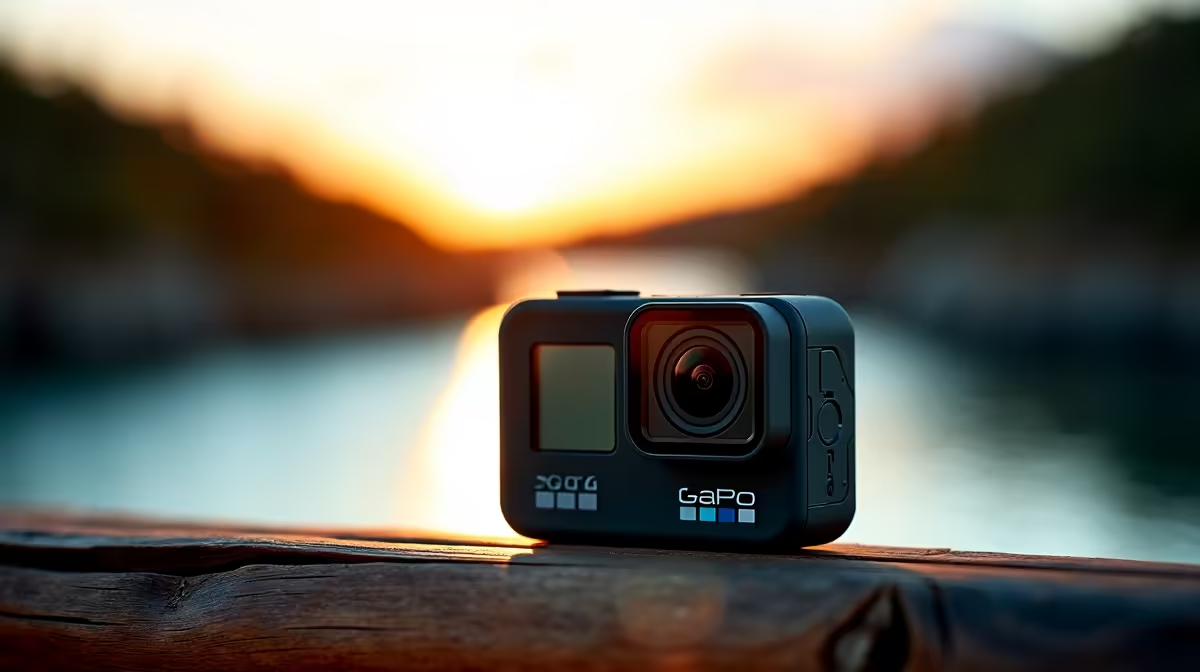
An action cam is small, tough and waterproof, with a wide field of view and strong built-in stabilisation. It is the camera you mount on a chest strap, a helmet or a bike, or take underwater. It captures the point-of-view immersion that neither a drone nor a gimbal does well.
Where it trades down is creative control and low-light quality. The wide lens and small sensor are built for durability and immersion, not for the shallow, cinematic look a larger camera on a gimbal produces. But for adventure travel, water, and anything where you cannot baby your gear, nothing else is as fearless.
Who the Action Cam Suits
Adventure and sports travellers who need a camera that survives being dropped, splashed and strapped to things. If your trips involve water, dust or motion, this is the one you reach for first.
How to Choose for Your Trip
Match the gear to the story you want to tell. If your edits live or die on aerial establishing shots, the drone is worth the planning, and you accept the SACAA rules as part of the deal. If your style is smooth, grounded storytelling, the gimbal does more work day to day. If you are headed somewhere rugged or wet, the action cam earns its place. Many creators pair an action cam with either a drone or a gimbal to cover both immersion and polish. To see how these categories are evolving and what is available locally, the smart home and creator gear range at Evetech is a useful starting point, and the accessories South Africans buy most at Evetech cover the mounts, cards and batteries that keep any of them shooting.
Combining Devices for a Complete Travel Kit
The most capable travel creators typically carry two of the three rather than one, and the combination matters. A drone paired with an action cam covers the widest creative range: the drone handles aerials, establishes locations, and produces polished cinematic footage, while the action cam goes underwater, straps to a helmet, and survives the environments that would end a drone's day. This pairing leaves the one gap: smooth, stabilised ground-level movement for walking shots and subject following. A creator whose work leans heavily on stylish ground footage would swap the action cam for a gimbal instead, accepting that they lose the rugged waterproof option.
The three-device kit, drone plus gimbal plus action cam, is heavy and expensive. Most people pick two and learn to work around the gap. Being honest about what percentage of your clips come from each category makes the decision obvious.
Weight and Pack Space
Drone, controller, and batteries are the heaviest combination of the three. A sub-250g drone like the Mini 5 Pro with a couple of spare batteries and the controller fits in a mid-size day pack without dominating it. A handheld gimbal with a camera or phone attached folds to roughly a short water bottle in size. An action cam is tiny. The constraint for most travellers is the drone kit, not the others, so choosing the right size of drone matters as much as choosing whether to bring one at all.
Frequently Asked Questions
Do I need to follow rules to fly a drone in South Africa?
Yes. Drone use falls under SACAA Part 101, which covers where you may fly, altitude and line-of-sight limits, and staying clear of airports, crowds and private property. Learn these before flying.
Which gives the most cinematic footage?
A camera on a handheld gimbal produces the smoothest, most cinematic ground footage thanks to its stabilisation and larger sensor look. An action cam trades that polish for ruggedness and a wide immersive view.
Can one device do everything?
Not really. A drone owns the aerial shot, a gimbal owns smooth ground movement, and an action cam owns rugged point-of-view immersion. Most serious travel creators carry two to cover the gaps.
What is best for adventure or water travel?
An action cam. It is waterproof, tough and ready to mount on your body or gear, making it the only one of the three you can take underwater or strap on without worry.
Is a drone worth the hassle for casual travel?
If aerial shots are central to your content, yes. If your trips are mostly urban, indoor or crowded where flying is restricted, the planning and rules often outweigh the benefit, and a gimbal serves you better.
Planning your travel filming kit? Explore the creator gear and accessories at Evetech to build a setup that captures your trip from the ground, the air, or both.