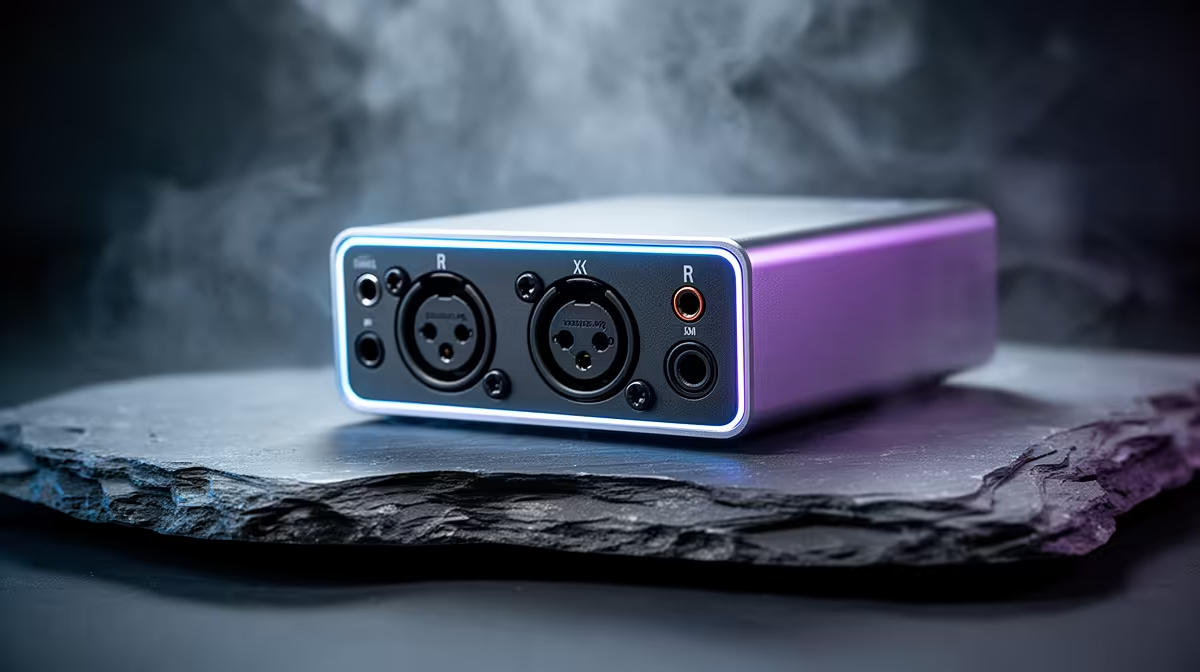
The socket on the front of a mixer looks simple until you realise the connector choice determines what kind of microphone you can use, how long your cable run can be before noise creeps in, and whether a condenser microphone will receive the power it needs to operate at all. Dual XLR combo jacks versus 3.5mm inputs is not a purely aesthetic decision. The two connection types carry audio in fundamentally different ways, and the difference is audible long before you reach professional listening levels.
Quick Answer
XLR combo jacks carry a balanced signal across three conductors, which cancels out interference picked up along the cable, and they supply 48V phantom power for condenser microphones. A 3.5mm input is unbalanced and carries no phantom power, so cable runs past about two metres start picking up audible hum.
🔌 How a Balanced Connection Differs From an Unbalanced One
A standard 3.5mm cable carries two conductors: the signal and a ground return. Any electromagnetic interference that couples onto the cable along its run arrives at the destination as additional voltage riding on top of your audio. The preamp has no way to distinguish the interference from the signal, so it amplifies both together. The result is a low-level hum or buzz that becomes more pronounced the longer the cable and the busier the electrical environment.
An XLR connector uses three conductors. The signal is split into two versions, one the mirror image of the other. Interference that couples onto the cable arrives as the same voltage on both conductors. When the receiving device combines the two versions, it inverts one and adds them together. The mirror signals add up to the original audio; the identical interference cancels to zero. The practical effect is that XLR cables can run substantially longer than 3.5mm connections without accumulating hum, which is why professional installations route audio over tens of metres without noise problems.
What the Combo Part of a Combo Jack Means
An XLR combo jack accepts both an XLR plug and a 6.35mm instrument jack in a single socket. The outer ring of the connector receives XLR microphone cables. The inner barrel accepts a 6.35mm TS or TRS jack for connecting a guitar, bass, or keyboard directly. This flexibility means a single socket on the mixer can serve a microphone during a streaming session and a guitar during a music recording without any adapter.
The 3.5mm input does not offer this dual-format acceptance. It accepts the 3.5mm plug format only, which limits it to sources built around that connector, primarily computer headsets, consumer earphones with integrated capsules, and certain portable recorder outputs.
🎙️ Phantom Power and Condenser Microphones
A large-diaphragm condenser microphone requires a direct current supply to charge the capsule and power the internal electronics. Without this voltage, the microphone produces no output regardless of gain setting. The standard supply voltage is 48 volts, referred to as phantom power because it travels down the same cable as the audio signal without interfering with it.
XLR combo jacks on a mixer with phantom power capability deliver this voltage directly to the microphone when the phantom switch is enabled. The microphone receives power through the XLR connection; the audio returns through the same cable. No additional power supply, no batteries, and no separate cable run.
A 3.5mm input carries no phantom power. It is a passive connection that passes the audio voltage from the capsule to the preamp and nothing more. Condenser microphones that connect via 3.5mm typically use a small battery housed in a module on the cable, which limits the capsule quality achievable at that price point and requires battery management during longer sessions.
This is why recording a large-diaphragm condenser microphone, the kind used in studio vocal work and serious podcasting, requires an XLR combo jack with phantom power. The 3.5mm route is simply not electrically compatible.
Pro Tip ⚡
enabling phantom power on an XLR combo jack, connect the microphone first and check that the cable is fully seated. Enabling phantom power with a partially connected XLR can send the 48V to an unintended ground path. This is unlikely to cause permanent damage on modern equipment but can introduce a loud pop into active monitors. Sequence: connect fully, then enable.
✨ Signal Level and Practical Gain Comparison
A condenser microphone powered through an XLR combo jack with 48V phantom generates a substantially hotter output than a passive 3.5mm electret capsule. A well-designed large-diaphragm condenser operating at its rated supply voltage can outproduce a 3.5mm electret by 15 to 20dB of output level at the same acoustic source level.
That level advantage has a practical consequence for gain headroom. The preamp driving the XLR condenser reaches a usable recording level at a much lower gain setting than the preamp driving a 3.5mm headset capsule. Lower gain settings amplify less of the preamp's self-noise, which keeps the noise floor of the recording quieter. The combination of the balanced input rejecting interference and the higher capsule output reducing the required gain means an XLR condenser through a combo jack consistently produces cleaner audio than a 3.5mm headset at equivalent recording levels.
🎯 When 3.5mm Is Actually the Right Choice
The 3.5mm input is not redundant. It holds a specific, legitimate role where its simplicity and physical size suit the task better than a full XLR run.
A gaming headset, a consumer lavalier, or a portable clip-on microphone with a 3.5mm plug works perfectly for short-cable applications where the cable run stays under two metres and the environment is not electrically noisy. A bedroom streamer connecting a headset microphone to a compact mixer does not need balanced XLR. The 3.5mm connection keeps the setup simple, the desk tidy, and the equipment cost lower.
For podcasting with two hosts both using studio microphones, the situation flips. Dual XLR combo jacks give each host a phantom-powered condenser on a clean balanced line. The jump in voice quality between that setup and two 3.5mm headsets is immediately audible to any listener.
Frequently Asked Questions
Why are XLR combo jacks quieter than 3.5mm on longer cable runs?
XLR uses a balanced three-conductor connection that cancels interference picked up along the cable by inverting and recombining the two signal copies. A 3.5mm cable carries only a single unbalanced signal, so interference accumulates rather than cancelling. Past roughly two metres, that difference becomes audible.
Can a 3.5mm input power a condenser microphone?
Standard 3.5mm connections carry no phantom power. Condenser microphones that use 3.5mm plugs incorporate a small battery in a cable module to supply the capsule. That limits the quality ceiling compared to a phantom-powered XLR condenser operating at the full 48V supply.
What does the combo part of a combo jack accept beyond XLR?
The inner barrel of the combo socket accepts a 6.35mm TS or TRS instrument jack, making the same socket usable for a guitar, bass, or keyboard without any adapter. A single combo jack on the mixer therefore handles both microphones and instruments.
Is 3.5mm ever the better option on a mixer?
For short cable runs under two metres and devices that natively use a 3.5mm connector, such as a gaming headset or a portable lavalier, yes. A 3.5mm connection is simpler, keeps the desk cleaner, and avoids the need for an XLR adapter. The balanced advantage only becomes meaningful as cable length increases or the environment becomes noisier.
Should I upgrade from 3.5mm to dual XLR for podcasting with two hosts?
Yes. Two XLR combo jacks let both hosts use studio-grade condenser or dynamic microphones on independent phantom-powered lines. The improvement in audio quality over two headset microphones on 3.5mm is significant and immediately noticeable to listeners.
Ready to get the cleaner, more capable input for your studio?
Browse the audio mixer range at Evetech and find the setup with dual XLR combo jacks that gives your microphones the balanced, phantom-powered connection they deserve.