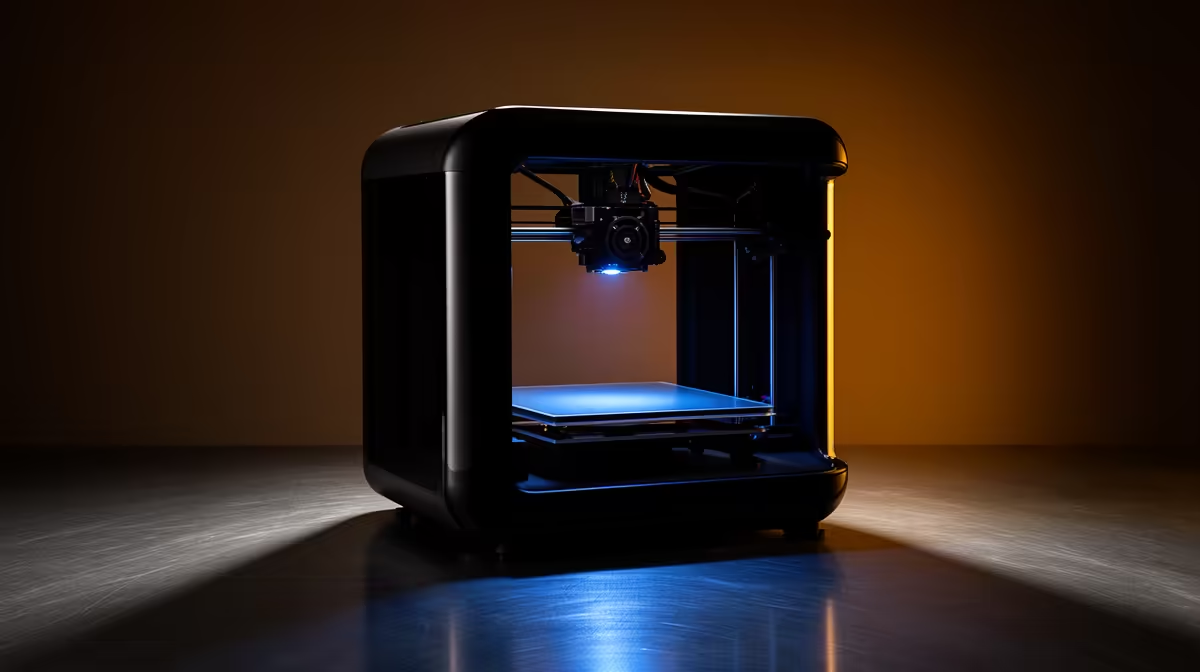
Pit two of the most popular hobbyist machines against each other and the Elegoo vs Anycubic resin printer question rarely has a single winner. Both brands sit within a few hundred Rand of each other at any given tier in South Africa, both run on standard 405 nm photopolymer resin you can buy locally, and both produce miniatures sharp enough to satisfy a tabletop painter. The real split is one of design philosophy, and once you understand it the choice almost makes itself.
Quick Answer
For batch printing a full army of 28 mm miniatures, an Elegoo Saturn class machine wins on build-plate area, often R6,000 to R9,000 for a large 12K plate. For the finest single-figure detail, an Anycubic Photon class machine wins on tighter pixel pitch. Same resin, same workflow, different priorities.
How the Two Brands Diverge
Elegoo built its reputation on the Saturn and Mars lines, leaning toward larger plates that let you fill the bed with dozens of supports in one run. That suits anyone printing squads, terrain pieces, or a Kickstarter STL bundle all at once. Anycubic, through the Photon line, has historically chased the smallest practical pixel, the idea being that a tighter XY resolution renders crisper edges on a single hero model. Neither approach is wrong. They answer different questions about what you actually print most weeks.
Plate Size and Throughput
A larger plate is not just about fitting more models. It changes your cost per figure, because the resin in the vat and the wash cycle afterward stay roughly constant whether you print one model or twenty. If you regularly produce full units for a wargame, an Elegoo Saturn class plate pays for itself in time saved. The Saturn 4 Ultra, for instance, offers a 219 x 123 x 220 mm build area with a 12K monochrome LCD at 19x24 micron XY resolution, giving it a strong detail-per-plate ratio. The concession is footprint: these machines are physically bigger and the FEP film replacements cost a little more.
Pixel Pitch and Fine Detail
Pixel pitch is the real-world size of each light pixel projected onto the resin. A smaller number means finer surface detail, which shows up on chainmail, fabric folds, and facial features. Anycubic's Photon Mono M7 Pro steps up to a 14K panel with 16.8x24.8 micron resolution, which nudges ahead of the equivalent Elegoo on single-figure sharpness. For a painter who does one display piece at a time, that edge can matter more than plate area. The gap has narrowed as Elegoo's recent 12K and 14K panels have closed much of the distance that existed a year ago.
Slicer Ecosystem and Software
The machine is only half the story. Elegoo's ecosystem leans on a ChiTuBox-branded slicer that is approachable for beginners yet hides professional-grade support controls for advanced users. The learning ramp is gentle. Anycubic ships Photon Workshop, which is functional but has a steeper set of quirks that first-time resin printers sometimes find frustrating. Both support third-party slicers like Chitubox and Lychee, which means you are never locked in. For a beginner who wants to go from STL file to finished print without a troubleshooting session, the Elegoo slicer tends to be the smoother starting point.
Resin, Consumables and Running Costs in SA
The good news for South African buyers is that both ecosystems run on the same generic 405 nm resin, so you are never locked into a single supplier. Standard grey or water-washable resin is widely stocked, and you can mix brands freely. Budget for nitrile gloves, isopropyl alcohol or a water-wash setup, a UV cure station, and spare FEP film. Our 3D printer range lists the current machines alongside the consumables that keep them running, so you can see real pricing before committing.
What You Actually Spend Per Month
Resin itself is the smallest recurring cost for most hobbyists. The bigger spend is alcohol for washing and the occasional FEP film, which wears with every print. A water-washable resin removes the alcohol cost entirely, at a small concession in cured strength, and is worth considering if you print weekly in a flat with limited ventilation.
Layer Lift Mechanism and Real-World Print Speed
Spec-sheet print speed numbers rarely tell the full story with resin printers, because the limiting factor is usually FEP peel force, not how fast the build plate moves. The Saturn 4 Ultra uses a tilt-release mechanism: the FEP film tilts away from the cured layer rather than peeling straight down. That angle significantly reduces the force needed to separate each layer from the vat, which lets the machine run faster in practice without the delamination risk that straight-pull peeling creates. The result is that real-world throughput on the Saturn 4 Ultra often narrows the gap with higher-rated machines because the mechanical peel cycle completes quicker.
The M7 Pro takes a different route to throughput by including a resin heater. Warmed resin flows and cures more consistently, particularly in cooler months when unheated resin can thicken and slow cure times. For anyone printing during a Cape Town winter where a garage workshop drops to single digits overnight, a built-in resin heater removes an unpredictable variable without a separate warming step.
AI Monitoring: Two Different Philosophies
Both printers include some form of AI failure detection, but they are tuned differently. The Saturn 4 Ultra's monitoring is calibrated to reduce false alarms: it pauses for confirmed detachment events rather than reacting to minor anomalies. The M7 Pro's system is tuned to be more sensitive, catching subtle early failures before they develop into a wasted six-hour print. If you run mostly overnight prints and want to be alerted to problems early, the M7 Pro's aggressive approach suits that use case. If you print in shorter supervised sessions and false-alarm pauses are more disruptive than useful, the Saturn 4 Ultra's approach may be the more comfortable daily experience.
Which One Suits Your Workflow
Choose Elegoo if you batch print, value a bigger plate, and want the lowest time cost per finished model. Choose Anycubic if you obsess over single-figure detail and print one showpiece at a time. If you are completely new, either entry-tier machine will outpace any filament printer on miniature detail, so buy on plate size and let your painting habits decide. The curing accessories and tools that round out a resin station appear in our hobbyist accessories that sell fastest, which is a sensible place to spec the wash-and-cure side of the setup.
Frequently Asked Questions
Is Elegoo or Anycubic better for Warhammer-style miniatures?
Both handle 28 mm and 32 mm miniatures with detail that filament cannot match. Elegoo's larger plates favour printing whole units in one run, while Anycubic's tighter pitch can edge ahead on a single hero model. For army building, plate size usually wins.
Can I use the same resin in both brands?
Yes. Both use standard 405 nm photopolymer resin, so you can buy any locally stocked bottle and mix brands freely. There is no proprietary cartridge lock-in on either platform.
How much should I budget for a first resin printer in SA?
Entry-tier machines start in the low thousands of Rand, with large 12K-plate models commonly in the R6,000 to R9,000 band. Add a wash-and-cure station, alcohol or water setup, gloves, and spare FEP film to your first order.
Does a bigger build plate reduce print quality?
No. Plate size affects how many models you can print at once, not the detail of each one. Detail is governed by pixel pitch and resin, both of which are independent of plate area.
Is water-washable resin worth it?
For anyone printing in a small or poorly ventilated space, yes. It removes the need for isopropyl alcohol washing at a small cost in final cured strength, which rarely matters for display miniatures.
Ready to choose between detail and throughput? Compare the current Saturn and Photon class machines side by side in the Evetech 3D printer range and pair your pick with the wash, cure and resin you need to start printing this weekend.