Quick Answer
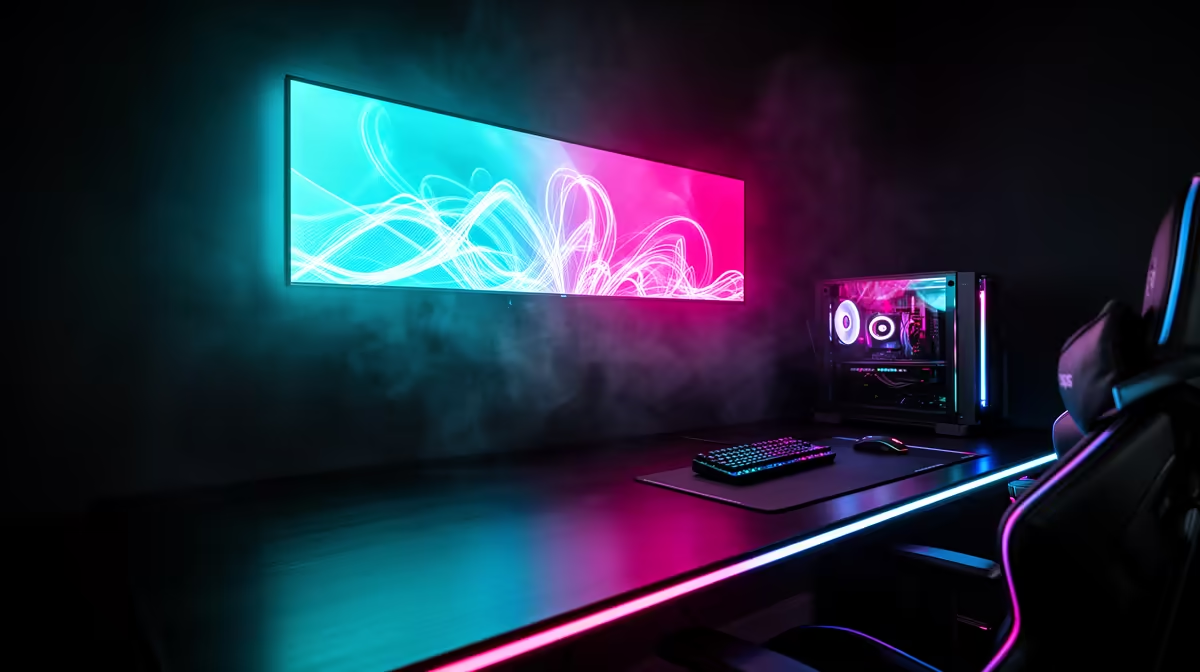
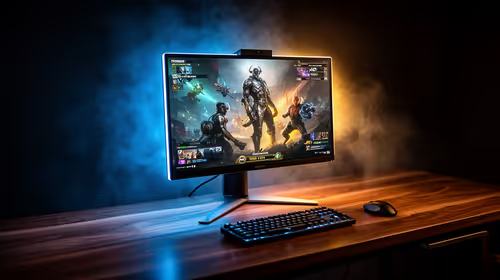
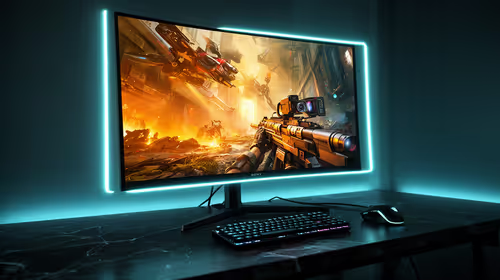
Replacing static gaming room lighting with music-sync panels dramatically enhances immersion by making the room respond to the audio environment of your game or playlist. The panels pulse, shift colour, and react to beats, turning passive background lighting into an active part of the gaming experience.
Why Static Lighting Falls Short for Immersion 🎮
Static ambient lighting, whether a fixed-colour RGB strip or a panel locked to one scene, contributes nothing dynamic to a gaming session beyond the initial aesthetic impression. After twenty minutes, the brain habituates to the colour and ignores it entirely, reducing it to background furniture. Music-sync lighting breaks this habituation by continuously varying the light output in response to audio, keeping your peripheral vision engaged with the environment rather than exclusively focused on the monitor. Research on sensory immersion in gaming consistently shows that multi-channel sensory stimulation including reactive lighting increases perceived depth and engagement of gameplay without any changes to the game itself.
How Music Sync Panels Work During Gaming 🎵
Game audio typically includes three distinct layers: ambient environmental sound (wind, crowd noise, footsteps), music or score, and effect transients (explosions, gunshots, interface sounds). A music-sync panel system running through its built-in microphone reacts to all three simultaneously, with the dominant audio layer driving the primary panel response. During a tense stealth sequence with minimal audio, the panels dim and pulse slowly. During a combat sequence with loud music and explosion effects, the panels react rapidly with bright bursts. The result is a lighting environment that mirrors the emotional intensity of the game in real time.
Setting Up Music Sync Specifically for Gaming ✨
For the most immersive game audio sync, mount the controller mic side facing your speakers rather than toward the ceiling. Use a mid-range sensitivity setting of 55 to 65 percent and select a colour palette matching your game's visual aesthetic: cool blues and greens for sci-fi and FPS titles, warm amber and red for fantasy and RPG sessions. Games with dynamic soundscapes benefit from a slow wave palette where panel colours shift gradually with audio intensity.
Immersion Calibration Tip ⚡
Spend five minutes calibrating your music-sync sensitivity before each new game title rather than leaving it on a fixed setting. Different games have vastly different audio loudness levels and dynamic ranges. An FPS at competitive volume is many times louder than an ambient exploration game at the same speaker volume setting, so the sensitivity that worked perfectly for one title may produce non-stop flashing or no reaction at all for another.
FAQ
Does music sync add any input lag to game audio?
No. Music-sync lighting operates entirely independently of your game's input pipeline. The lighting controller reads ambient room audio through its own microphone and processes it locally, with no interaction with your GPU, CPU, or network connection.
Can music sync panels react to game-specific events like kills or deaths?
Not via mic-based sync alone. Game-event-specific lighting requires software integration between the game and a compatible PC lighting platform such as Razer Synapse or Corsair iCUE. Standard music-sync panels react only to audio volume and frequency, not game state data.
Is music sync worth the upgrade from static RGB for solo gaming?
Yes, especially for narrative-heavy or atmospheric games. The reactive lighting extends the emotional register of the game's audio into your physical environment, creating a connection between the on-screen experience and your room that static lighting cannot replicate.
Ready to upgrade from static to immersive reactive lighting?
Evetech stocks music-sync hexagon and modular panel systems across a range of budgets, from basic sound-reactive kits to full smart panel installations.