


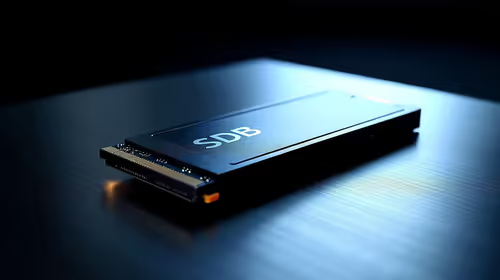
PCIe 5.0 vs PCIe 4.0 for Video editing in 4k in SA
PCIe 5.0 vs PCIe 4.0 for video editing in 4k is mainly about fit, features, compatibility, cost, and upgrade path, not one automatic winner. SA buyers should match the choice to the setup.
Read moreA studio-compatible desktop video setup needs a 1080p60 or 4K camera, a flat-response cardioid microphone, and a bi-colour key light covering 3200K to 5600K. Matching these specs lets desktop output blend with studio footage. 🎬
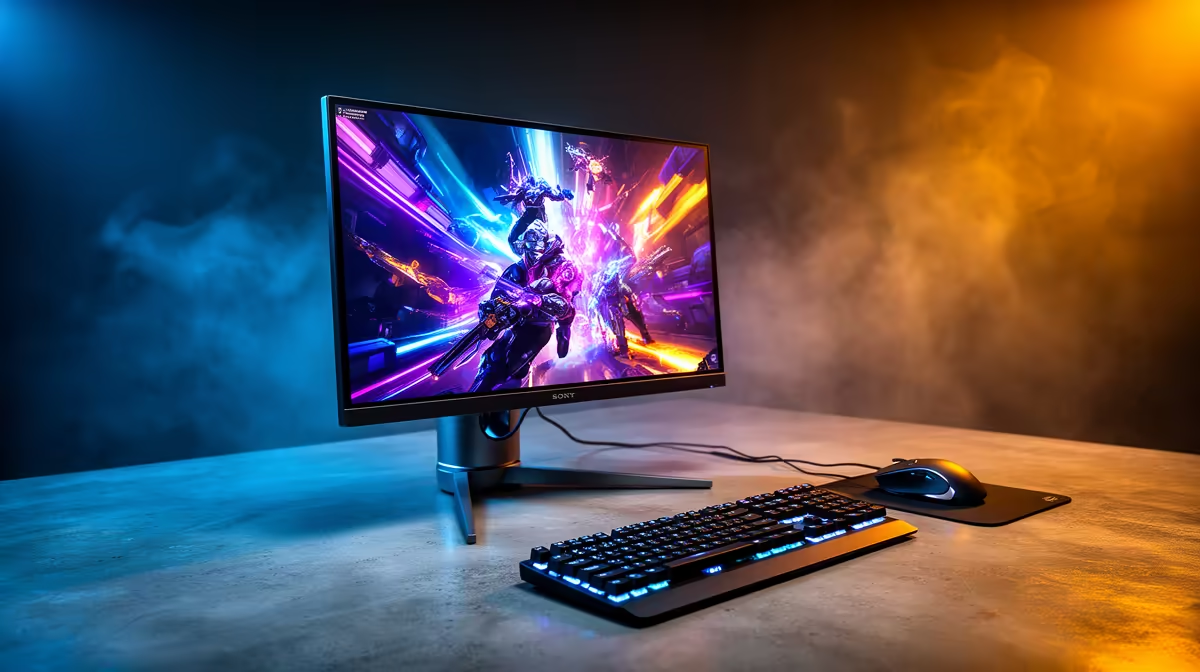
The difference between a desktop video setup that blends with studio footage and one that clearly looks like a webcam call comes down to a handful of measurable specifications. Matching those numbers precisely is what lets a remote host appear in the same cut as a camera-crew-shot interview without the edit looking mismatched. A studio-compatible desktop video setup is not about buying the most expensive gear; it is about matching the right numbers on resolution, colour temperature, audio response, and output format.
For studio-compatible desktop video, target a 1080p60 or 4K camera with clean HDMI output, a flat-response cardioid microphone with 24-bit depth, and a bi-colour LED key light adjustable from 3200K to 5600K. These three specs let desktop footage intercut with professionally shot material.
A 1080p30 camera produces footage that looks visibly different in motion compared to studio-shot material at 1080p60 or 4K. The frame rate mismatch causes a judder in intercuts that no colour grade fixes. The floor for studio compatibility is 1080p60, which delivers smooth motion that edits cleanly alongside professional cameras.
4K capture is increasingly the standard for any content that may be repurposed, cropped, or archived for future use. A 4K camera used in a 1080p timeline gives the editor room to reframe, zoom, and stabilise the desktop shot without touching the pixel ceiling. When the desktop feed and studio camera are both at 4K, the resolution gap that usually makes a webcam clip look softer disappears.
Dynamic range is a less obvious but equally important variable. Professional cameras hold detail in the highlights and shadows simultaneously, so that a well-lit face does not blow out while a slightly dark edge stays visible. A desktop camera with good dynamic range can be graded to match studio material; one with limited range clips highlights and blocks up shadows in ways that fight the colour grade.
Clean HDMI means the camera outputs its video signal without overlays, battery indicators, focus boxes, or exposure readouts burned into the picture. Many consumer cameras default to displaying their menu graphics over the HDMI feed. For a capture device or switcher, that overlay is permanent and unremovable in post. Confirm that the camera you choose can disable all on-screen display before purchasing for a studio workflow.
A flat frequency response from 20Hz to 20kHz means the microphone captures the full range of the human voice without boosting or cutting any part of it. Many consumer microphones add a presence boost around 5kHz to 10kHz that makes the voice sound cleaner on casual listening but introduces a brightness that sits oddly next to a flat studio recording. In a mixed edit, those presence peaks become obvious.
Bit depth determines the headroom available in the recording. A 16-bit recording starts to run out of dynamic range when the signal gets loud and clips with a harsh digital distortion. A 24-bit recording has substantially more headroom, which means quiet dialogue and louder speech both sit in the clean zone. Studio audio editors expect 24-bit source material because it gives them meaningful room to adjust levels, apply noise reduction, and normalise without artefacts.
Cardioid polar pattern is the standard shape for desk-based recording. It concentrates sensitivity toward the speaker while reducing what it picks up from the sides and behind. That directionality keeps room ambience out of the signal, giving the desktop recording the intimate quality of a close-miked studio voice.
Record a short voice clip with your desktop mic at 24-bit and compare it against the studio audio you need to match. Listen specifically to the consonant sharpness and low-end warmth. If the tonal balance differs significantly, adjust mic placement and gain before the shoot rather than hoping the mix will resolve it in post.
Colour temperature is where desktop setups most frequently fail to match studio material. Studio lights are typically dialled to a specific Kelvin value, often 5600K for a daylight-balanced look or 3200K for a tungsten-style warmth. If your desktop key light is fixed at a different temperature, faces will carry a different tint in the cut, visible as a sudden colour shift between the studio clip and the desktop clip.
A bi-colour LED key light that adjusts continuously from 3200K through to 5600K eliminates that problem. You dial the desktop light to exactly the Kelvin value used in the studio, and the colour grade sees consistent skin tones across both sources. The light should also have stepless dimming so that the overall brightness of the desktop shot matches the studio exposure, not just the colour tone.
Soft, diffused light matches studio quality better than hard direct output. A small softbox spreads the light evenly across the face, where a raw LED panel at close range creates a hard, small source that reads differently in an intercut. A second low-powered backlight behind the subject lifts the hair and shoulders off the background, adding the depth that studio footage carries naturally and that a single flat key light cannot replicate.
The signal path from camera to capture device determines how much of the captured quality reaches the edit. HDMI carries a signal that preserves colour depth and sharpness; USB carries a compressed feed with reduced colour sampling that limits grading precision in a mixed cut. For studio-compatible output, HDMI into a capture device is the standard, with the capture device converting to a high-bitrate codec that holds through repeated exports.
Audio interface quality follows the same principle. An XLR microphone through a dedicated interface provides cleaner analogue-to-digital conversion, a lower noise floor, and more precise gain control than the USB audio path. For dialogue that needs to sit beside studio-recorded tracks, the interface approach gives the mix engineer better material to work with.
1080p60 is the practical floor. It delivers smooth motion at a resolution that matches common studio output, and most editing software handles the intercut without visible quality differences. 4K is preferable for anything that may be cropped or repurposed, since it gives the editor reframing room without reducing resolution in the final export.
A mic with a flat response captures the voice accurately without colouring it. Consumer mics that boost the upper frequencies sound subjectively bright and present in isolation but clash with a flat studio recording in a mixed edit. Matching the tonal signature of studio audio is easier when the desktop mic starts from a neutral baseline rather than a pre-shaped curve.
Very. Colour temperature mismatches between the desktop light and the studio source produce a visible tint difference on skin tones that takes significant colour grade work to correct and often cannot be fully fixed. Matching the Kelvin value at the shoot stage means the editor sees consistent colours from both sources from the first frame.
Yes. Any camera overlay burned into the HDMI signal appears in every frame of the recorded footage. Even a single pixel of a battery icon in the corner is permanent. For content that will be broadcast, distributed, or edited professionally, clean HDMI output with all display overlays disabled is a baseline requirement.
An XLR microphone through a dedicated audio interface offers better analogue-to-digital conversion and a lower noise floor, which matters when the audio needs to match studio-recorded tracks. A high-quality 24-bit USB mic is a capable second option for setups where simplicity is the priority, provided the frequency response and noise specifications align with what the studio material requires.
Ready to build a desktop setup that holds its own beside studio footage? Browse the professional webcams, condenser microphones, and bi-colour LED lighting range at Evetech to match each specification your production demands.
1080p60 is the practical floor. It delivers smooth motion at a resolution that matches common studio output, and most editing software handles the intercut without visible quality differences. 4K is preferable for anything that may be cropped or repurposed, since it gives the editor reframing room without reducing resolution in the final export.
A mic with a flat response captures the voice accurately without colouring it. Consumer mics that boost the upper frequencies sound subjectively bright and present in isolation but clash with a flat studio recording in a mixed edit. Matching the tonal signature of studio audio is easier when the desktop mic starts from a neutral baseline rather than a pre-shaped curve.
Very. Colour temperature mismatches between the desktop light and the studio source produce a visible tint difference on skin tones that takes significant colour grade work to correct and often cannot be fully fixed. Matching the Kelvin value at the shoot stage means the editor sees consistent colours from both sources from the first frame.
Yes. Any camera overlay burned into the HDMI signal appears in every frame of the recorded footage. Even a single pixel of a battery icon in the corner is permanent. For content that will be broadcast, distributed, or edited professionally, clean HDMI output with all display overlays disabled is a baseline requirement.
An XLR microphone through a dedicated audio interface offers better analogue-to-digital conversion and a lower noise floor, which matters when the audio needs to match studio-recorded tracks. A high-quality 24-bit USB mic is a capable second option for setups where simplicity is the priority, provided the frequency response and noise specifications align with what the studio material requires.
PCIe 5.0 vs PCIe 4.0 for video editing in 4k is mainly about fit, features, compatibility, cost, and upgrade path, not one automatic winner. SA buyers should match the choice to the setup.
Read more
Wi-Fi 7 vs Wi-Fi 6e for competitive esports comes down to router support, latency goals, device compatibility, and coverage. SA buyers should match the choice to the real network setup.
Read more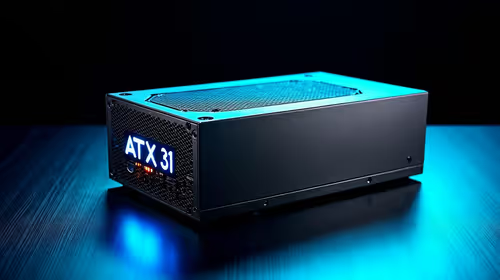
ATX 3.1 vs ATX 3.0 for mMO and live-service games buyers - what changes is mostly about compatibility, budget, upgrade path, and setup fit. SA buyers should check device support and real needs before expecting a clear win from either option.
Read more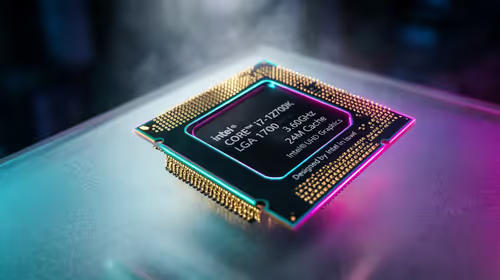
LGA 1851 vs LGA 1700 can affect Twitch and YouTube streaming when gaming and encoding share CPU resources. For SA creators, the real-world difference depends on encoder choice, memory support, motherboard cost, thermals, and upgrade plans.
Read more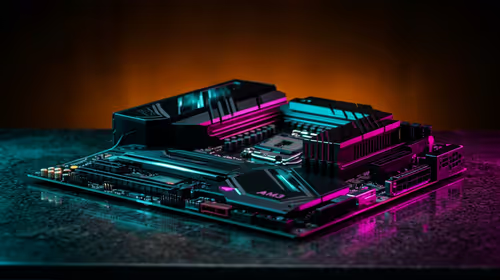
X870E vs X670E for aaa single-player gaming is mainly about fit, features, compatibility, cost, and upgrade path, not one automatic winner. SA buyers should match the choice to the setup.
Read more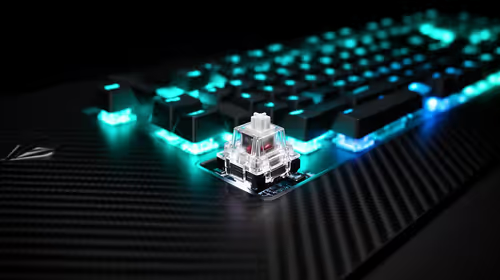
Hall Effect switches vs Mechanical switches for mMO and live-service games is mostly about compatibility, budget, upgrade path, and setup fit. SA buyers should check device support and real needs before expecting a clear win from either option.
Read more
A fake 113GB GTA VI ISO reportedly used empty padding around a small malware payload. SA gamers should delete unofficial builds, keep Windows security active and wait for official channels.

Wi-Fi 6E vs Wi-Fi 6 matters for 4K video editing when files move across a network. The real-world difference between Wi-Fi 6E and Wi-Fi 6 for video editing in 4K depends on NAS access, cloud uploads, router range, and SA creator workflows.

The difference between PCIe 5.0 and PCIe 4.0 for SA gamers is mostly bandwidth headroom. Compare GPU slot needs, NVMe speed, motherboard support, and upgrade timing before paying extra for a newer platform.

Gaming PC stuck pixel checks in South Africa should confirm the monitor fault first. Use colour tests, screenshot comparison, cable swaps, display menu checks, and clear photos before deciding on support.

Shokz OpenFit Air 2 earbuds weigh 7.2g each and use a redesigned dual-driver open-ear layout. SA buyers should choose them for comfort and awareness, not maximum isolation.

AMD's current driver now lists a Radeon RX 9050 4GB, while product coverage details a narrowed memory system. SA buyers should weigh the low VRAM ceiling against current local Radeon options.

Samsung Display has demonstrated a 16-inch 2.5K OLED laptop panel running at 300Hz. SA buyers should wait for a named notebook, full panel specifications and a local price before planning an upgrade.

Microsoft says some Windows 11 game crashes after recent updates are linked to RGB-related drivers. Affected SA gamers should confirm the update and driver before using the published registry workaround.

RTX 5090 on a 650W PSU is a tight pairing with very limited headroom. For SA gaming PCs, focus on total system draw, PSU quality, connector support, CPU choice, and avoid OC plans unless the full build is carefully power-limited.
PCIe 5.0 vs PCIe 4.0 for video editing in 4k is mainly about fit, features, compatibility, cost, and upgrade path, not one automatic winner. SA buyers should match the choice to the setup.
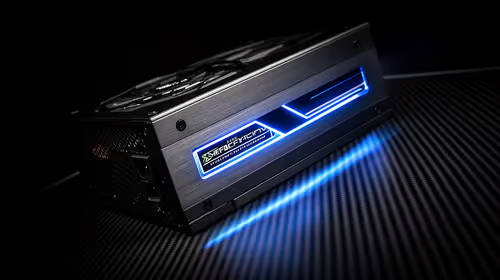
850W PSU safety for RTX 5090 is plausible with a quality unit and balanced parts. In SA, confirm connector support, CPU power draw, case airflow, PSU age, and spare capacity before building around 850W.
Wi-Fi 7 vs Wi-Fi 6e for competitive esports comes down to router support, latency goals, device compatibility, and coverage. SA buyers should match the choice to the real network setup.