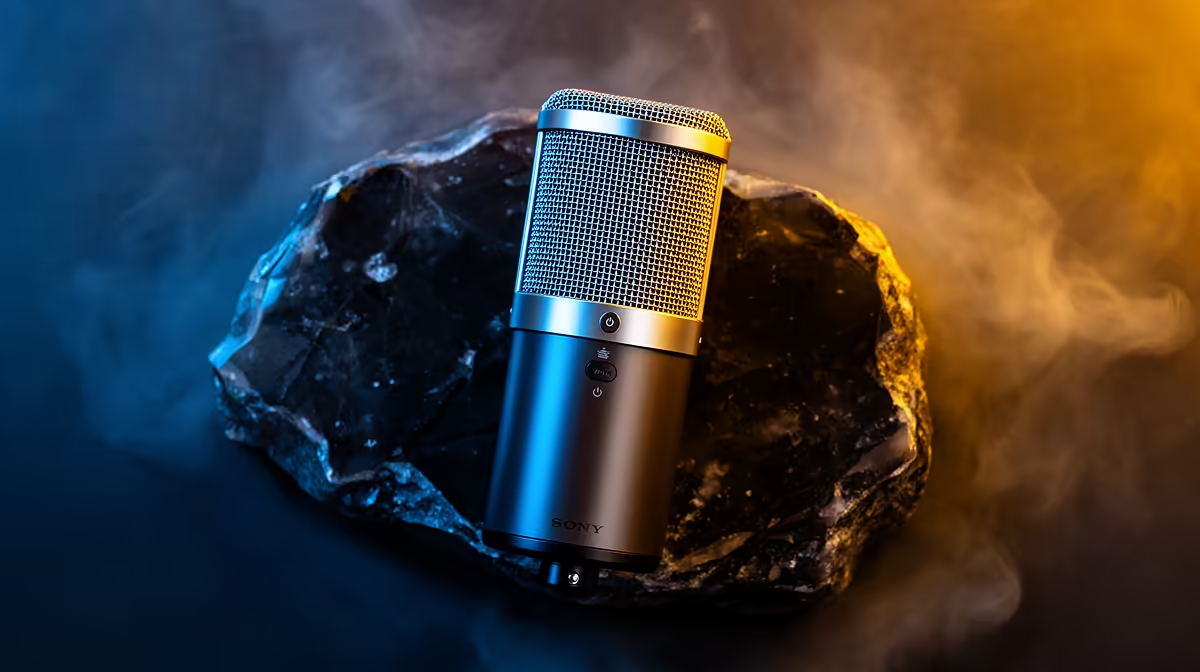
Pull up any USB microphone listing and the feature list reads like a spec competition: 192kHz sampling, multi-pattern switching, RGB with eight modes, companion software suites. Most of those extras exist to justify a price tier, not because they improve the recording. The essential USB microphone features for content creators are a much shorter list, and knowing which three carry real weight helps you spend money on the right hardware instead of the most impressive-looking one.
Quick Answer
The three features that genuinely matter are a tap-mute button for instant broadcast privacy, a headphone jack for zero-latency monitoring, and a physical gain dial for live level control. Get those right and a cardioid pattern does the rest. RGB and multiple polar patterns are finishing touches, not foundations.
🎯 The Tap-Mute Button
No single feature on a USB microphone has a faster return on investment than a hardware tap-mute. It cuts the signal at the capsule, before it travels down the USB cable to your software. That sequence matters more than it sounds.
Software hotkeys for muting depend on the application being active, responsive and correctly configured. When OBS is stuttering, when Discord froze for a moment, when you were in the middle of clicking something else on screen, a software hotkey may or may not fire. A hardware mute fires every time because it does not touch software at all. The signal stops at the mic.
The practical value is most obvious in streaming. A private aside to someone in the room, an unexpected phone call, a cough or a sneeze that would derail the mood of a video if it landed on the live audio, all of these become invisible with one tap. The LED ring or indicator light that confirms muted state is equally important. You should never have to wonder whether the mic is live. A red glow means silent; check the spec to confirm what colour scheme the specific model uses, as it varies between brands.
For content creators who record commentary alongside gameplay footage, the mute button also saves editing time. Instead of cutting around pauses and interruptions in post, you mute in real time and record a clean file that needs less work.
🔆 Zero-Latency Monitoring via the Headphone Jack
The headphone jack on a USB microphone sends your voice signal directly from the capsule to the output before any USB processing delay. The result is that you hear yourself in real time, exactly as the mic is capturing you, with no perceptible lag.
Without monitoring, you find out how the recording sounded after you stop. With it, you find out while you are still speaking. The difference in practical terms is catching a gain level that is too hot before it clips the audio, hearing the room creep into the recording when you shift position, noticing that the mic has shifted angle and the low end has thinned, and adjusting immediately rather than in the edit.
For South African creators recording in residential environments where ambient noise fluctuates, monitoring is particularly valuable. A neighbour's dog, a car alarm, an aircon unit that cycles on suddenly, these land differently in a live monitor feed than they do in a waveform review an hour later. Monitoring makes you aware in the moment. Editing makes you aware too late.
The monitoring output also doubles as a latency-free way to use the mic during a video call without the software adding a processing loop delay. Anyone who has used a laptop's built-in mic on a long call and experienced the strange double-voice sensation of hearing yourself delayed understands why direct monitoring removes that distraction entirely.
🔧 Physical Gain Control and the Cardioid Pattern
A physical gain dial on the mic body is the feature most creators underestimate until they have recorded without one. Adjusting input level through Windows audio settings, through your DAW's interface, through OBS's source properties, all of these routes take time and focus away from the content. A dial on the mic takes two seconds with a thumb.
More importantly, a physical dial lets you make micro-adjustments by feel. If you move slightly closer to the mic while recording a quiet passage, a gentle turn reduces gain without interrupting the take. That kind of live compensation is not possible when gain lives in a software menu.
The cardioid polar pattern underpins all of this. A cardioid picks up sound from directly in front of the capsule in a heart-shaped zone and rejects approximately 20 dB of sound arriving from behind. In a home studio or bedroom recording space, that rejection is the closest thing to free acoustic treatment you can get. It means the wall behind the mic, the desk surface bouncing reflections upward, and the general ambient hum of a residential space all sit around 20 dB quieter in the recording than they would in an omnidirectional capture.
Pro Tip ⚡
Set your physical gain dial at around 40 to 50 percent, then move your mouth closer to the mic to increase apparent volume rather than turning the gain higher. Closer placement boosts your direct voice signal without raising the noise floor. This technique, proximity over gain, keeps recordings clean and avoids the hiss that creeps in at high gain settings.
✨ Where RGB and Multi-Pattern Fit In
RGB illumination on a USB microphone is a legitimate feature with a clear use case: it looks good on camera and adds to the aesthetic of a clean desk setup. That is its entire job, and it does that job well. The concern is only when RGB is used as a tie-breaker between two mics instead of the capsule specification and the functional feature set.
Eight-mode RGB or a matching Chroma ecosystem sync is pleasant to have. It should be chosen after confirming that the SNR is high enough, the mute works hardware-side, the headphone output is zero-latency and the gain is physical. If two mics meet all four of those criteria and one has better lighting, choose the better lighting. If one has weaker specs but more RGB, choose the better specs.
Multi-pattern mics that add omnidirectional and figure-eight modes alongside cardioid follow the same logic. A solo content creator recording individual commentary, gameplay audio, or podcast episodes will use cardioid for approximately 95 percent of all recording sessions. The remaining patterns solve specific problems that most creators encounter rarely if ever. A multi-pattern mic is worth considering only if your format already calls for it, a two-person interview setup where figure-eight genuinely helps, for example. Otherwise the extra cost sits unused.
Frequently Asked Questions
What is the most useful USB microphone feature for a streaming setup?
A hardware tap-mute button. It silences the mic at the source, before the signal reaches any software, so an unexpected interruption never lands on the live audio. A software hotkey depends on the app being active and responsive. Hardware mute acts instantly regardless of what is happening on screen, making it the single feature with the most direct impact on broadcast reliability.
How critical is a headphone jack for content creators specifically?
Very critical, and for a reason beyond convenience. The headphone output on a USB mic provides zero-latency monitoring, meaning you hear exactly what the mic is capturing in real time with no processing delay. This catches gain problems, positioning errors and unexpected ambient noise while you are still recording, not after the session is over. For creators who record multiple takes or long sessions, monitoring is a consistent time-saver and quality safeguard.
Does a physical gain dial really make a difference over software control?
Yes, in practice. Adjusting gain through a software interface requires switching focus from the content to a menu and back. A physical dial takes a thumb movement in under two seconds without looking away. The more useful advantage is making real-time micro-adjustments mid-recording, slightly louder, slightly quieter, as you naturally move closer or further from the capsule during a long take.
Is customisable RGB worth paying extra for on a USB microphone?
It depends entirely on the trade-off. RGB adds a clean aesthetic to a desk setup and can match a lighting theme visible on camera. That has genuine value for creators whose desk is in the shot. The question is whether the RGB is sitting on a capable capsule or subsidising a weaker one. If the noise floor, mute feature and monitoring are all solid and the mic has RGB at a similar price to a similar-spec competitor, the RGB is a reasonable tiebreaker. It should never be the primary reason for choosing a microphone.
Which polar pattern should a solo content creator use?
Cardioid, almost without exception. A cardioid pattern captures sound in a focused front-facing zone and rejects roughly 20 dB of ambient noise from behind the capsule. For a single-host stream, podcast, voiceover or gaming commentary, this pattern delivers cleaner recordings in an untreated room than any other option. Multi-pattern mics are worth paying extra for only when the format specifically requires omnidirectional or figure-eight capture, which is rare in solo content creation.
Ready to build a USB microphone setup that actually performs?
Browse the USB condenser microphone range at Evetech and find the features that matter for your content, not just the ones that photograph well.