Quick Answer
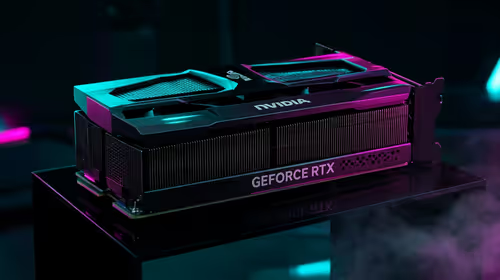
A 4K 144Hz monitor in SA needs a real GPU behind it: only an upper-tier card sustains high frame rates at 4K, so pair the panel with at least an RTX 4070 Super class GPU. For the panel itself, prioritise a fast IPS with HDMI 2.1 or DisplayPort 1.4, true 144Hz and adaptive sync.
What To Look For In A 4K 144Hz Panel
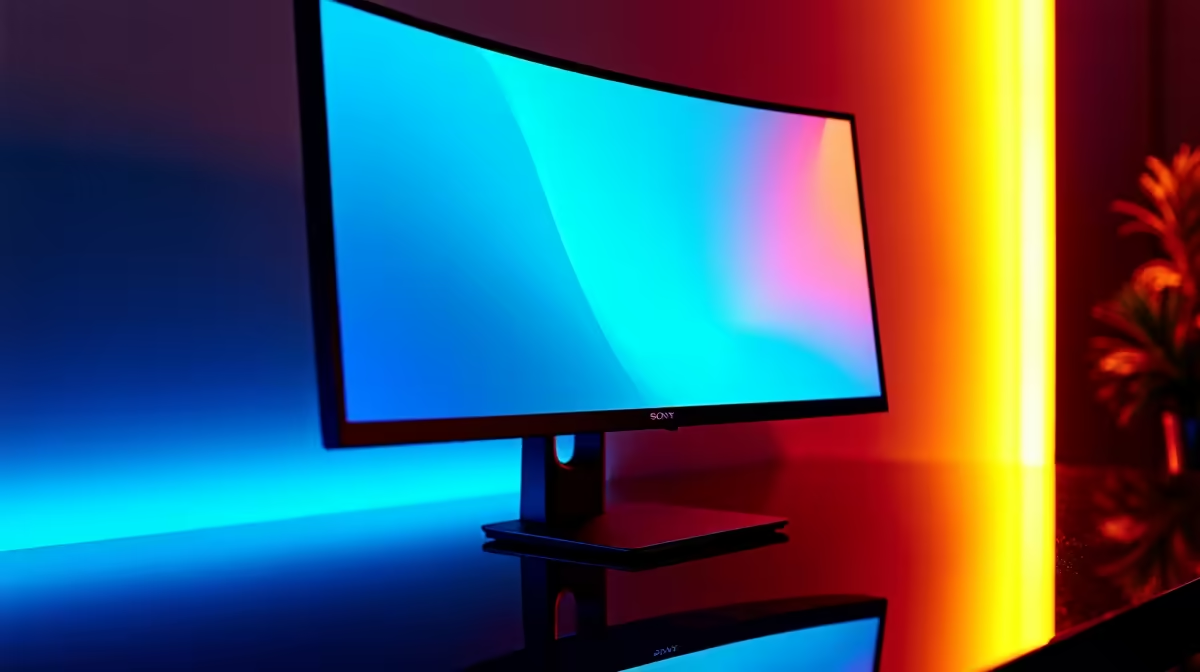
The key specs are panel type, response time, connectivity and HDR. A fast IPS panel gives strong colour with low response times suited to gaming; some use newer OLED or Mini-LED for better contrast at higher cost. You need HDMI 2.1 or DisplayPort 1.4 with DSC to carry 4K at 144Hz, so confirm your GPU has a matching output. Adaptive sync (FreeSync or G-Sync) keeps motion tear-free.
Size usually runs 27-32 inches at 4K; 27 inches gives a very sharp image, while 32 inches suits a more immersive setup at a normal viewing distance.
Driving It Properly
4K 144Hz is demanding, so the GPU is the gating factor. An upper-tier card hits high frame rates in many titles, and quality upscaling helps reach 144 fps in heavier games. For single-player visuals you might target 4K 60-100 fps; for competitive play at 4K you need serious GPU power. Make sure your cable supports the full bandwidth, since a weak cable can silently cap refresh or colour depth.
FAQ
What GPU do I need for a 4K 144Hz monitor?
At least an RTX 4070 Super class card, ideally higher for competitive frame rates. 4K 144Hz is demanding, so a weaker GPU cannot sustain the frame rates the panel can display.
What cable carries 4K at 144Hz?
HDMI 2.1 or DisplayPort 1.4 with DSC. Confirm both your GPU and the monitor have a matching port, and use a certified cable, since a weak cable can silently cap refresh or colour.
Is 27 or 32 inches better at 4K?
27 inches gives a very sharp, dense image; 32 inches is more immersive at a normal desk distance. Both look excellent at 4K, so choose based on desk space and preference.
a 4K 144Hz panel, confirm your GPU can drive it and that you have an HDMI 2.1 or DisplayPort 1.4 cable. A weak cable silently caps refresh or colour depth.