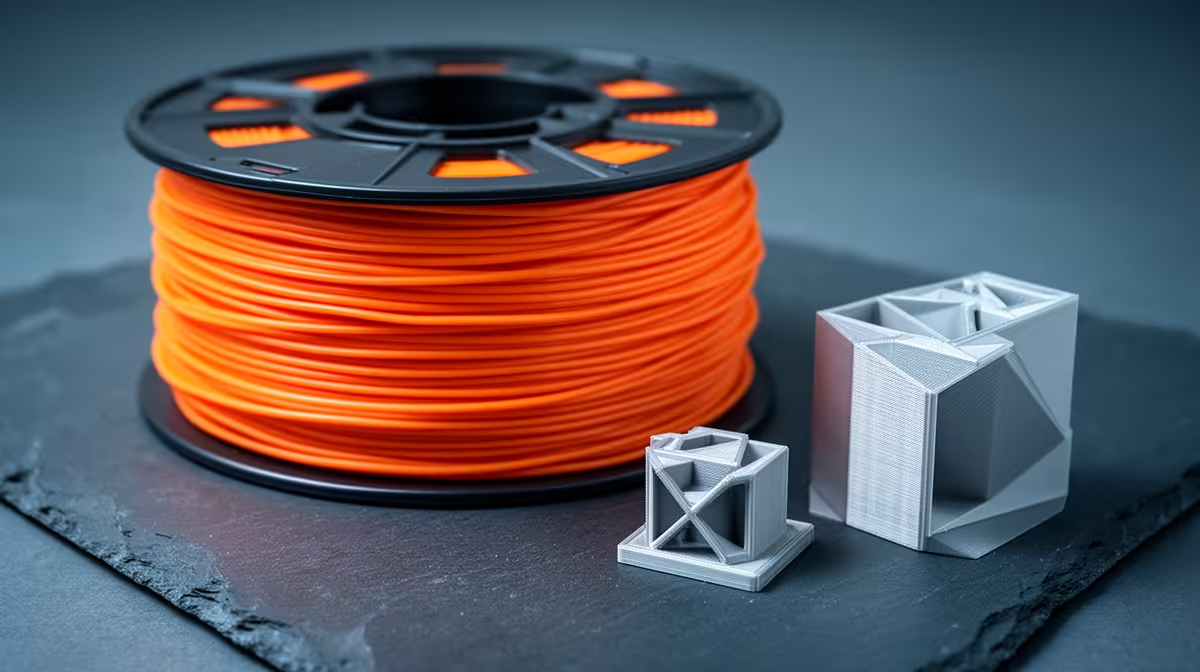
Feed a 1kg spool of PLA into an FDM 3D printer and you are holding raw material for dozens of finished parts. A palm-sized bracket or figurine usually eats 20 to 40 grams, which means a single R250 spool can produce thirty or more of them. Once you fold in the trickle of electricity a printer draws, the real cost of a print drops to a few rand each, not the small fortune many first-time buyers expect.
Quick Answer
A 1kg PLA spool costs roughly R200 to R350 in South Africa and holds about 1,000 grams of usable plastic. A typical hand-sized model uses 25 to 35 grams, so it costs around R6 to R12 in filament plus a rand or two of electricity. Cost per print scales directly with the grams a model consumes.
How Grams Translate Into Rand
Every slicer (the software that prepares a model for printing) reports an estimated filament weight before you start. That number is the single figure that decides your cost. Divide the spool price by 1,000 to get a per-gram rate, then multiply by the weight the slicer predicts.
At R250 a spool, you are paying R0.25 per gram. A 30g phone stand costs R7.50 in plastic. A 120g desk organiser costs R30. A large 400g helmet shell costs R100. The maths never gets more complicated than that, which is why FDM stays so cheap for small and medium parts.
If you want to browse machines and see what they can produce, the lineup of desktop FDM printers stocked at Evetech gives a sense of build volumes and the part sizes each one handles.
What a Single Spool Really Buys
Picture a spool dedicated to common household prints. At an average of 30 grams per item, 1,000 grams yields about 33 finished objects. That could be a full set of cable clips, a few phone stands, a tablet dock, some drawer dividers and a handful of toys, all from one purchase under R350.
Small Functional Parts
Brackets, hooks, clips and adapters typically land between 10 and 40 grams. These are where FDM shines for value. A R250 spool can churn out fifty small clips, putting each one well under R5.
Display Models and Figurines
A detailed 100mm figurine prints at around 40 to 70 grams once you account for supports. Even at the heavier end, that is roughly R17 in plastic. Compare that to buying a finished collectible and the savings are obvious over a few prints.
Large or Hollow Prints
Big parts like a helmet or a vase look expensive until you remember most of them are hollow. Slicers default to a low infill (the internal lattice that fills solid-looking shapes) of 15 to 20 percent, so a print that looks like a kilogram of plastic often uses only 300 to 400 grams.
The Electricity Most People Forget to Count
An FDM printer draws power mainly to heat the nozzle and the print bed. A common desktop unit pulls somewhere between 50 and 150 watts during steady printing, spiking higher only while heating up. Over a six-hour print at an average of 120 watts, that is about 0.72 kilowatt-hours.
At a residential tariff in the R2.50 to R4.50 per kilowatt-hour range across most South African municipalities, six hours of printing costs roughly R2 to R3. Even a marathon overnight job rarely pushes past R10 in electricity. The filament, not the power bill, dominates your cost per print.
Where the Hidden Costs Actually Hide
Filament and electricity are the obvious line items, but two smaller factors shift the real number.
Failed prints waste plastic. A print that detaches halfway through still consumed grams you paid for. Good bed adhesion and a level first layer keep failures rare, which protects your effective cost per part.
Supports and rafts add grams that never appear in the final model. A figurine with steep overhangs might burn 15 grams on support structures you snap off and bin. Orienting a model to minimise supports is the easiest way to keep cost per print down.
If you want to keep a printer running smoothly between projects, the accessories most often bought alongside makers' gear cover the small extras that prevent wasted spools.
PLA Against the Pricier Filaments
PLA is the budget benchmark, but it is not the only material, and the choice changes your cost per print. PLA prints easily, costs the least and suits decorative and light functional parts, which is why it dominates most spools sold.
PETG sits a step up in price and handles heat and outdoor use better, making it worth the premium for parts that live in a hot car or outside. ABS is tougher again but fussier to print and usually pricier still. TPU, the flexible filament used for phone cases and grips, also carries a higher per-kilogram cost.
For pure cost per print, PLA wins comfortably. The smart approach is to keep PLA as your everyday spool and only reach for a costlier material when a specific part genuinely needs the extra durability. Buying a premium filament for a job PLA could handle is the quickest way to inflate your cost per print without any real benefit.
Is FDM Worth It for SA Makers?
For anyone printing functional parts, prototypes, replacements and small gifts, the value is hard to argue with. The break-even point against buying finished plastic items arrives fast. A single spool replacing thirty small purchases pays for the filament many times over, and the printer itself earns its keep within a few months of regular use.
The catch is time, not money. FDM is cheap per gram but slow per part, so it rewards patience and planning over instant gratification. If you batch prints overnight and design with low infill where strength allows, your cost per print stays in the few-rand territory that makes the technology so appealing.
Frequently Asked Questions
How many prints can I get from one 1kg spool?
It depends entirely on part weight. At an average of 30 grams per model, a 1kg spool yields about 33 items. Smaller 15g parts can stretch a spool past 60 prints.
What does PLA filament cost in South Africa?
A standard 1kg PLA spool sits in the R200 to R350 band at local suppliers, with premium or specialty blends costing more. PLA is the cheapest and easiest common filament to print.
Does the printer use a lot of electricity?
No. A typical desktop FDM printer averages 50 to 150 watts while running. A six-hour print costs roughly R2 to R3 in power at common SA residential tariffs.
Why does my print cost more than the filament weight suggests?
Supports, rafts and failed attempts all consume plastic that never ends up in the finished part. Reducing supports through smart orientation and ensuring a solid first layer keeps wasted grams low.
Does infill change the cost much?
Yes, significantly. Infill is the internal lattice inside solid-looking shapes. Dropping from 50 percent to 15 percent infill on a large model can halve the grams used, directly cutting your cost per print.
Ready to start turning spools into finished parts for a few rand each? Explore the range of desktop FDM 3D printers at Evetech and find a machine matched to the part sizes you want to make.