Quick Answer
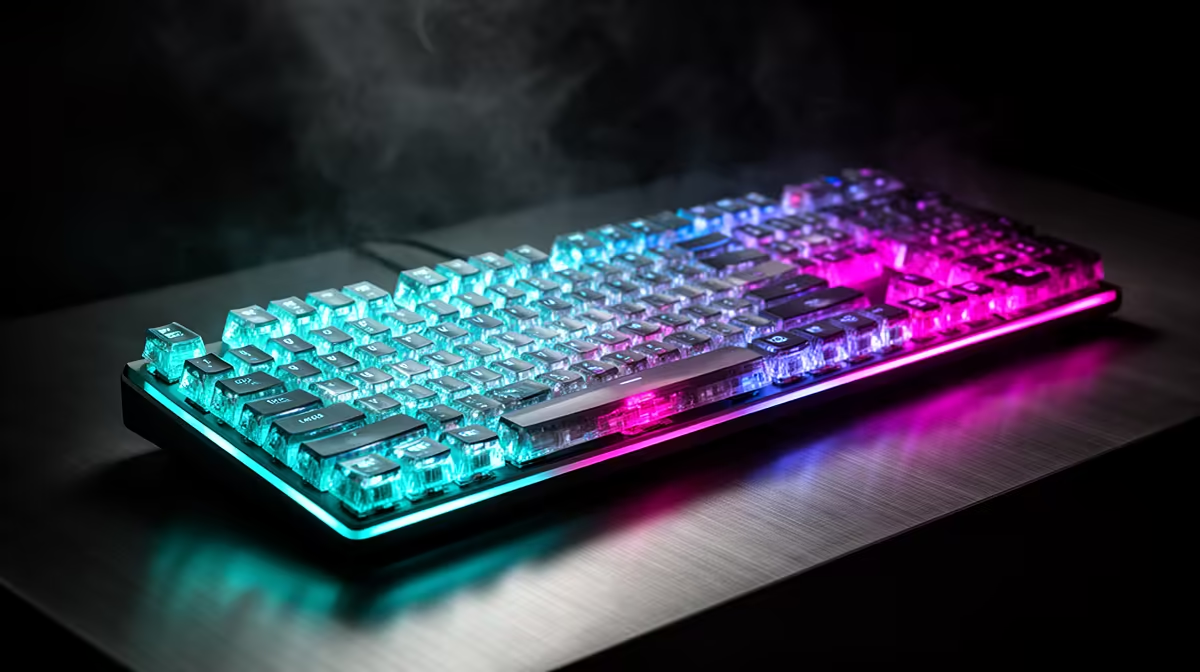
For low-latency play a wired mechanical keyboard in the R900-R2,000 band is the no-regret pick. A Keychron or Redragon mechanical (~R999) with linear switches and 1,000Hz polling feels instant, where a membrane board mushes. Hot-swap switches let you tune feel later without buying a new board.
What actually lowers latency for engineering simulations
A wired connection at a 1,000Hz polling rate (1ms) is the real win — most mechanical boards hit this. Switch type changes feel, not speed: linear reds suit fast gaming, tactile browns suit typing. N-key rollover stops dropped inputs in busy moments. Spend here before chasing exotic analogue switches you will rarely use.
Switches, layout and build for daily use
Hot-swappable sockets let you change switches without soldering, so one board lasts through taste changes. A tenkeyless (TKL) layout frees mouse space for low-sens players; a full-size board suits number entry for coursework. Doubleshot PBT keycaps resist the shine that cheap ABS caps develop within months.
Wired vs wireless and SA value notes
Wired stays the safe pick for competitive play — no battery, no dropout. A good wireless board (~R1,800) with a 2.4GHz dongle is nearly as fast and tidies the desk if you value that. For most SA buyers a R999 wired hot-swap mechanical is the value champ. Stick to brands with proper South African distribution so RMA stays painless if something fails inside warranty.
FAQ
Are mechanical keyboards really faster?
The latency gain is small but real — the bigger benefit is consistent, registered inputs and N-key rollover. Wired and 1,000Hz polling matter more than the switch brand for responsiveness.
Which switches are best for gaming?
Linear switches (reds) actuate smoothly and suit fast presses; tactile browns balance gaming and typing. Try both if you can — hot-swap boards let you change later without buying a new keyboard.
Is a wireless gaming keyboard worth it?
A 2.4GHz wireless board is fast enough for most players and tidies the desk, but wired removes any battery or dropout risk for competitive play. For pure value, wired wins.
Pick a wired mechanical at 1,000Hz polling with hot-swap sockets, then choose linear or tactile switches by feel — you can swap switches later without buying a new board.