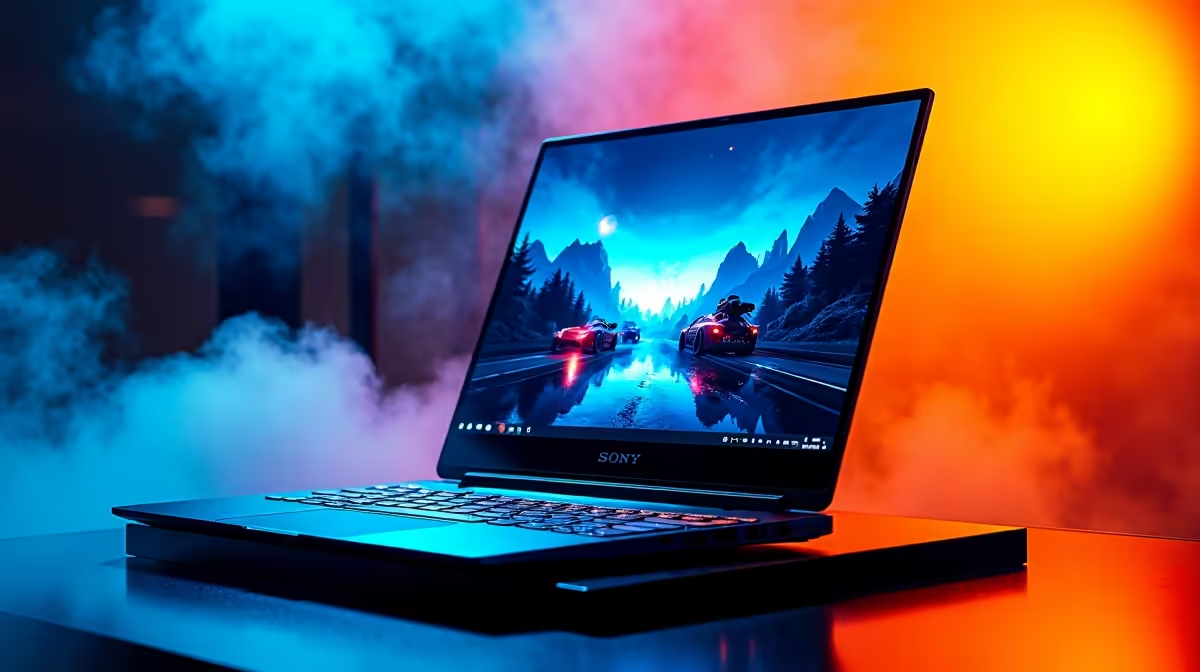
Howzit, ZA gamers! You've obsessed over the GPU and CPU, but what about the one part you actually look at? Your laptop's screen is the final gatekeeper for all that glorious power. A slow, dull display can cripple a beastly rig, turning your R30k investment into a blurry mess. This guide to gaming laptop display tech will ensure every pixel and every frame hits your eyes exactly as intended. 🚀
Why Your Gaming Laptop's Display Matters
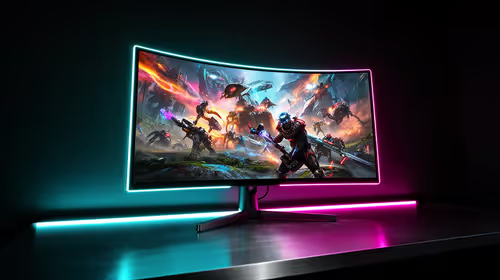
Think of it this way: your powerful new RTX graphics card is the engine, but the display is the windscreen. If the windscreen is blurry, slow, or dull, you can't actually see or react to the road ahead. The same applies to gaming. All the frames-per-second (FPS) your GPU generates are meaningless if your screen can't physically draw them fast enough.
Understanding the core principles of gaming laptop display tech is not just for hardcore enthusiasts; it's essential for anyone in South Africa wanting to get the best value and performance from their investment.
Key Display Tech Specs for ZA Gamers
Let's break down the jargon into what actually impacts your gameplay. These are the big three you need to watch.
Refresh Rate (Hz): Smoothness is King 🎯
Refresh rate, measured in Hertz (Hz), is how many times your screen updates per second. A standard laptop is 60Hz, but for gaming, that's the absolute minimum.
- 120Hz/144Hz: This is the sweet spot for most gamers. The jump from 60Hz is massive, providing a fluid, responsive feel in fast-paced games like Apex Legends or Warzone.
- 240Hz+: Primarily for competitive esports players where every millisecond counts. The smoother motion can give you a tangible edge in tracking targets.
Higher refresh rates demand powerful hardware to push enough frames, something you'll find in top-tier machines like the MSI Raider series, which are built for pure performance.
Response Time (ms): Ghosting's Worst Enemy
Response time, measured in milliseconds (ms), dictates how quickly a pixel can change from one colour to another. A slow response time results in "ghosting" or motion blur, where you see a faint trail behind fast-moving objects. For gaming, you want this number as low as possible—ideally 3ms or less. A low response time ensures your image stays crisp and clear, even in the most chaotic firefights. You can find excellent response times in many powerful MSI Vector gaming laptops that balance speed with great value.
Colour Accuracy Check 🎨
Beyond gaming, check a display's sRGB or DCI-P3 colour gamut coverage. A high percentage (95%+) means vibrant, accurate colours, which is a massive plus if you also do content creation, photo editing, or just love watching movies. It ensures what you see is true to the source.
Resolution & Panel Type: Clarity and Colour
This is where personal preference and budget play a huge role.
Putting It All Together: Finding Your Perfect Screen
So, which gaming laptop display tech is right for you?
If you're a competitive gamer playing esports titles, prioritise a high refresh rate (144Hz+) and a low response time on a 1080p screen. If you're more into stunning single-player adventures and creative work, a QHD IPS or OLED panel will deliver the visual punch you're looking for. By understanding these trade-offs, you can make a smarter choice when browsing our full range of MSI gaming laptops to find the one that perfectly matches your needs.
Ready to See the Difference?
Choosing the right gaming laptop display tech is crucial for unlocking your machine's true potential. Don't let a subpar screen hold you back. Explore our massive range of laptop specials and find the perfect visual powerhouse for your needs.