Quick Answer
Gold-plated connectors provide better signal longevity. Gold does not oxidise, maintains contact resistance below 10 milliohms indefinitely, and withstands thousands of insertion cycles without degradation. Nickel-plated connectors oxidise slowly and develop higher contact resistance over time, particularly in humid or coastal South African environments.
The Chemistry Behind the Difference ⚗️
Gold sits at the noble end of the electrochemical series, meaning it does not react with oxygen or moisture under normal conditions. A 0.3 to 1.0 micron gold layer over a nickel undercoat is all that is needed to protect the copper substrate from corrosion for the cable's practical lifespan. Nickel is more reactive: it forms a thin oxide layer within months of exposure to air, and in humid environments that layer thickens faster. This oxide, while invisible to the naked eye, increases contact resistance and forces digital signals to work harder to maintain integrity. HDMI and DisplayPort protocols manage some of this through error correction, but sustained high contact resistance eventually causes visible symptoms: 4K flicker, dropped audio channels, or random display disconnections.
Real-World Performance Over Time 🔬
In accelerated corrosion testing, gold-plated connectors maintain contact resistance under 10 milliohms after 1,000 hours of salt-fog exposure, while nickel-plated connectors can reach 50 to 200 milliohms under the same conditions. For digital video, even 50 milliohms can cause intermittent packet errors at 4K bandwidth. In practical terms, a gold-plated DisplayPort or HDMI cable costing R180 to R350 at Evetech will perform as well after three years in a Durban or Cape Town home as it did on day one. A nickel-plated cable at R80 to R120 may show symptoms within 12 to 18 months in coastal conditions. Inland in Gauteng, where air is drier, the difference is less dramatic but still present after extended use.
When Nickel Plating is Acceptable 🔧
Nickel plating is perfectly adequate for temporary or low-cycling connections: a cable that is plugged in once and never moved, in a climate-controlled, low-humidity inland environment. It is also the standard in professional audio connectors like XLR jacks due to its durability in high-insertion-force applications. For permanent desktop PC cable runs in Johannesburg or Pretoria, either plating type will work if the cable is undisturbed. The argument for gold plating strengthens as humidity rises, cycling frequency increases, or cable runs extend beyond two years without replacement.
Identify Plating Type Before You Buy ⚡
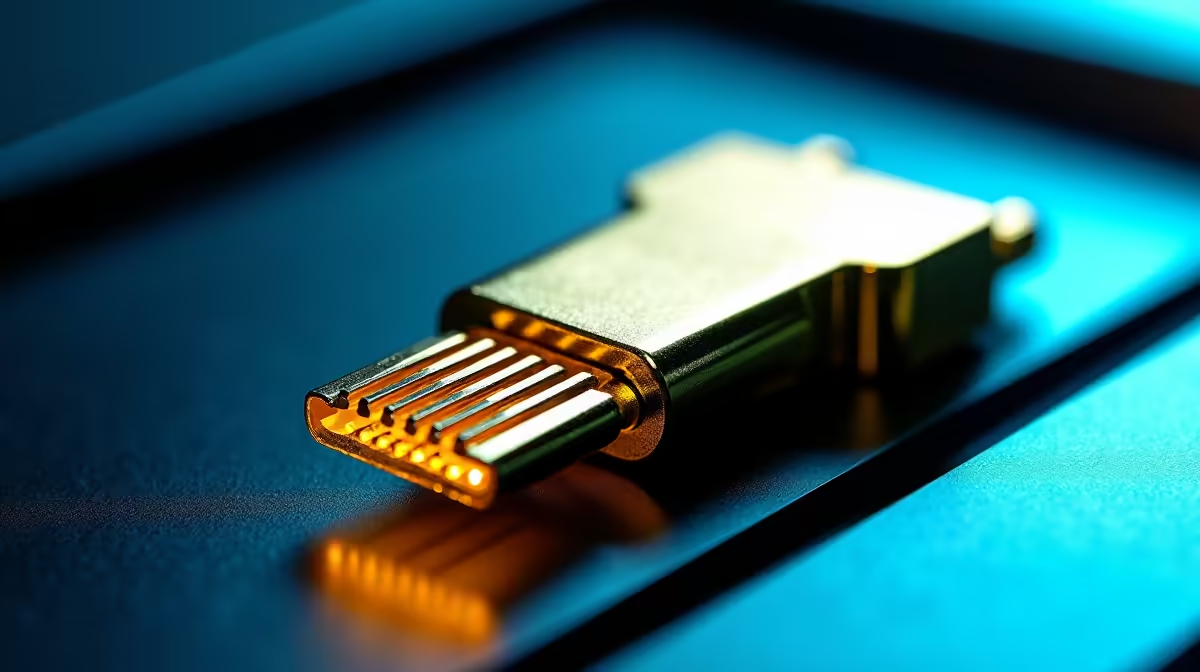
Genuine gold plating has a warm yellow tint on connector pins versus the cooler silver-grey of nickel. In dim lighting they look similar, so check the product spec sheet for the plating material and thickness. A reputable cable brand will always list this information on packaging or in the online product description.
FAQ
Does the plating on HDMI connectors affect 4K HDR signal quality?
For a freshly manufactured cable in controlled conditions, no. Over time in humid environments, yes: oxidised nickel-plated connectors introduce resistance that degrades high-bandwidth signals like 4K HDR 120Hz before they visibly affect 1080p 60Hz content.
Can I clean oxidised nickel-plated connectors to restore performance?
A cotton swab with 99 percent isopropyl alcohol removes surface oxidation and temporarily restores contact quality. This is a useful short-term fix but does not stop re-oxidation; replacement with a gold-plated cable is the permanent solution.
Are gold-plated connectors worth the price premium for a basic 1080p setup?
For a 1080p 60Hz connection in a stable inland environment, the premium is marginal. The benefit becomes clearer at 4K and high refresh rates, in coastal environments, or wherever cables are regularly disconnected and reconnected.
Tired of intermittent display issues?
Evetech stocks gold-plated HDMI and DisplayPort cables designed to maintain signal integrity over years of use, including in South Africa's variable climate conditions.