Stick drift used to be the slow death sentence hanging over every handheld you bought. Spend a year mashing through emulated RPGs and the analogue stick would start registering movement you never made, sending your character wandering off on its own. Hall-effect stick upgrades for retro handhelds kill that problem at the root, because they read your thumb with a magnet and a sensor that never physically touch, so there is nothing inside to wear out and start sending phantom input.
Quick Answer
Hall-effect sticks use a magnetic sensor instead of a wiping carbon contact, so they do not develop drift the way old potentiometer sticks do. Several 2026 Android handhelds, including the Retroid Pocket 6 and the AYN Odin 2 Portal, ship with hall-effect sticks as standard, so on those devices you do not need an upgrade at all. On older units, a drop-in hall module is the only repair worth doing.
Why Traditional Sticks Drift In The First Place
A conventional analogue stick sits on top of two potentiometers, one for each axis. Each potentiometer is a small carbon track with a metal wiper that scrapes across it as you move the stick, and the resistance it reads tells the console where your thumb is. That scraping is the whole problem. Over thousands of hours the carbon wears thin, dust works into the track, and the wiper starts reporting a position even when the stick is centred. The console reads that false signal as real movement, and your aim or your character creeps in one direction with your hands nowhere near the controls.
No amount of cleaning fixes a worn track permanently. You can blow compressed air into the housing or flood it with contact cleaner and buy yourself a few weeks, but the carbon is already gone. That is why drift feels inevitable on anything you actually use hard.
How Hall-Effect Sticks Remove The Wear
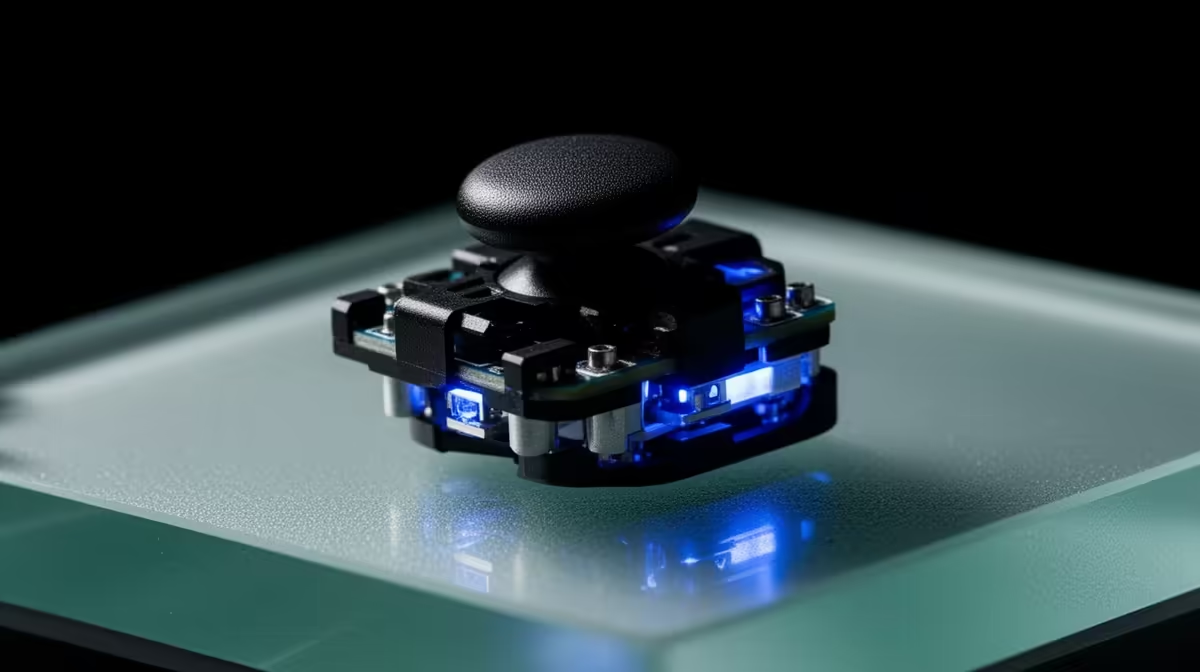
A hall-effect stick replaces the carbon-and-wiper system with a magnet mounted on the moving gimbal and a hall sensor fixed to the board below it. As the stick tilts, the magnet moves relative to the sensor, and the sensor measures the change in the magnetic field to work out the position. Nothing rubs against anything. There is no track to wear, no wiper to lose contact, and no dust-sensitive surface to contaminate.
That single design change is why these sticks last the life of the device. The magnet does not weaken in any timeframe that matters, and the sensor is solid-state. You get the same dead-centre rest position in year three that you had on day one.
What Hall-Effect Does Not Fix
It is worth being honest about the limits. Hall-effect sensors solve drift caused by wear, but they do not fix a stick that has been physically knocked out of alignment, nor do they magically improve the quality of the plastic gimbal or the rubber thumb cap. A cheaply built hall module can still feel mushy or loose. The sensor technology is excellent; the rest of the build still has to be good for the stick to feel right.
Which 2026 Handhelds Ship With Hall Sticks Already
The good news for anyone shopping now is that hall-effect has gone from a premium extra to a baseline expectation on serious Android handhelds. The Retroid Pocket 6 pairs a Snapdragon 8 Gen 2 and a 5.5 inch AMOLED screen with hall-effect sticks and analogue triggers as standard. The AYN Odin 2 Portal goes bigger with a 7 inch 1080p OLED panel, an 8000mAh battery, and hall sticks with RGB lighting built in. On both, the drift conversation is already over before you switch the device on.
If you are buying fresh rather than repairing, this matters more than almost any other single feature, because it is the part most likely to fail on a heavily used handheld. Checking the live handheld gaming consoles range is the fastest way to see which current models list hall-effect sticks in their spec sheet.
Upgrading An Older Handheld That Drifts
If you already own a handheld with worn potentiometer sticks, a hall-effect replacement is the right repair. The process depends entirely on the model, but the pattern is consistent: open the shell, disconnect the battery, desolder or unclip the old stick module, fit the matching hall module, and reassemble. Some devices use a connector that makes this a true drop-in; others need soldering.
A few things decide whether it is worth doing yourself. First, confirm a hall module exists for your exact model, because the gimbal footprint and connector are not universal. Second, be realistic about your soldering comfort if the module is not plug-and-play. Third, weigh the cost. On a budget unit that already feels dated, the money is often better spent toward a new handheld that has hall sticks and a stronger chip from the factory. Browsing the current best-selling builds and devices gives you a sense of where the value sits before you commit to a fiddly repair on ageing hardware.
Tools And Time
Plan for a small Phillips driver, plastic pry tools to avoid cracking the shell, and a fine-tip soldering iron if the module is not connector-based. Set aside an unhurried hour for a first attempt. Take photos at each step so reassembly is not a guessing game, and keep screws sorted by location, because handheld shells often use several different lengths.
Frequently Asked Questions
Can a hall-effect stick ever drift?
In normal use, no. Drift on traditional sticks comes from a physically worn contact, and hall-effect sticks have no contact to wear. The rare exceptions involve a damaged magnet, a misaligned gimbal after a hard knock, or a firmware calibration issue, none of which are the gradual wear that defines classic drift.
Are factory hall sticks better than aftermarket modules?
Not necessarily better, just different. A factory hall stick is tuned to that exact device, while a quality aftermarket module brings the same drift-free benefit to an older handheld. The sensor is the same idea either way; build quality of the gimbal and thumb cap is what separates a good stick from a vague one.
Do hall-effect sticks use more battery?
The difference is negligible. Hall sensors draw a tiny, steady current to read the magnetic field, far less than the screen or the processor. You will not notice it in your runtime on any modern handheld.
Is it worth replacing sticks on a cheap old handheld?
Often not. If the device already struggles with the games you want to play, the repair cost and effort are better put toward a current handheld that ships with hall sticks and a faster chip. Save the repair for a device you genuinely like using.
Will a hall stick feel different to use?
The drift-free behaviour is the obvious change, but the feel depends on the gimbal and spring, not the sensor. A well-made hall stick can feel identical to a good traditional one, with the bonus that it stays accurate for the life of the device.
Buying a handheld this year? Make hall-effect sticks a non-negotiable on your checklist and skip the drift problem entirely. See which current models list them in the spec sheet over on the Evetech handheld gaming consoles range and pick a device built to last.