



IPS vs OLED for Competitive esports in SA
IPS vs OLED depends on Competitive esports needs, platform limits, and budget fit. Compare compatibility, latency, upgrade path, and real setup constraints before choosing for an SA build.
Read moreStruggling to decide between a handheld vs laptop for loadshedding? 🔦 We compare battery life, performance, and power efficiency to help you game through the blackout. 🎮 Discover which device keeps the action going when the lights go out in South Africa.
That EskomSePush notification hits. Stage 4. Again. Your gaming rig is now just an expensive desk ornament. The big question for 2025 is: what's the ultimate weapon in this fight? In the debate of handheld vs laptop for use during an unexpected outage, one offers pure convenience while the other brings serious power.
The rise of powerful handhelds like the Steam Deck and ROG Ally has been incredible. These pocket rockets promise AAA gaming anywhere. On the other side, modern gaming laptops have become leaner, meaner, and more battery-efficient than ever.
When the lights go out, your choice comes down to a few key factors: how long you want to play, what you want to play, and what else you need your device to do. This is the core of the handheld vs laptop for use during an unexpected outage dilemma.
Let's be honest: when you're deep into a Helldivers 2 mission, the last thing you want is a low-battery warning.
Gaming handhelds are brilliant for a quick session, but their small batteries often tap out after 1.5 to 3 hours on demanding titles. A gaming laptop, with its much larger battery, often provides a similar gaming window but offers far more flexibility. If you switch from gaming to watching a movie or browsing, it can last significantly longer. Finding one with a solid battery is key, and there are always great gaming laptop deals that balance power with endurance.
This is where the lines become very clear. Handhelds use incredibly efficient APUs (Accelerated Processing Units) that combine the CPU and GPU. They work wonders for their size, delivering a solid 720p or 1080p experience on their smaller screens.
But they can't compete with a dedicated graphics card. A laptop equipped with a proper GPU offers a massive leap in performance. You get higher frame rates, better resolutions, and the ability to turn on stunning visual features like ray tracing. For anyone who refuses to compromise on graphics, a machine from the range of GeForce RTX gaming laptops on special is the undeniable winner. Whether you prefer the raw power of the latest Ryzen laptop deals or a different flavour of CPU, the performance ceiling is just so much higher.
If a UPS is required, size it for a controlled shutdown against the measured load of the complete laptop.
Here’s the knockout blow in the handheld vs laptop for use during an unexpected outage fight. A handheld plays games. A laptop does... well, everything.
It’s your assignment-crushing machine for varsity, your mobile office for work, and your portable cinema for movie nights. You can connect it to an external monitor when the power is on for a full desktop experience. It's a single investment that covers entertainment, productivity, and creativity. For many South Africans, this versatility is non-negotiable, making a laptop the most practical choice. You don't even need to break the bank; there are fantastic gaming laptops under R20k that offer incredible value.
So, who wins? It depends entirely on your needs.
For most South Africans looking for the smartest investment to beat the darkness, the gaming laptop is the clear winner.
Ready to Build a More Reliable Laptop? While handhelds are fun, a gaming laptop is a true power-outage powerhouse. It's the versatile all-rounder that keeps you productive and entertained when Eskom won't. Explore our massive range of laptop specials and find the perfect machine to conquer an unexpected outage.
Handhelds generally offer better battery life for low-wattage gaming, while gaming laptops drain significantly faster due to larger screens and power-hungry GPUs.
Usually no. You need a specialized high-wattage power bank (65W-100W+) with USB-C PD support, whereas handhelds often work with standard fast-charge banks.
Yes, most gaming laptops throttle performance drastically when unplugged to preserve energy, while handhelds are optimized to deliver consistent frame rates on battery.
Both are excellent for Stage 6. Their low power draw (15W-30W) means a simple backup battery keeps you gaming for hours, unlike hungry laptops.
High-end laptops can pull 200W-330W, draining UPS systems fast. Handhelds typically pull 15W-45W, making them far more efficient for loadshedding gaming.
A handheld console is generally more cost-effective than buying a gaming laptop plus the expensive inverter or large UPS required to keep it running.
IPS vs OLED depends on Competitive esports needs, platform limits, and budget fit. Compare compatibility, latency, upgrade path, and real setup constraints before choosing for an SA build.
Read more
Skip the RTX 5060 for local AI workloads if memory headroom is the bigger need. SA buyers should compare VRAM capacity, CUDA support, PSU needs, case space, gaming overlap, software stack, and realistic model sizes before choosing a GPU for your PC.
Read more
Front-mesh airflow cases has practical trade-offs for SA buyers, not one answer for every setup. Compare fit, compatibility, upgrade path, price tier, and daily gaming needs before deciding.
Read more
gaming chair guide for Pietermaritzburg gamers should be shortlisted around the job it must do. South African buyers should compare fit, performance, compatibility, and upgrade room, warranty path, and upgrade room before treating any pick as best.
Read more
Where East London gamers buy a gaming monitor should be shortlisted around the job it must do. South African buyers should compare panel type, resolution, refresh rate, and ports, warranty path, and upgrade room before treating any pick as best.
Read more
Intel Core Ultra CPU S-tier through F-tier should be shortlisted around the job it must do. South African buyers should compare fit, performance, compatibility, and upgrade room, warranty path, and upgrade room before treating any pick as best.
Read more
Steam game recording black screen needs a fresh capture and export test before a hardware upgrade. Check the recording mode, free space and whether another game records correctly. Community reports suggest testing broadcasting settings, but that is not a universal fix.
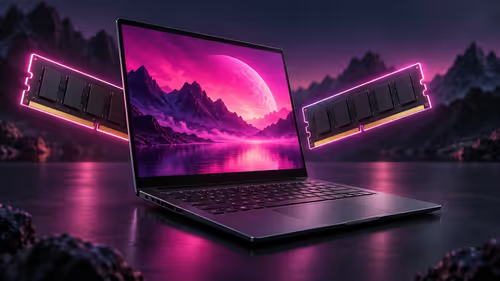
MSI Stealth 16 RTX 5070 specs need an exact SKU check because current listings disagree on GPU memory. One UK listing says 12GB while MSI's family table says 8GB. Confirm the supplied configuration rather than assuming either describes every machine.
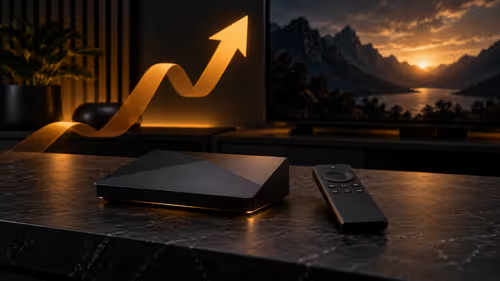
SHIELD TV Pro price increase means a higher US price for the existing streaming box. NVIDIA confirmed the change starts on 2 October and cited component costs. Compare playback needs, regional service access and the full local quote before buying.

Is a transparent phone mount the key to clearer windshield views? 🚗 We analyze if these see-through accessories actually reduce obstruction while driving or if they’re just a clever marketing gimmick. Find out which mount keeps your dash clean. 📱
Steam game missing from library usually needs an account and filter check before a reinstall. Match your receipt to the signed-in account, clear library filters and inspect hidden games. Installed files do not establish ownership on the account you are using.
Steam game recording black screen needs a fresh capture and export test before a hardware upgrade. Check the recording mode, free space and whether another game records correctly. Community reports suggest testing broadcasting settings, but that is not a universal fix.

Windows 11 two finger scroll not working needs a gesture and driver check first. Test pointer movement and scrolling in more than one app, inspect Touchpad settings and use Windows Update or the laptop maker's driver. A new mouse is only a workaround.
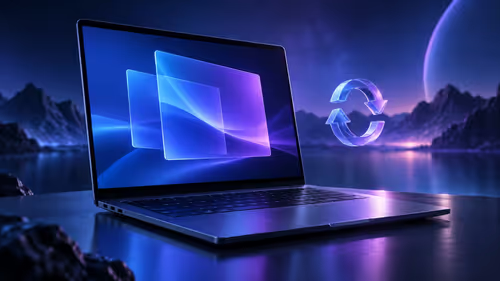
Windows 11 Insider 26220.9587 is a Beta preview released on 2 October. Microsoft lists Unicode text support, Settings performance work and a Cloud Rebuild entry point. These are preview changes, not a reason to move your only working PC onto a test build.
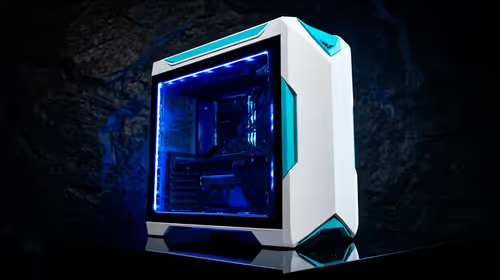
white PC builds in SA is worth checking through fit, cost, availability, and upgrade impact instead of a blanket trend claim. SA builders should compare setup details before changing parts or priorities.
IPS vs OLED depends on Competitive esports needs, platform limits, and budget fit. Compare compatibility, latency, upgrade path, and real setup constraints before choosing for an SA build.
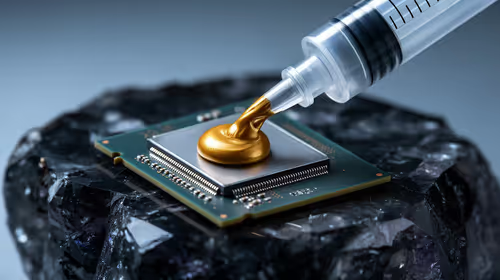
Should I use thermal paste or thermal pads should be shortlisted around the job it must do. South African buyers should compare GPU tier, VRAM, cooling, and PSU headroom, warranty path, and upgrade room before treating any pick as best.
Skip the RTX 5060 for local AI workloads if memory headroom is the bigger need. SA buyers should compare VRAM capacity, CUDA support, PSU needs, case space, gaming overlap, software stack, and realistic model sizes before choosing a GPU for your PC.