Moving years of photos off a cloud service and onto a machine in your own home is the easy part. The catch is that Immich, the self-hosted alternative people reach for, is not just a file store: it runs face recognition, object detection and semantic search through a separate machine-learning container, and that container is where weak hardware shows. Pick a host with enough RAM and a capable CPU and the smart features feel close to the cloud product. Skimp, and the first big upload crawls while indexing chews through the night.
Quick Answer
For self-hosting Immich, aim for 8GB of RAM and a 4-core CPU, with 16GB recommended once the machine-learning features are on and the library grows. The minimum is 6GB and 2 cores, while 4GB only works with machine learning disabled. A modern mini PC with 16GB of RAM and an 8-core CPU comfortably runs face recognition and smart search for libraries into the tens of thousands of photos.
What actually drives the hardware demand
Immich runs as several containers. The core app, the database and the web interface are modest and happy on light hardware. The machine-learning container is the one that matters. It powers face recognition, CLIP embeddings for semantic search ("photos of my dog on the beach") and duplicate detection, and it wants real RAM and CPU to do that work at a reasonable pace.
Disable that container and Immich runs comfortably on 4GB, but you lose the features that make it a genuine cloud replacement. So the sizing question is really: how much do you want the smart features, and how large is your library?
RAM: the spec that bites first
RAM is where an undersized host fails earliest, usually during a large initial upload when the app, database and ML container all work at once. The official baseline is 6GB, but 8GB is the sensible floor and 16GB gives breathing room for a growing library or for running Immich alongside other home services.
Why 16GB is the comfortable target
The ML container alone adds one to two gigabytes on top of the core app, and that climbs during bulk indexing. On an 8GB host dedicated to Immich, libraries under roughly 50,000 photos run well, but adding other containers gets tight. At 16GB you stop worrying. Note that since version 2.6 the ML container on amd64 needs an x86-64-v2 microarchitecture, which any CPU from roughly 2012 onward provides, so this only rules out genuinely old hardware.
CPU: cores cut your indexing time
Face recognition and CLIP indexing are CPU-heavy on a host without a capable GPU, and they parallelise well. An 8-core processor can roughly halve face-recognition and indexing time against a 4-core chip. The first full index of a large library is the slow part; after that the system only processes new uploads, so a faster CPU mainly saves you that initial wait. For a small library a 4-core machine is fine. For tens of thousands of photos, more cores pay off.
Offloading ML to another machine
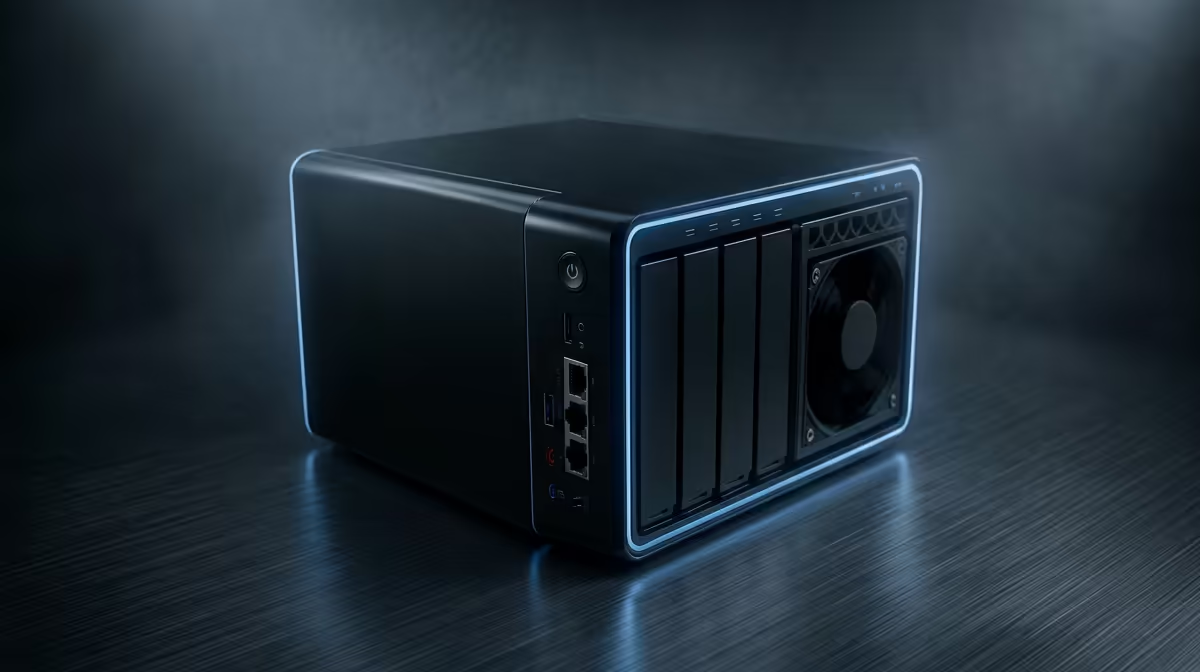
If your main host is a low-RAM NAS, Immich lets you run the ML container on a separate, more capable machine on your network and point the main instance at it. That is a neat way to keep smart search without upgrading the NAS, and it means a modest always-on box can serve photos while a stronger machine handles the heavy thinking.
Storage: what Immich needs on disk
The Postgres database that backs Immich should live on a local SSD and never on a network share, because it relies on fast, consistent random I/O that a network mount cannot reliably deliver. The photo library itself can go on a larger, slower drive once the database is separated, which is a good argument for a two-drive layout: a small NVMe for the OS and database, and a larger drive or network volume for the originals. Budget roughly 20GB for the Immich stack and OS, plus whatever your actual photo collection needs on top of that.
What to actually buy
A compact mini PC is the sweet spot for most homes: small-form-factor machines on modern Intel and AMD chips that hold 16 to 32GB of RAM, draw only 10 to 15W under load and stay near silent. That low idle draw matters for a box meant to run continuously. The current mini PC range at Evetech covers exactly this class, and a unit with 16GB and an 8-core CPU handles Immich's ML features and a library well into the tens of thousands. If you would rather build a small tower with room to grow storage, scanning the systems other SA buyers pick most shows where capable CPUs and 16GB-plus configurations sit.
Frequently Asked Questions
How much RAM does Immich need?
The minimum is 6GB, but 8GB is the practical floor and 16GB is recommended once machine learning is enabled and your library grows. The ML container adds one to two gigabytes on top of the core app, more during bulk indexing.
Can I run Immich on 4GB of RAM?
Yes, but only with the machine-learning container disabled. That removes face recognition, semantic search and duplicate detection, which are the features that make Immich a real cloud-photos replacement. For the full experience, plan for 8GB or more.
Do I need a GPU for Immich?
No, a capable multi-core CPU handles the machine-learning work, just more slowly than a GPU. An 8-core chip roughly halves indexing time versus a 4-core one. A GPU mainly helps with very large libraries or impatience during the first index.
Is a mini PC good enough for Immich?
For most homes it is ideal. A mini PC with 16GB of RAM and a modern 8-core CPU runs Immich's ML features comfortably for libraries into the tens of thousands of photos, while drawing only 10 to 15W for always-on use.
How many photos can an 8GB host handle?
As a dedicated Immich box, an 8GB host runs well for libraries under roughly 50,000 photos. Beyond that, or if you run other services on the same machine alongside Immich, step up to 16GB to keep things smooth.
Ready to bring your photo library home? Browse the mini PC range at Evetech and pick a low-power host with the RAM and cores Immich's smart features actually need.