Three designs split the personal audio world, and the choice between open-back, closed-back and in-ear monitors decides more about your listening than the price tag does. An IEM seals into your ear canal for isolation you can take on a Metrorail commute. A closed-back headphone blocks the room around you. An open-back trades that isolation away for a soundstage that feels like the music is around you rather than inside your head. None is better; each is built for a different job.
Quick Answer
Choose IEMs for portability and isolation on the move, closed-back headphones for blocking noise at a desk or while gaming, and open-back headphones for the widest, most natural soundstage at home in a quiet room. The single biggest factor is how much outside noise you need to keep out versus how spacious you want the sound to feel.
In-Ear Monitors: Sealed, Portable, Isolating
An IEM sits inside the ear canal, with a tip (silicone or foam) that forms a physical seal. That seal does two things: it blocks a large amount of ambient noise passively, and it lets a tiny driver deliver surprisingly full bass because the sound has nowhere to leak.
For an SA listener this is the format that survives real life. They tuck into a pocket, they isolate enough that you do not crank the volume on a noisy taxi or in a busy res common room, and good ones cost far less than you would expect. The trade-off is fit. The wrong tip size ruins both comfort and bass, so trying a few tip sizes is worth the few minutes it takes.
Driver types inside IEMs
Most budget and mid-range IEMs use a single dynamic driver, essentially a miniature speaker cone. It handles all frequencies together and tends to produce cohesive, natural bass with a slight warmth. Balanced armature drivers, borrowed from hearing-aid engineering, are more precise and faster but are smaller and often require multiple units covering different frequency bands to reproduce the full range. Multi-driver IEMs combine both types and tuned crossovers, which at the price extremes delivers exceptional detail; at lower price points the crossover design matters more than the driver count. For most SA buyers entering the IEM world, a well-tuned single dynamic driver under R1,000 is a stronger starting point than a poorly tuned multi-driver at the same price.
Closed-Back Headphones: The All-Rounder
Closed-back headphones have a sealed outer cup. Like an IEM, that seal blocks outside noise and keeps your audio from spilling to people nearby, but on a larger scale and with the comfort of an over-ear or on-ear cushion.
Why Gamers and Office Workers Reach for Them
The isolation is the whole point. In a shared digs, an open-plan office, or a gaming session where you need to hear footsteps and not your housemate's TV, a closed-back keeps the outside world out and your audio in. Most gaming headsets are closed-back for exactly this reason. The sound tends to feel more intimate and forward, with strong, contained bass.
The Trade-Off
That sealed cup can make the soundstage feel narrower, as if the music is happening close to your ears rather than spread out in a room. For competitive gaming and noisy environments that is a fair price; for relaxed critical listening some people find it slightly closed-in, which is exactly where the open-back comes in.
Open-Back Headphones: Soundstage Over Isolation
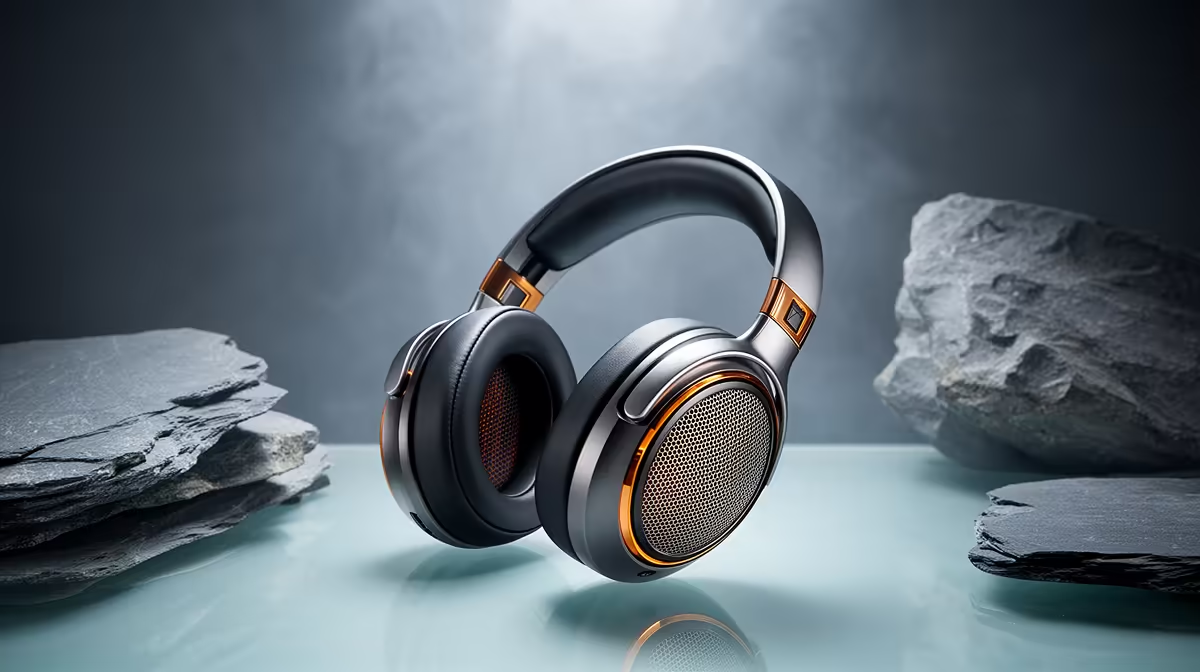
An open-back cup has vents or a mesh grille, letting air and sound pass freely through the back of the driver. This removes the pressure build-up of a sealed cup and produces a wider, airier, more natural soundstage. Instruments feel placed in space, and many listeners describe the result as less fatiguing over long sessions.
The catch is right there in the name. Open-back leaks sound both ways: people near you hear your music, and you hear them. They isolate almost nothing, which makes them poor for commuting, shared offices or anywhere with background noise. They are home-and-quiet-room headphones, and in that setting they are hard to beat. You can compare designs side by side in the headphone and headset range at Evetech to see which cup style fits your space.
How to Choose for Your Use Case
- Commuting, gym, on the go: IEMs. Portable, isolating, pocketable.
- Gaming, shared spaces, office calls: closed-back. Blocks noise both directions.
- Critical listening at home in a quiet room: open-back. Widest, most natural sound.
- One pair for everything: a good closed-back is the safest all-rounder.
Driver type and impedance matter too. High-impedance audiophile headphones may want a dedicated amp to reach their potential, while most IEMs and gaming headsets drive easily straight off a phone or motherboard. If you want a shortlist of proven sellers rather than wading through specs, the most popular headsets at Evetech are a quick way to narrow the field.
Impedance: What It Means in Practice
Most consumer IEMs and gaming headsets sit between 16 and 32 ohms. They are deliberately easy to drive from a phone or a laptop without any extra hardware. Open-back audiophile headphones frequently run at 150, 250 or even 600 ohms. Those models were engineered around the assumption that a proper amplifier sits in the chain: plugged straight into a phone they sound quiet and flat, but through a dedicated headphone amp they open up fully. Before buying a high-impedance pair, check whether your source can drive them. If your current setup cannot, a dedicated DAC/amp is the follow-on purchase.
Tip Fit and Ear Fatigue: The Overlooked Factors
For IEMs, tip material changes how the seal feels over hours. Silicone tips are easy to clean and durable but can feel firm in longer sessions. Foam tips compress on insertion and expand to fill the canal, giving a more consistent seal and slightly more isolation, and many listeners find them more comfortable for extended listening. Open-back headphones generally cause the least ear fatigue over long sessions because the absence of pressure build-up lets your ears breathe, which is one of the reasons they remain popular among anyone who listens for hours at a stretch.
Frequently Asked Questions
What is the main difference between open-back and closed-back headphones?
Closed-back cups are sealed and block outside noise while keeping your audio in. Open-back cups are vented for a wider, more natural soundstage but leak sound both ways and isolate very little.
Are IEMs better than over-ear headphones?
Neither is universally better. IEMs win on portability and isolation for life on the move, while over-ear headphones tend to be more comfortable for long sessions and can offer a larger sound.
Which design is best for gaming?
Closed-back headsets are the common choice because they isolate background noise and keep game audio contained, helping you focus on positional cues like footsteps without distraction.
Do open-back headphones need an amplifier?
Not always, but many higher-impedance open-back models reach their full potential with a dedicated headphone amp. Lower-impedance ones run fine straight from a phone or PC.
Can I use IEMs for music production?
Yes, in-ear monitors are widely used for monitoring because they isolate well and deliver detailed sound. For mixing decisions, many engineers still cross-check on open-back headphones or speakers.