How the Rand-Dollar Exchange Rate Affects Tech Prices in South Africa
If you’ve ever refreshed a product page and wondered why a graphics card costs more this week than it did last week, the rand is often part of the answer. For South African gamers and PC buyers, tech pricing is not just about stock. It’s about exchange rates, import costs, VAT, logistics, and timing. That mix can make a new GPU feel cheap one month and pricey the next ⚡
How the rand-dollar exchange rate affects tech prices
Most computer hardware is priced globally in US dollars. That matters because South African retailers usually buy from international suppliers, then convert those costs into rand. When the rand weakens against the dollar, the landed cost rises. When it strengthens, prices can improve, but not always immediately.
Why not instantly? Because retailers work with stock bought at different times. A batch imported when the rand was weaker may still sit on shelves for a while. So a deal today may reflect an older exchange rate, not the one you see on the news this morning. That lag is normal.
For buyers, the headline lesson is simple. The rand-dollar exchange rate affects tech prices, but it does so unevenly. High-demand items like GPUs, gaming laptops, and CPUs often react faster because their costs are tightly linked to global supply. Lower-volume items may shift more slowly.
What South African buyers should watch
If you’re shopping for a rig, it helps to track more than one number. Compare the exchange rate with local specials, stock levels, and seasonal demand. A strong rand can create a window where upgrades suddenly look sensible. A weak rand can push you to buy sooner, before the next stock landing resets prices higher.
That’s especially relevant when choosing between a custom build and a ready-made system. Browsing gaming PC deals can help you spot whether bundled value is better than buying parts separately. If you need a full system fast, pre-built PC deals are worth checking too. For shoppers who are waiting on a drop, special offers can be the sweet spot.
A quick real-world example
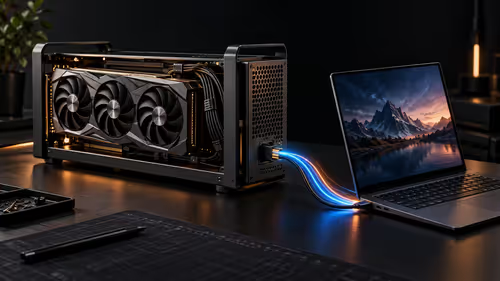
Imagine a graphics card launched internationally at US$499. If the rand weakens, the local price can climb even if the dollar price stays the same. Add shipping, duties, and retailer margin, and the final number in ZAR can move noticeably. That’s why some weeks feel calmer, while others bring sticker shock 😅
If you’re building around a specific GPU, keep an eye on graphics card deals. The best time to buy is often when stock is healthy and the rand is stable, not just when a flashy discount appears.
How to buy smarter when the rand moves
The best strategy is to separate need from wish-list upgrades. If your current laptop is struggling with work or study, waiting for a perfect rate could cost more in lost productivity than it saves. For mobile buyers, laptop deals are useful when you need performance without paying full launch pricing.
Smart Buying Tip 🔧
Watch the price, not just the discount. A “deal” in rand can still be expensive if the exchange rate moved hard that week. Compare the current price against your needs, then decide quickly when a good window appears.
The rand will always influence local tech pricing. You can’t control the exchange rate, but you can control timing, comparison shopping, and how fast you move when value appears. That’s where informed buyers win.
Ready to Find Your Perfect Match?
The Mac vs Windows debate is complex, but for maximum power, choice, and value in South Africa, Windows is hard to beat. Explore our massive range of laptop specials and find the perfect machine to conquer your world.