Quick Answer
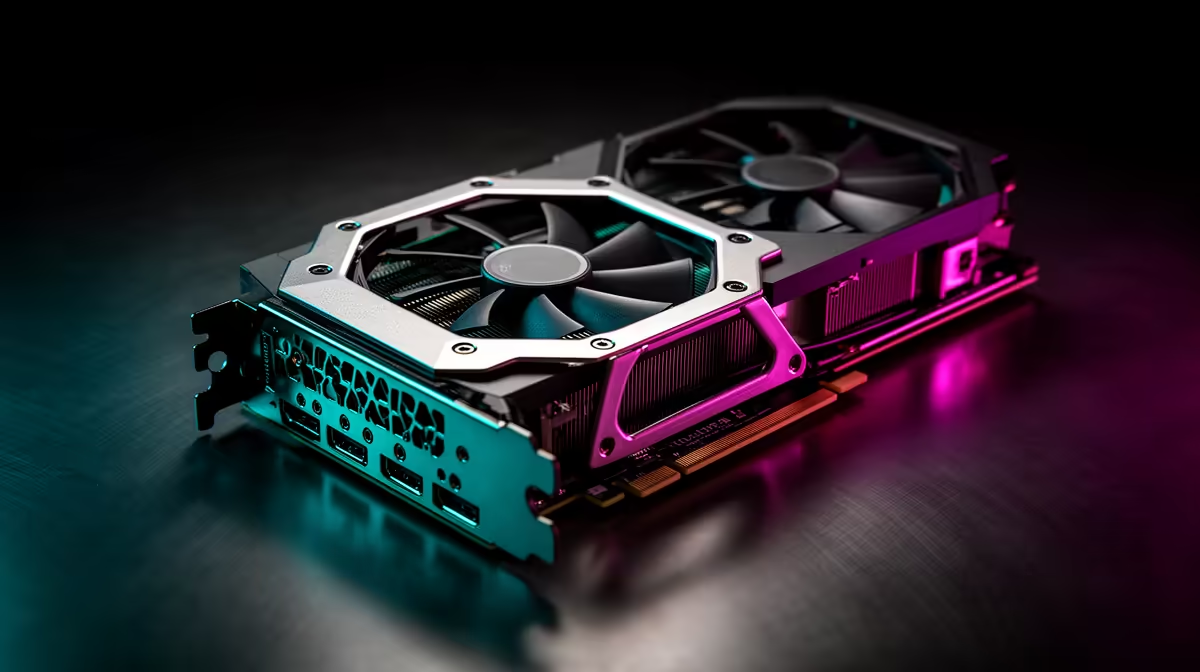
Built-in GPU braces are important for any build using a triple-slot graphics card weighing over 1.5 kg, which includes the RTX 5080, RTX 5090, and RX 9070 XT in their higher-end AIB variants. Without a brace, sustained sag of 5 mm or more over months of use stresses PCIe contacts and the GPU's PCB, with measurable long-term reliability consequences.
The Physics Behind GPU Sag and Why It Matters 🔧
A modern flagship GPU creates a cantilever load at the PCIe x16 slot. The card's centre of mass sits 150 mm to 200 mm away from the slot's support point, and with a mass of 1.8 kg to 2.3 kg, this generates a torque of roughly 3 Nm on the connector and the PCB edge. PCIe slots are rated for repetitive insertion cycles but not for sustained lateral bending loads. Over 6 to 18 months of daily use, the slot retention tab slowly deforms, the PCIe contact pins lose tension, and gold plating on both the card's edge connector and the motherboard slot wears unevenly. The result can be intermittent black screens, PCIe error codes in Windows Device Manager, or in extreme cases a failed slot that requires motherboard replacement, which on a premium Z890 EATX board costs R8,000 to R15,000 locally.
How Built-In Braces Differ From Aftermarket Options 🖥️
Cases with dedicated built-in GPU brace systems use a sliding rail mounted to the case floor or PCIe bracket panel, with an adjustable arm that cradles the GPU shroud from below. The advantage over aftermarket floor-mount braces is integration: built-in braces are designed to the case's exact internal geometry, so the arm length and position are optimised for the PCIe slot height and GPU thickness in that specific chassis. Aftermarket braces are universal and occasionally clash with PSU shroud designs or cable routing channels. Premium cases in the R4,500 to R7,500 range increasingly include built-in braces as standard because GPU sag has become a genuine engineering issue rather than an aesthetic concern.
Verifying That a Case Brace Works Correctly 💡
Installation is not the end of the process. After installing the GPU and setting the brace arm to contact position, run the system through a full thermal cycle (power on to gaming load to idle to power off) and then re-examine the GPU from the side panel. Thermal expansion can shift the card's position by 1 mm to 2 mm, and an arm set too tightly before the cycle can introduce upward pressure after components cool down. The brace should touch the GPU shroud with zero deflection in either direction. Check again after 30 days since the PCIe slot retention tab relaxes over initial use.
Choosing a Case With a Brace ⚡
When evaluating cases, look for the phrase "GPU support bracket" or "anti-sag brace" in the specification list, not just in marketing copy. Some cases include a bracket-shaped piece that requires a separate purchase for the actual adjustable arm. Confirm both the bracket mount and the adjustable arm are included in the box before purchasing.
FAQ
Do all heavy GPUs need a brace, or only the longest ones?
Weight matters more than length. A short but heavy GPU with a copper-dense cooler can sag just as much as a long lightweight card. Any GPU over 1.4 kg benefits from brace support regardless of length.
Can I use a GPU vertical mount instead of a brace to prevent sag?
Yes, a vertical PCIe riser mount eliminates sag entirely since gravity acts along the card's length rather than bending its PCB. The trade-off is a reduction in GPU cooler airflow due to proximity to the side panel glass.
Will a GPU brace void my GPU warranty?
No, a brace contacts only the GPU cooler shroud externally and makes no modifications to the card itself. GPU warranties cover manufacturing defects, not the physical orientation of the card in a case.
Running a heavy triple-slot GPU?
Evetech stocks cases with integrated GPU braces and a full range of flagship GPUs to match, so your investment stays supported from day one.