Quick Answer
A high-end full-tower gaming build needs a minimum of three 140mm intake fans and two exhaust fans to keep a flagship GPU and overclocked CPU within safe operating temperatures. Total system airflow targeting 80 to 120 CFM net intake ensures positive case pressure and prevents dust accumulation on sensitive components.
Calculating the Right Fan Count and CFM 📊
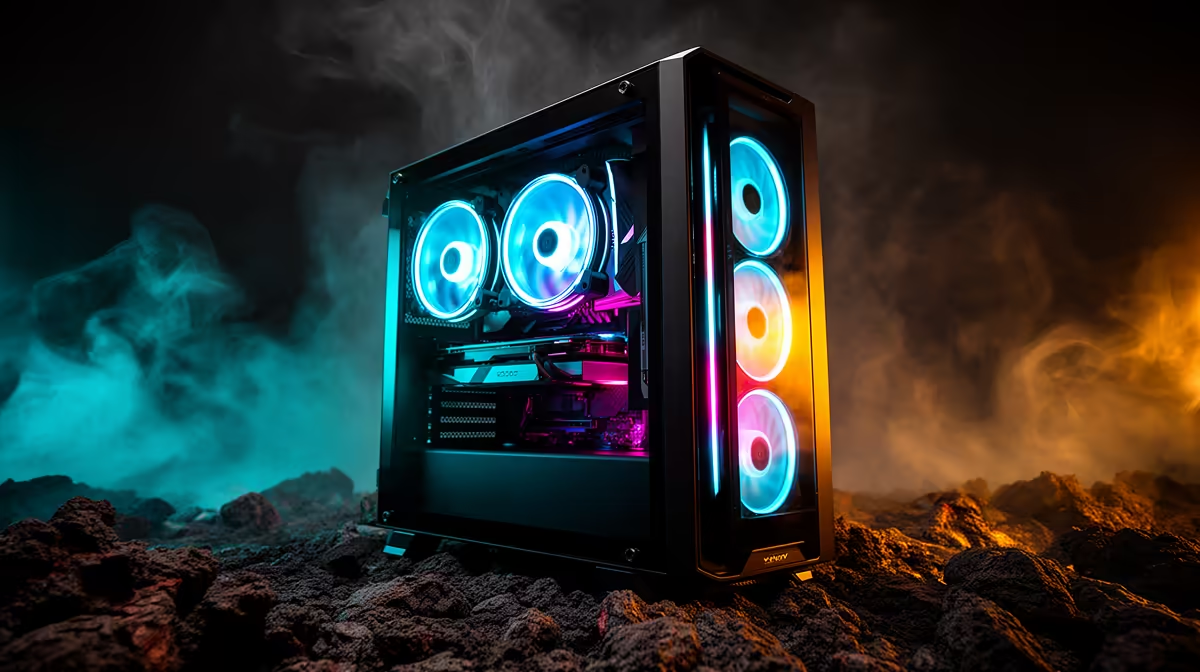
Airflow is measured in cubic feet per minute (CFM) or cubic metres per hour. A single quality 140mm fan delivers between 55 and 90 CFM depending on the model and RPM setting. For a full-tower build housing an RTX 5090 paired with a Ryzen 9 9950X, total heat dissipation under full gaming load can exceed 600W from the CPU and GPU combined. Matching that heat output requires directed airflow rather than simply more fans: three front intakes push cool air toward the GPU, a rear exhaust pulls it out after it passes the CPU cooler, and one or two top exhausts remove residual heat from the upper chamber. Cases with dual-chamber designs separate the PSU and storage from the main compute area, improving thermal management without needing extra fans.
Fan Speed, Noise, and Thermal Trade-offs 🔊
Running every fan at maximum RPM achieves excellent cooling but produces significant noise. A well-designed airflow setup with 140mm PWM fans running between 700 and 1,100 RPM keeps a high-end build quiet during gaming while maintaining CPU temperatures below 75 degrees Celsius and GPU temperatures below 80 degrees Celsius. Most modern motherboards include fan curve controls in their BIOS or companion software, letting you set temperature thresholds that trigger speed increases only when needed. For a South African home where desktop fans often run simultaneously, keeping PC noise low improves the overall audio environment for gaming and streaming.
Positive Versus Negative Pressure Configurations 🔧
Positive pressure means more air is pushed into the case than is exhausted, forcing air out through panel gaps rather than drawing dust in. Negative pressure does the opposite and pulls dusty ambient air through every gap. For full-tower cases with open mesh panels, maintaining slight positive pressure by running three intake fans versus two exhausts keeps filters effective and reduces cleaning frequency. Dust filters on intake panels are essential: clean them every four to six weeks depending on your environment. South African homes with tiled floors tend to generate less carpet-dust than carpeted environments.
Set Custom Fan Curves in BIOS ⚡
Most current-gen motherboards let you assign independent PWM curves to each fan header. Setting a gentle ramp from 500 RPM at 40 degrees Celsius to 1,200 RPM at 80 degrees Celsius gives you near-silent idle and responsive cooling during demanding sessions, without needing third-party fan controller software.
FAQ
How many fans does a full-tower gaming case need minimum?
For a high-end full-tower build, four fans is the practical minimum: three intake at the front and one rear exhaust. Adding one or two top exhausts improves thermal performance for CPU-heavy workloads and keeps the upper chamber clear of heat accumulation.
Does a bigger case automatically mean better airflow?
Not automatically. A larger internal volume gives heat more room to collect if you do not have sufficient fans to move it out. Bigger cases require thoughtful fan placement rather than simply relying on the extra volume to dissipate heat passively.
What GPU temperature is considered safe for a high-end full-tower build?
Most flagship GPUs, including the RTX 5090 and RX 9070 XT, are designed to throttle at around 90 degrees Celsius. Sustained temperatures below 82 degrees Celsius under full load indicate good case airflow. Temperatures consistently above 85 degrees Celsius suggest intake or exhaust restrictions that need addressing.
Building a full-tower powerhouse?
Evetech stocks full-tower cases with mesh front panels, high fan counts, and the internal volume to house your most ambitious hardware configuration.