Quick Answer
For a mid-range gaming build using a Ryzen 7 or Core i5 class CPU with an RTX 5070 or RX 9070 GPU, target a compact mATX case with at least two 120 mm front intake fans and one 120 mm rear exhaust, plus a minimum of 240 mm radiator support for the CPU cooler. Builds pushing 250 W GPU TDP or higher need 360 mm AIO support or exceptionally dense air cooling with three front fans.
Fan Mount Count and Placement in mATX Builds 🌬️
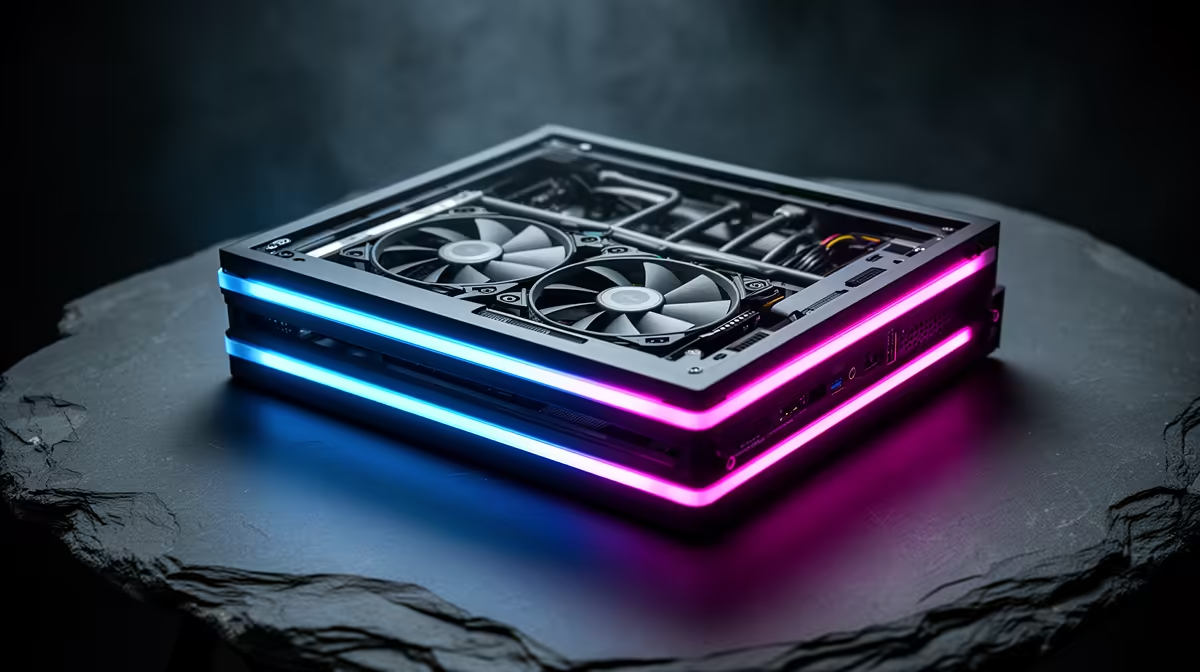
A compact mATX case typically measures 380 mm to 430 mm tall and 200 mm to 220 mm wide, which limits total fan mount positions to five or six, compared to eight or more in a full-tower ATX. The practical baseline for a gaming rig is three fan positions: two 140 mm or three 120 mm intakes at the front and one 120 mm exhaust at the rear. The Cooler Master NR400 and Fractal Design Pop Mini both hit this layout at under R1,500 locally. Adding a top exhaust fan (120 mm to 140 mm) is the most effective single upgrade for GPU temperature, dropping junction temps by four to eight degrees Celsius under sustained load on cards like the RTX 5070 Ti.
AIO Radiator Support: 240 mm vs 280 mm vs 360 mm 💧
Not all compact mATX cases can mount a 360 mm radiator, so confirm before you buy. A 240 mm AIO brings a modern Ryzen 7 9700X from 95 degrees Celsius under prime stress to a sustained 72 to 78 degrees Celsius, which is perfectly acceptable. A 280 mm radiator shaves another four to six degrees and is worth considering if you plan to run PBO2 overclocking. The 360 mm option is mainly relevant for Ryzen 9 or Core i9 CPUs, or builders who want to run the CPU cooler at low fan speeds for noise reasons.
Airflow Design Patterns and What They Mean for Your Build 🔧
Mesh front panels with a high percentage of open area (above 70%) allow two to three times the airflow of solid steel fronts. This matters most in compact cases where the GPU sits close to the front panel. High-mesh designs like the Lian Li LANCOOL 205M and Phanteks Eclipse G300A keep GPU inlet temperatures within five degrees Celsius of ambient even under full gaming load. Conversely, a tempered glass front panel restricts intake and requires the fans to spin faster and louder to compensate. If visual aesthetics demand glass front, look for side-vented versions with perforated steel underneath the glass panel for secondary intake.
Use Positive Pressure for Cleaner Builds ⚡
Running slightly more intake CFM than exhaust CFM creates positive case pressure, which reduces dust ingestion through unfiltered gaps. In South Africa's dry, often dusty conditions especially in Gauteng and the Northern Cape, this noticeably extends the time between filter cleanings. Most compact mATX cases with two front intakes and one rear exhaust naturally achieve this ratio.
FAQ
Can I fit a 360 mm AIO in a compact mATX case?
Only if the case specifically lists 360 mm support. Models like the Phanteks Eclipse G300A and Lian Li LANCOOL 205M can accommodate 360 mm radiators, while cases such as the Fractal Pop Mini max out at 240 mm. Always verify before purchasing.
Does a bigger GPU affect how much cooling space I need in an mATX case?
Yes. A three-slot GPU like the RTX 5080 reduces space between the card and the case floor, limiting bottom fan positions and sometimes blocking a front fan. Check that the case's GPU clearance is at least 20 mm longer than your card, and confirm bottom fan slots are not obstructed.
How warm do compact mATX cases run compared to full-ATX cases?
With equivalent fan configurations, temperatures typically run two to five degrees Celsius higher in compact mATX cases due to less overall airflow volume. A well-chosen mATX case with mesh front and proper fan layout can largely close that gap.
Need a compact case with serious cooling headroom?
Evetech stocks a wide selection of mATX cases including mesh-front and radiator-ready options, all available to order online with local delivery across South Africa.