Quick Answer
For a genuine 8K-capable DisplayPort 2.1 UHBR10 cable in South Africa, budget R250 to R550 for a quality 1 to 2 metre passive cable. Spending below R150 risks getting a cable that cannot sustain the UHBR10 link rate needed for 8K/60Hz, causing the GPU to drop to a lower display resolution or refresh rate.
What Separates an 8K Cable from a Standard DP Cable 💰
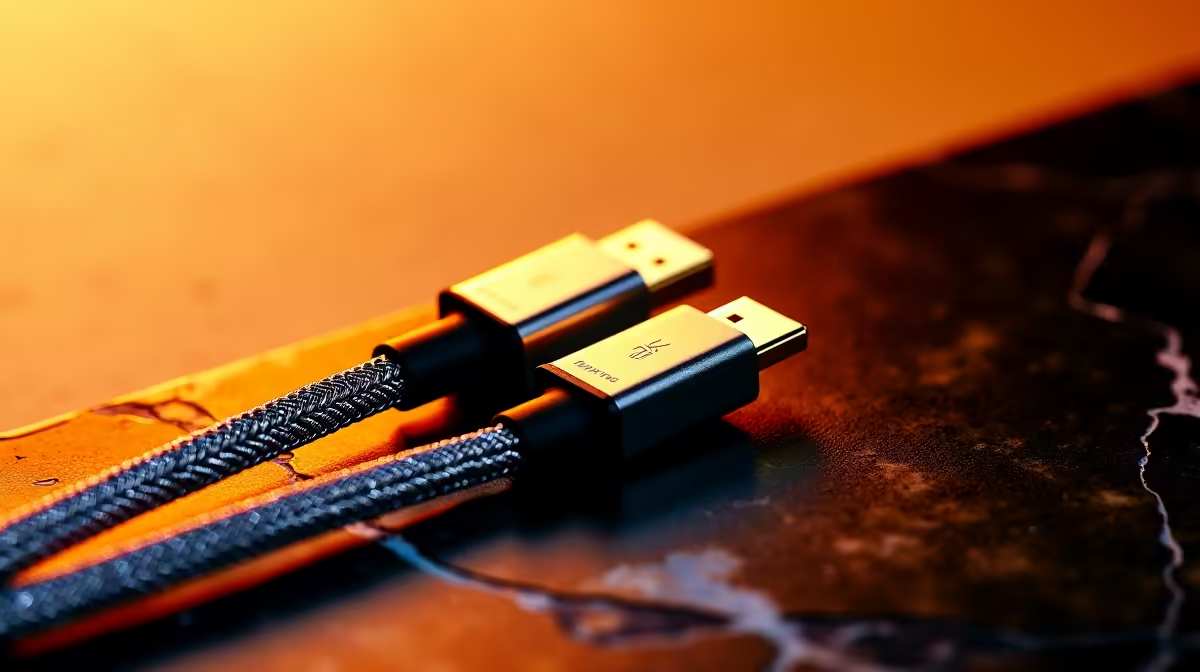
DisplayPort 2.1 at UHBR10 (Ultra High Bit Rate, 10 Gbps per lane) requires four lanes of tight-tolerance copper construction, low-loss connectors, and a cable jacket that keeps impedance consistent along the full run. Budget cables often pass certification at minimum margins and fail under the sustained 77.4 Gbps aggregate bandwidth that 8K/60Hz at 10-bit colour demands. A certified VESA DisplayPort 2.1 cable will have the version number on the connector boot or packaging. If the box just says "8K ready" without citing the DP version, treat it with scepticism. Current RTX 50-series cards (RTX 5080, RTX 5090) and RX 9070 XT output DP 2.1 natively, so using one of these GPUs means the cable is the last link in the chain and quality matters.
Price Bands and What You Actually Get 🖥️
At R150 to R250 you typically find passive cables rated for DP 1.4 (HBR3, 32.4 Gbps), which cap out at 4K/120Hz or 1440p/240Hz. These are excellent value for monitors that do not exceed those specs. At R250 to R550 you enter genuine DP 2.1 UHBR10 territory, covering 8K/60Hz or 4K/240Hz. Above R600, you are mostly paying for longer cable lengths (2 to 3 metres) or active cables. For an average South African gaming desk with a 50 to 100 cm cable run, a R300 to R400 UHBR10 cable is the sensible ceiling.
Is an 8K Cable Worth It If You Own a 4K Monitor? 💡
Buying a DP 2.1 UHBR10 cable even for a 4K display gives you headroom: it handles 4K/240Hz when you eventually upgrade, and the superior cable construction reduces the risk of intermittent sync loss at high refresh rates. If your current monitor tops out at 4K/60Hz or 1440p/165Hz, a DP 1.4 cable at R180 to R250 is perfectly adequate. The jump to an 8K-rated cable only makes immediate sense if you own a GPU and display combination that can actually use UHBR10 bandwidth today.
Verify VESA Certification Before Paying More ⚡
Flip the cable box over and look for the VESA-certified DisplayPort version label. A cable without this marking claiming to be "8K capable" is unverified. In South Africa, uncertified cables sometimes circulate through grey market channels, so buy through a verified local retailer with a real return policy.
FAQ
Can I use an HDMI 2.1 cable instead of DisplayPort 2.1 for 8K?
HDMI 2.1 supports 8K/60Hz at 48 Gbps, which is enough for 8K/60Hz with DSC compression, but it tops out where DP 2.1 UHBR10 at 77.4 Gbps has significant headroom. For PC gaming, DisplayPort is generally preferred because it supports higher refresh rates over the same resolution band and is standard on most gaming monitors.
How long a DP 2.1 cable can I buy without going active?
Passive UHBR10 cables are typically limited to about 2 metres reliably. For 3 metres at full UHBR10 speeds, look for an active DP 2.1 cable, which contains an on-cable repeater chip. Passive DP 1.4 cables can run to 3 metres more comfortably because HBR3 has lower per-lane signalling demands.
Will my older DisplayPort 1.2 monitor work with a DP 2.1 cable?
Yes. DisplayPort is backwards-compatible, so a DP 2.1 cable connected to a DP 1.2 monitor will negotiate down to DP 1.2 speeds automatically. You do not gain any performance benefit over a DP 1.2 cable, but there is no harm in using the newer cable if you plan to upgrade your display later.
Ready to connect your 8K or 4K/240Hz display properly?
Evetech stocks DisplayPort 2.1 cables alongside the RTX 50-series and RX 9000-series GPUs that drive them. Check the cables section for locally stocked, certified options.