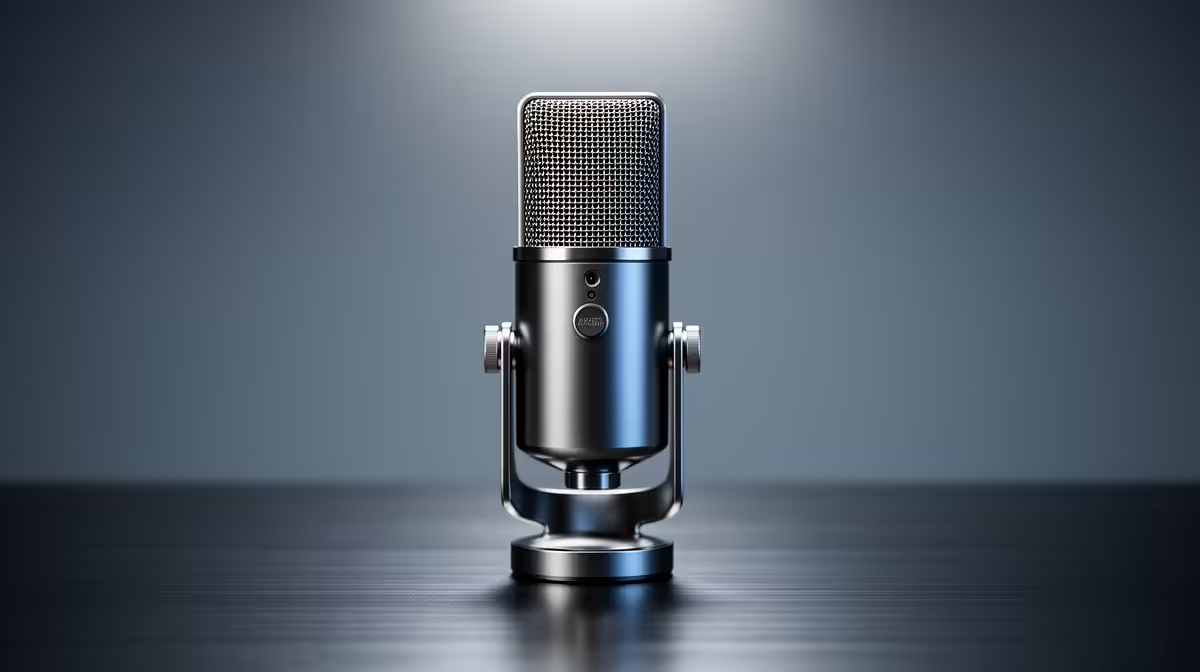
Buying a microphone in South Africa without a price framework is how creators end up either underspending on something that sounds poor or overspending on studio-grade hardware they will never use to its ceiling. The price of an XLR and USB microphone in South Africa sits across three tiers, each with a different set of features and a different intended user. Knowing which tier matches your actual workflow before you buy is the decision that matters.
Quick Answer
South African dual USB and XLR microphones run roughly R1,500 to R2,500 for entry-level, R2,500 to R4,500 for mid-tier, and above R4,500 for professional. Most creators and streamers get the best value at the mid-tier, where dual connectivity, onboard controls and a quality capsule arrive together without pro-level overspend.
💰 Entry Tier: R1,500 to R2,500
The entry tier covers first-time creators moving beyond a headset mic or a basic webcam microphone. At this price range, a dual USB and XLR mic provides both connectors on a single capsule, onboard gain control, and a cardioid pickup pattern. The electronics are modest. The preamp on the USB output does its job without distinction, and the capsule is adequate for speech recording in a reasonably quiet room.
What the entry tier does well is reduce friction. For a South African streamer who has never used a standalone mic, plugging in USB and talking is the correct experience. The mic handles the gain, the connection is immediate, and the result is meaningfully better than an integrated headset microphone. The XLR connector is present and functional, which means the entry mic can grow into an interface setup if that becomes relevant.
The limitations are genuine rather than theoretical. Entry-tier capsules are less transparent, meaning they add a slight colouration to the voice that quality monitoring will notice. The self-noise floor is higher, which matters if you speak quietly or record in a low-level environment. The onboard controls are typically a single gain knob, sometimes a mute button, without the multi-function smart dial available further up the range.
For a creator who does not yet know whether streaming will become a serious commitment, or who is validating the hobby before investing, the entry tier is the right place to start. Outgrowing it is a genuine possibility and a reasonable outcome that the dual connector makes easy to manage.
⚡ Mid-Tier: R2,500 to R4,500
The mid-tier is where the feature set aligns with what most South African streamers and podcasters actually use. Capsule quality rises noticeably. Self-noise drops. The USB output handles 24-bit audio cleanly. Onboard controls step up to a smart multi-function dial that cycles through gain, headphone volume, monitor mix and mute without opening software.
Hardware monitoring becomes more capable at this price. Many mid-tier mics include zero-latency headphone output, meaning you hear your voice in real time through the direct monitoring path without the delay that software-routed audio introduces. For streamers who talk while gaming or podcasters monitoring a live recording, the absence of echo or delay in the headphones makes vocal delivery more natural.
The XLR output on mid-tier mics pairs well with entry-to-mid audio interfaces. Connecting the XLR side to a dedicated preamp at this level produces a genuinely better result than the USB chain alone, particularly for a quieter speaker who needs more clean gain. The capsule is transparent enough to reveal the preamp's contribution, whereas an entry capsule would obscure the difference.
What the Mid-Tier Is Not
The mid-tier does not deliver professional-grade broadcast quality. The frequency response is clean but not as extended or flat as a dedicated studio condenser or broadcast dynamic. The preamp headroom on the USB chain is good but not unlimited. For the content types that most streamers and online creators produce, these are not practical limitations. The audience for a streaming or podcasting session is listening on compressed audio over a platform, through laptop speakers or consumer headphones. The ceiling of the mid-tier is well above what that delivery chain reveals.
Where the mid-tier falls short is in recording environments that demand the microphone to do more. If the room has significant background noise that onboard suppression cannot address, or if the content is music production or professional voiceover where the full frequency response matters, the mid-tier capsule will show its limits.
Pro Tip ⚡
At the mid-tier, spend the budget on the mic and a quality metal boom arm before considering a more expensive capsule. A R3,500 mic on a R700 metal arm will sound better in a real recording than a R5,000 mic on a plastic desk stand at the wrong distance. Placement is not separable from mic quality at any price point.
🎙️ Professional Tier: Above R4,500
Above R4,500, the capsule quality and the preamp chain step up to studio-grade performance. Frequency response is flatter and more extended. The self-noise floor is lower. Transient handling is more accurate. For content where those characteristics matter, the premium is justified.
The professional tier primarily serves creators doing music production, high-end voiceover, broadcast audio or commercial content where the recording quality is itself a deliverable. A music producer recording vocal takes needs the capsule transparency that this tier provides. A professional voiceover artist needs the frequency neutrality to apply processing confidently without fighting the mic's inherent character.
For gaming commentary, streaming, podcasting or standard online content creation, the honest assessment is that the professional tier delivers marginal gains over the mid-tier. The bottleneck is the delivery medium and the listening environment of the audience, not the capsule. Most streaming platforms compress audio significantly, and most viewers are listening on consumer-grade output. The gains in the signal chain above R4,500 are real but largely inaudible to the audience by the time the content reaches them.
🔆 Where the ZAR Budget Goes Furthest
The most common money-wasting pattern in the South African creator market is spending up to a professional capsule while neglecting placement, room treatment, and monitoring. A mic at R6,000 sitting on a plastic desk stand at 40cm in a bare room will sound worse than a mid-tier mic at R3,000 on a metal arm at 12cm with a foam panel behind the chair.
The sequence that extracts maximum value from any budget tier starts with the microphone and a quality metal arm, then adds a pop filter, then addresses room acoustics with soft furnishings already available, and only then considers upgrading the capsule. Most South African creators who run this sequence discover the mid-tier mic is sufficient for their delivery platform and audience for considerably longer than they expected.
The dual connectivity on any of these tiers means the mic itself can survive a chain upgrade without being replaced. Start on USB, add an interface later, plug the XLR side in, and the capsule investment carries forward.
Frequently Asked Questions
What is the entry price for a dual USB and XLR microphone in South Africa?
The entry price range is roughly R1,500 to R2,500. At this tier you get both connectors, a cardioid pickup pattern, and basic onboard gain control. The capsule and electronics are functional rather than exceptional, making it a solid starting point for a first standalone mic without committing to a premium investment before the workflow is established.
How much does a mid-tier creator microphone cost in Rand?
Expect to spend roughly R2,500 to R4,500 for a mid-tier dual mic. This price range adds a noticeably better capsule, 24-bit USB output, zero-latency headphone monitoring, and a multi-function smart knob for live control. Most South African streamers and podcasters will find this tier covers everything they practically need without crossing into professional territory.
When does spending above R4,500 on a microphone make sense?
When the content demands studio-grade frequency response and the lowest possible self-noise: music production, professional voiceover, broadcast audio, or commercial recording. For gaming commentary, streaming and standard online content, the gains above R4,500 are real at the technical level but largely inaudible through a compressed streaming platform to a consumer-headphone audience.
Does spending more always produce better-sounding audio?
Not automatically. Past the mid-tier, the marginal gains in capsule quality are small for voice-only recording, and they are further compressed by the delivery platforms that streaming and podcasting use. Spending R700 on a metal boom arm to improve placement typically does more for perceived audio quality than spending R2,000 more on a capsule at the same poor distance.
Is a USB-only microphone cheaper than a dual USB and XLR option?
Slightly. A USB-only capsule can start from around R1,000, a few hundred Rand below the entry dual mic. The gap is small enough that most creators are better served by the dual connector from the start. If the workflow ever requires an interface or a second mic, the XLR side is already present and the capsule does not need to be replaced.
Ready to pick the tier that fits your setup and your budget?
Browse the dual USB and XLR microphone range for South African creators, from entry to professional, and find the capsule that matches the content you actually make.