Quick Answer
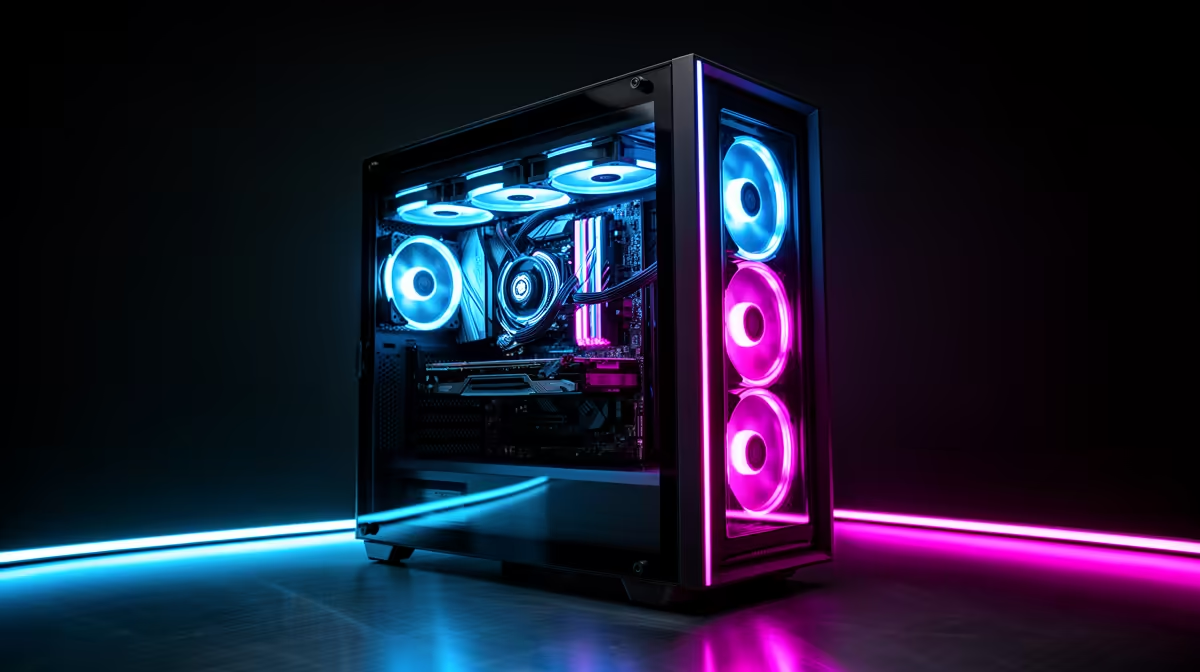
Choose a gaming PC on a current-generation platform (AMD AM5 or Intel LGA1851) that supports at least two M.2 NVMe slots, DDR5 with EXPO, a PCIe 4.0 x16 GPU slot, and a PSU rated at 650W or higher. These platform choices keep the system upgradeable for four or more years without requiring a full motherboard and CPU replacement.
Platform Longevity: The Foundation of Upgrade Potential 🔧
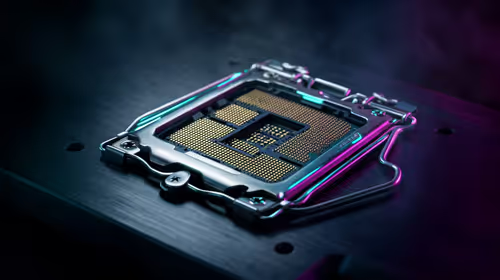
The single most important upgrade decision is made at the platform level, before choosing the GPU or RAM. AMD AM5 is explicitly supported through at least 2027 with next-generation Ryzen CPUs, meaning an AM5 board purchased today will accept a future Ryzen 9000-series or later chip without a new motherboard. Intel LGA1851 (Z890, B860) supports Arrow Lake now with roadmap compatibility expected through the next two to three Intel generations. Choosing either over an older AM4 or LGA1700 system means CPU upgrades can be done without also replacing the motherboard, RAM type, and cooler mounting hardware. In South Africa, a CPU upgrade within the same platform typically costs R2,000 to R5,000, far cheaper than a full platform refresh at R8,000 to R15,000 for CPU plus board plus DDR5 kit.
GPU and PSU: Building In Upgrade Room 🎮
A gaming PC built around a 650W 80+ Gold PSU can accommodate a GPU upgrade to an RTX 5070 or RX 9070 XT class card without a PSU replacement, since these GPUs draw 200 to 250W peak. Choosing a 750W or 850W PSU from the start extends the upgrade path to RTX 5080 and RX 9080-class cards without any component changes beyond the GPU itself. This adds R200 to R600 to the initial PSU budget but eliminates a R1,000 to R2,000 PSU swap later. The GPU slot must be PCIe 4.0 x16 or better: all current-gen and anticipated near-future gaming GPUs run at full performance on PCIe 4.0.
RAM and Storage: Expanding Without Replacing 💾
Buying 16GB DDR5 as 2x8GB today and planning to upgrade to 32GB later risks EXPO compatibility with four sticks on budget boards. A safer upgrade-proof strategy is to buy 2x16GB (32GB) from the start and never touch RAM again for the life of the build. For storage, a motherboard with two or more M.2 slots allows a second NVMe SSD to be added without removing drives or purchasing an external adapter. A 1TB PCIe 4.0 NVMe as the primary drive leaves the second M.2 slot free for a future 2TB expansion. NVMe SSD prices historically fall 15 to 25% per year, making this one of the lowest-cost upgrade paths available in any build.
Check the Second-Hand GPU Market at Launch Windows ⚡
When a new GPU generation launches, enthusiasts sell previous-gen cards to fund upgrades. Monitoring SA classifieds during new launch windows can yield quality previous-gen GPUs at 20 to 35% below retail, stretching your ZAR upgrade budget significantly on the GPU swap.
FAQ
Is AMD AM5 or Intel LGA1851 better for long-term upgrades?
Both platforms have multi-year CPU support commitments. AM5 has a clear advantage in that AMD has publicly confirmed support through 2027 and potentially beyond, giving buyers greater confidence in future CPU upgrade paths without a full platform change.
Should I buy a pre-built or self-build for maximum upgrade flexibility?
Pre-built gaming PCs from Evetech are built on standard ATX platforms with retail-grade components, making them fully upgradeable. Unlike some OEM builds, they do not use proprietary PSU connectors or non-standard motherboard form factors.
How much should I reserve in my ZAR budget for future upgrades?
A practical approach is to build at 80% of your total budget and hold 20% in reserve for the first upgrade, typically a RAM capacity increase or a second NVMe SSD. For a R20,000 budget, spending R16,000 now and keeping R4,000 available means the first upgrade can happen within 12 to 18 months without additional financial strain.
Building smart for the long run?
Evetech stocks AMD AM5 and Intel LGA1851 gaming PCs and components, with upgrade-friendly configurations and local warranty support across the full platform range.