Quick Answer
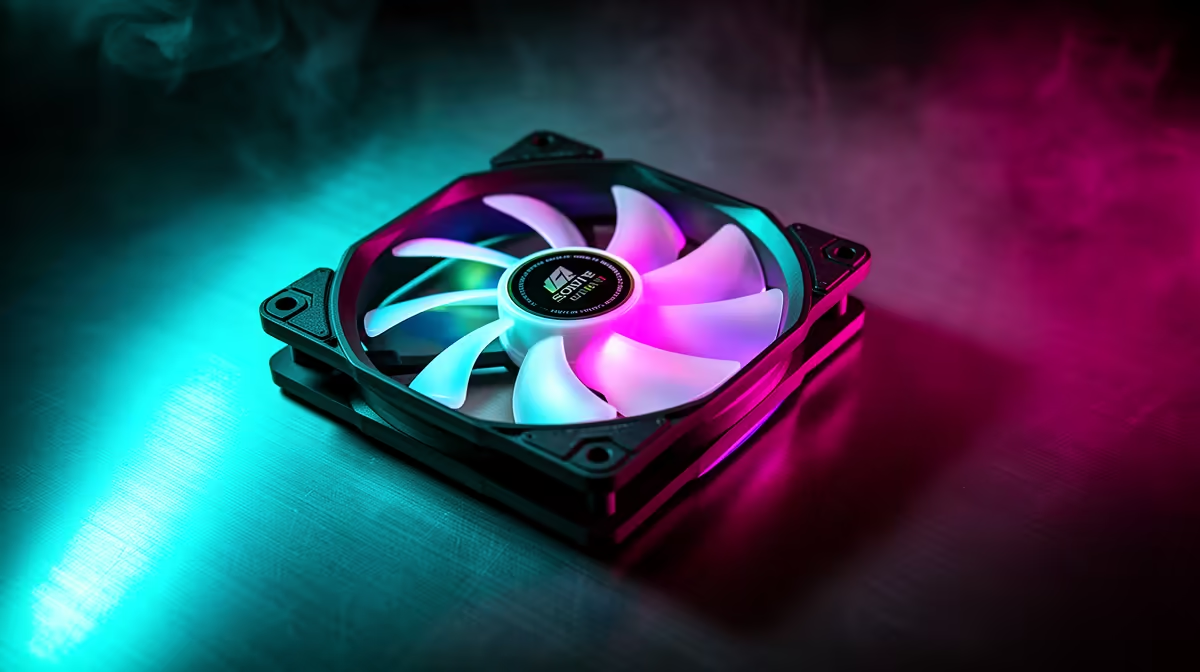
For a fanless gaming case, choose fans based on four factors: the case's fan mounting positions and sizes (120mm or 140mm), your CPU cooling method (AIO or air cooler), your GPU's heat output, and whether you want ARGB aesthetics. Start with three 120mm or 140mm intake fans at the front and two exhaust fans (top and rear) as the baseline configuration for a high-end gaming build.
Matching Fan Size to Case Mounting Positions 🔧
Before buying a single fan, document every available fan mounting position in your case with its size requirement. Most ATX cases without included fans support 120mm in the rear (one position), 120mm or 140mm at the top (two to three positions), and 120mm or 140mm at the front (two to three positions). Some cases also support 120mm fans at the bottom for GPU supplemental cooling.
Mixing 120mm and 140mm fans in the same case is fine from a functional standpoint but creates visual inconsistency that bothers some builders.
Airflow vs Static Pressure: Which Fan Type Goes Where 💡
Fan designs are optimised for two different jobs. High airflow fans move large volumes of air efficiently in open spaces (front intake positions and top exhaust positions with no restriction).
For a fanless case being populated from scratch: put static pressure fans on your AIO radiator (front or top depending on your layout), and use high airflow fans for any open intake or exhaust positions that do not have a radiator. If you are using an air cooler instead of an AIO, all positions can use high airflow fans because there is no radiator obstruction in the airflow path.
Fan Count and Build Tier: SA Pricing Reference 💰
For a typical high-end South African gaming build in 2026, a practical fan budget allocates R80 to R200 per fan depending on whether you want ARGB or plain black fans.
For a budget build where the case already shipped without fans, the three-intake and two-exhaust configuration (five fans total) is the minimum effective setup. At Gauteng summer temperatures of 28 to 35 degrees Celsius, under-fanned cases with high-end GPUs like the RTX 5080 will thermal throttle during extended gaming sessions, reducing performance and increasing component wear.
Positive Pressure Reduces Dust Ingress in SA Homes ⚡
Configure more intake fans than exhaust fans (positive pressure) to reduce dust ingress through unfiltered case gaps. South African homes, particularly in Gauteng and the Western Cape, accumulate fine dust quickly. Positive pressure pushes air outward through gaps, while negative pressure (more exhaust than intake) draws dust in through every unfiltered opening. Use filtered intake positions and clean filters monthly.
FAQ
How many fans does a gaming case need for an RTX 5080 build?
For an RTX 5080 system, five to six case fans is the appropriate count: three front intake, one rear exhaust, one or two top exhaust. If your AIO uses a 360mm radiator, those three fans count as the front intake, meaning you need only one rear and one top exhaust fan in addition to the radiator fans.
Are more fans always better for cooling a gaming PC?
No. Beyond the correct airflow pattern for your case layout, adding fans has diminishing returns. A well-configured five-fan setup outperforms a poorly configured eight-fan setup. Airflow direction (positive or negative pressure, front-to-back airflow path) matters more than raw fan count above a functional minimum.
Do fan controllers come with the case if it ships without fans?
Typically no. Fanless cases include fan mounting hardware but not fan controllers. Your motherboard provides PWM and ARGB headers for direct connection. For setups with more fans than motherboard headers, a fan hub powered via SATA and controlled by one PWM header is a R150 to R400 addition that solves the header shortage cleanly.
Populating a fanless gaming case with the right fan setup for your SA build?
Evetech stocks a full range of case fans from leading cooling brands, including ARGB and high-performance static pressure options with local warranty support.