Quick Answer
Gold-plated connectors resist oxidation and corrosion, maintaining consistent contact resistance over years of use, while triple shielding (foil, braid, and drain wire) suppresses electromagnetic interference that corrupts digital video and data signals. Together they are the most effective passive measures for long-term signal reliability in any cable.
How Gold Plating Protects Your Connection 🔌
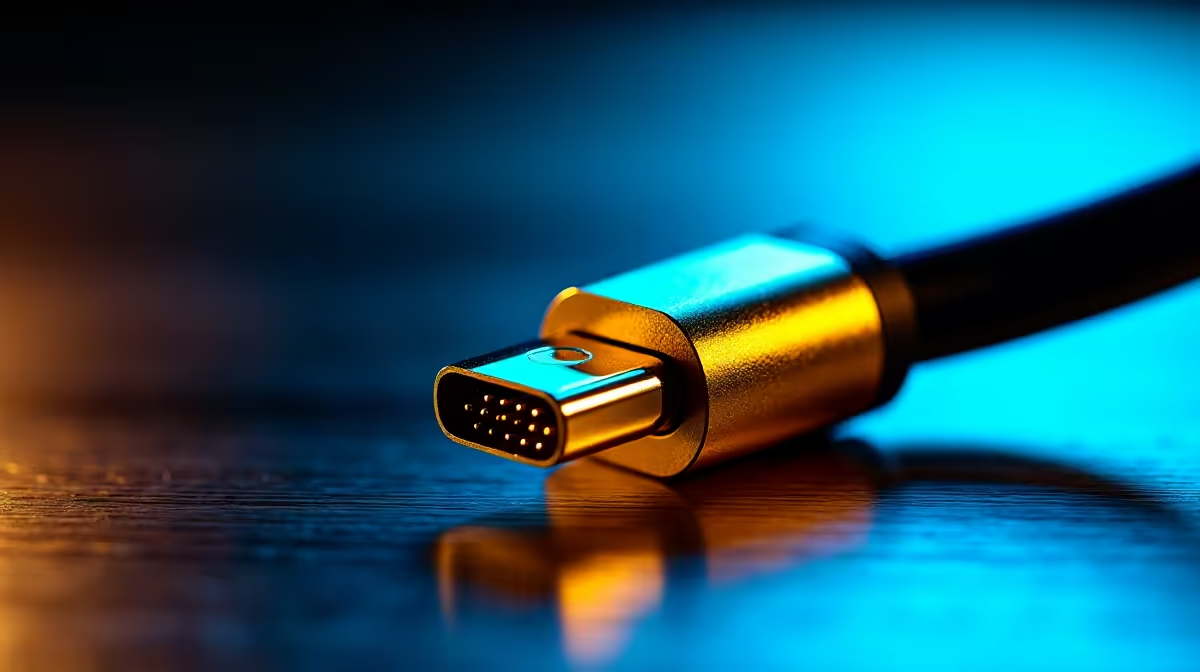
Base metal connectors, typically tin or nickel over copper, oxidise gradually, especially in humid coastal environments like Durban or Cape Town where salt air accelerates surface corrosion. Oxidation increases contact resistance, which in digital interfaces shows up as dropouts, flicker, or complete signal loss rather than gradual quality degradation. Gold does not oxidise under normal conditions, keeping contact resistance below 10 milliohms consistently over the cable's life. For DisplayPort and HDMI cables, gold plating is applied to the connector pins at a thickness between 0.3 and 1.0 microns, which is sufficient for thousands of insertion cycles. The practical benefit in a South African coastal home is that a R180 to R350 gold-plated cable outperforms a cheaper tin-plated alternative by year two or three of continuous use.
Understanding Triple Shielding 🛡️
Triple shielding refers to three layers of electromagnetic protection wrapped around the cable conductors. The first layer is an aluminium foil shield that blocks high-frequency interference from nearby power cables and radio sources. The second layer is a braided copper or aluminium mesh that handles lower-frequency EMI and adds mechanical strength. The third layer, the drain wire, provides a continuous ground path that bleeds off any residual charge that penetrates the outer layers. In environments with dense wireless activity, such as open-plan offices in Sandton or Cape Town tech parks, unshielded or single-shielded cables can pick up enough interference to cause 4K signal flickering at cable lengths beyond 1.5m. Triple-shielded cables eliminate this by reducing EMI ingress by 40 to 60 dB compared to unshielded equivalents.
Practical Steps to Maximise Reliability 🔧
Keep power cables at 90-degree crossings rather than parallel runs with your display cables. Parallel runs increase inductive coupling and undermine shielding over distance. Seat connectors fully until the latch clicks for DisplayPort or screws engage for HDMI. Inspect pins annually; bent or recessed pins cause intermittent faults. In humid environments, store spare cables in a sealed bag with silica gel.
Coastal Cable Care for SA Homes ⚡
In Cape Town and Durban, wipe DisplayPort and HDMI connector pins with a dry microfibre cloth every six months to remove salt film before it causes oxidation underneath the gold plating. Gold resists but does not fully prevent salt deposit build-up on pin surfaces.
FAQ
Does gold plating make a difference on short cables under 1m?
For short cables the primary benefit is longevity, not immediate signal quality. At under 1m, signal integrity is rarely the issue; oxidation over time is, and gold plating directly addresses that, particularly in coastal SA climates.
How can I tell if a cable has genuine triple shielding?
Look for manufacturer spec sheets that list foil shield, braid shield, and drain wire as separate line items. Reputable cable brands stocked at Evetech include this information on packaging. A noticeably heavier and stiffer cable for its length is also a reliable physical indicator.
Will triple shielding affect the flexibility of the cable?
Triple-shielded cables are stiffer and heavier than single-shielded options, typically by 20 to 30 percent in bending radius. This is a worthwhile trade-off for fixed desktop runs but may be inconvenient for frequently moved laptop cables.
Want cables that last in South African conditions?
Evetech stocks gold-plated, triple-shielded DisplayPort and HDMI cables for both home office and professional setups. Check the cable accessories section for current options.