Quick Answer
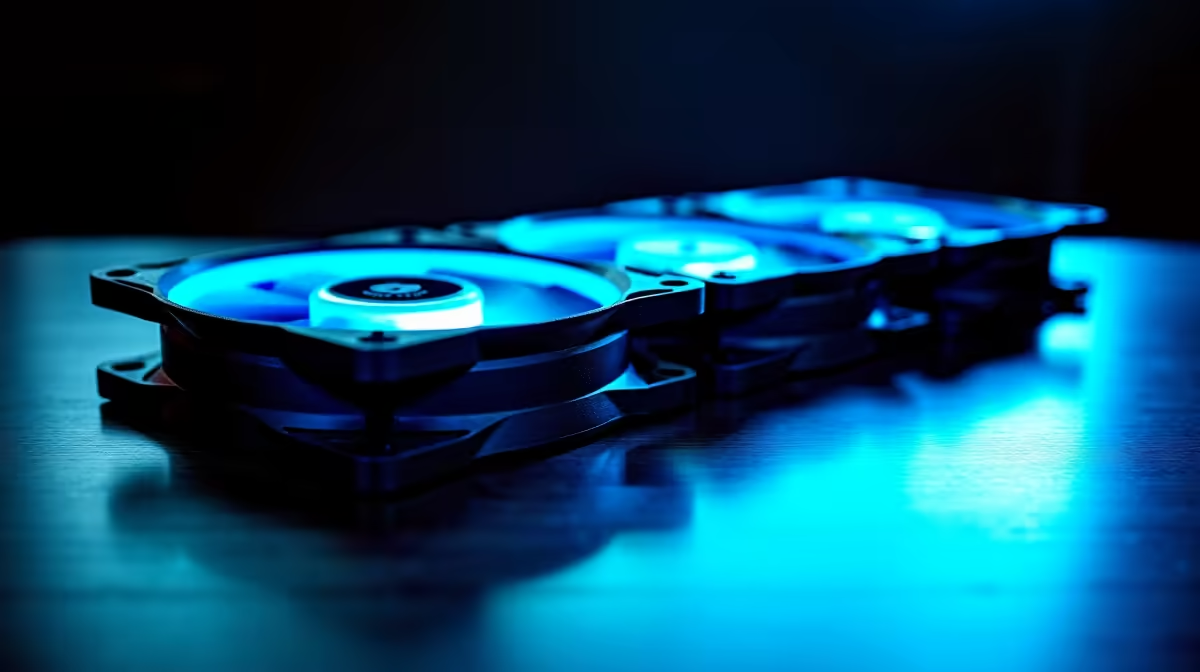
Clean 120mm PC fans every three to four months with compressed air, check for dust accumulation on fan blades and heatsink fins, and inspect bearing noise annually. Fans with sleeve bearings may need a drop of light machine oil at the three-year mark; fluid dynamic bearing fans generally require no lubrication.
Cleaning Schedule and Technique for 120mm Fans 🔧
Dust is the primary enemy of 120mm fan longevity in South Africa. Johannesburg and Pretoria homes accumulate visible dust on fan blades within two to three months. A clogged blade reduces airflow by 15 to 30 percent without changing the RPM readout. Clean fans with short bursts from a compressed air can (R60 to R120 at SA stationery and tech retailers) while holding the blade still to prevent bearing overspinning. Clean both blade sides, the frame grille, and any case dust filters simultaneously. Annual deep cleaning with the fan removed allows access to the hub and blade roots.
Bearing Inspection and Lubrication 🛢️
Bearing noise is the most reliable indicator of fan health. A healthy fluid dynamic bearing (FDB) fan at 1,200 RPM produces a smooth, faint whoosh. Rattling, grinding, or a rhythmic ticking sound indicates bearing wear or a partially seized bearing. Sleeve bearing fans (used in budget 120mm units) are more prone to this, particularly after two to three years of continuous use in a warm SA environment. A single drop of light sewing machine oil (such as Singer brand, available at SA fabric stores and hardware shops) applied to the bearing shaft via a cotton bud after peeling back the hub sticker can extend the fan's life by six to twelve months. Do not over-oil: excess lubricant attracts dust and worsens the bearing condition faster than no oil.
Airflow Testing After Cleaning 💨
After a cleaning session, verify that airflow has actually improved by comparing CPU temperatures under identical loads before and after. Run Cinebench R24 or a similar repeatable CPU benchmark, record peak temperature, clean the fans, and re-run. A drop of 3 to 8 degrees Celsius is typical after cleaning clogged 120mm fans in a mid-tower with three intake fans. If temperatures do not improve after thorough cleaning, the thermal paste between the CPU and cooler may also be degraded and require replacement. In SA's warmer northern regions, thermal paste degrades faster: plan a reapplication every two to three years for sustained performance.
Hold Fan Blades Still When Cleaning With Compressed Air ⚡
Blasting compressed air into a spinning fan forces the bearing to spin far beyond its rated RPM, which can damage the bearing in a single cleaning session. Always hold the blade hub or insert a cotton bud between two blades to keep the fan stationary while directing short air bursts at the dust. This takes five extra seconds per fan and significantly extends bearing life.
FAQ
How often should I replace 120mm fans in a SA gaming PC?
Quality FDB fans (such as those rated at 150,000-hour MTBF) last five to eight years in a well-maintained build. Budget sleeve bearing fans may need replacement after two to three years if bearing noise develops. Plan a fan inspection annually and replace on bearing noise, not on a fixed schedule.
Can I wash PC fan blades with water?
The blades themselves can be wiped with a slightly damp cloth, but the bearing and motor must stay completely dry. Never submerge a PC fan or spray liquid directly onto it. Compressed air and dry cotton buds are the safest cleaning tools.
My fan rattles even after cleaning. Is there a fix?
If cleaning does not resolve rattling, the bearing is likely worn beyond lubrication recovery. A replacement 120mm fan stocked at Evetech costs R150 to R400 depending on the specification, which is a straightforward swap without any special tools beyond a Phillips head screwdriver.
Time to replace worn fans or refresh your cooling?
Evetech stocks a range of 120mm replacement fans including FDB and ARGB options, with delivery to all major SA cities and towns.