Quick Answer
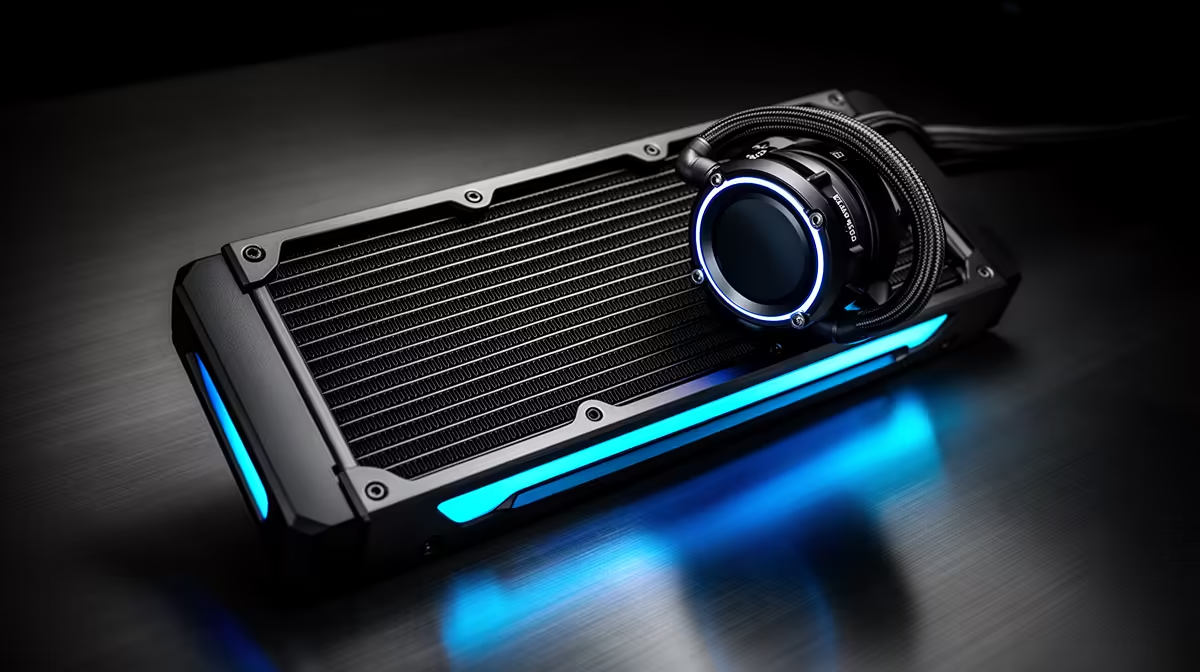
Reduce 360mm AIO fan noise by setting a custom PWM curve that keeps fans below 1,200 RPM during desktop and light gaming loads, ensuring the pump stays on its performance preset, and positioning the radiator for best natural airflow. On a well-cooled system, this approach cuts audible fan noise by 40 to 60% during typical use without any measurable rise in CPU temperature at moderate workloads.
Custom Fan Curves: The Single Most Effective Change 🎚️
The default "performance" preset on most AIO software runs fans at a flat 60 to 80% speed regardless of actual CPU temperature, which is unnecessarily loud during web browsing, light gaming at below 60 degrees Celsius, or system idle.
Radiator Placement and Fan Orientation for Acoustic Improvement 🔧
Fans blowing through a radiator generate more static-pressure noise (a mid-frequency hum) than fans that pull air through from the outside. Push-pull configurations increase airflow volume but also increase noise. For a quiet build, a single-fan-layer push configuration on a top-mounted radiator with fans set as exhaust typically achieves the best balance. Bottom-to-top airflow through the radiator uses the natural convective flow direction, reducing the pressure the fans need to overcome to achieve the same airflow rate. Reducing the pressure load on each fan is the most acoustically beneficial physical change outside of software tuning.
Pump Noise and Vibration Management 🔩
A noisy pump is a separate issue from fan noise and is often mistaken for fan noise in diagnostic troubleshooting. AIO pump noise presents as a mid-to-high-frequency gurgling or whine rather than the rhythmic whoosh of fan blades. If your pump noise is disruptive, first check that the pump is fully primed (no air bubble trapped in the loop, which causes a gurgling sound). Ensure the AIO tubes have no sharp bends or kinks restricting coolant flow. If pump noise persists, confirm in software that the pump is not in its maximum-performance mode during light loads: most AIOs allow pump speed control, and reducing pump speed from its maximum during idle reduces both noise and power draw slightly.
Fan Anti-Vibration Mounting Tip ⚡
Use silicone fan screws instead of standard metal screws when mounting your 360mm AIO fans to the radiator. Metal screw vibration transfers resonance from the fan motor directly into the radiator and case panels, amplifying low-frequency noise. Silicone screws cost under R50 for a pack of 16 and are one of the cheapest acoustic improvements available for any PC build.
FAQ
Can I run a 360mm AIO fan at very low RPM all the time without overheating?
At 300 to 500 RPM (15 to 25%) the fans move very little air and are unsuitable for sustained CPU loads above 100W. Use this range for idle and desktop only; ensure your fan curve ramps aggressively enough to reach 80 to 100% before temperatures exceed 85 degrees Celsius.
Does a thicker radiator help with noise at lower fan speeds?
Yes. A 30mm thick radiator holds more coolant volume and fin surface area, so it can dissipate more heat at lower fan speeds. This means your fans spend more time at the quiet end of their RPM range before needing to ramp up, providing a tangible acoustic benefit over a thin 25mm radiator at the same TDP.
Is pump noise covered under warranty if it develops after a year of use?
Most reputable AIO manufacturers cover pump failure under warranty for three to five years. Gurgling or whining pump noise that develops after initial setup is typically covered. Keep your purchase receipt and register the product on the manufacturer's site to ensure warranty access via the local distributor.
Looking for a quiet 360mm AIO for your gaming build?
Evetech stocks AIOs with PWM fan headers and software-configurable curves, so you can dial in the noise-to-performance balance that suits your setup.