Quick Answer
A built-in GPU holder is a vertical arm or rail mechanism inside the case that contacts the underside of the GPU and bears its weight independently of the PCIe slot. Install it by adjusting the height to just touch the card without lifting it, then lock the bracket in place.
Why GPU Sag Is a Real Problem in 2026 🖥️
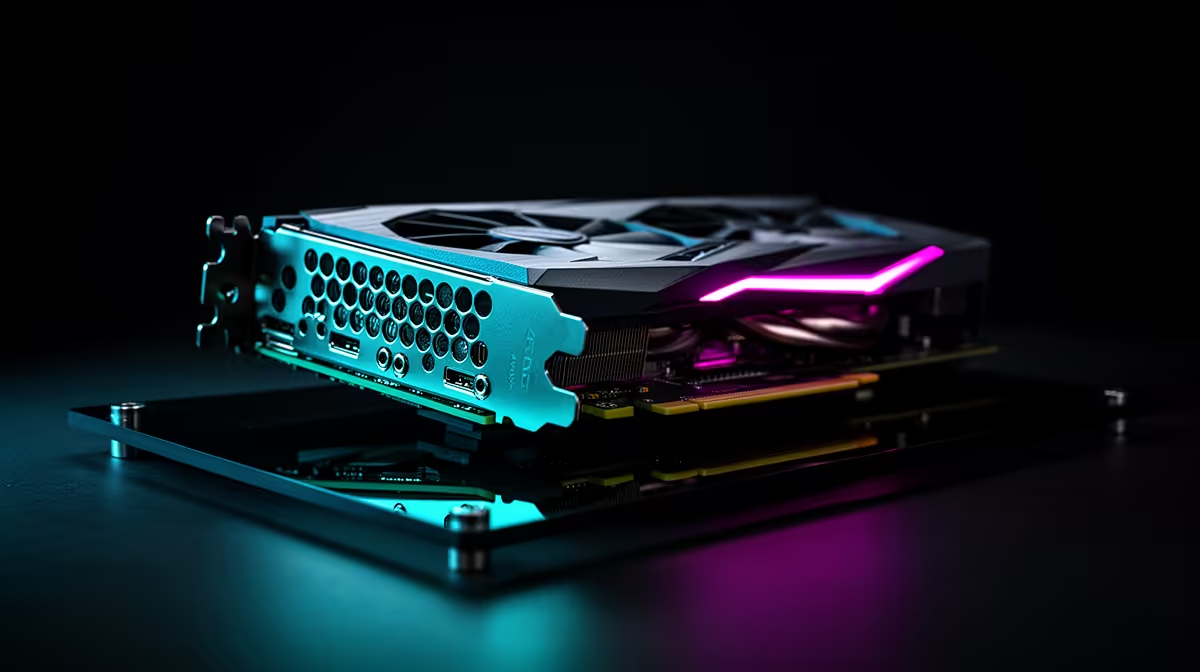
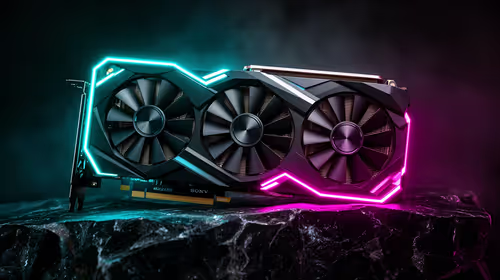
Modern high-end GPUs are genuinely heavy. An RTX 5090 with its triple or quad-fan cooler weighs 1.8 to 2.3kg depending on the AIB variant. The PCIe x16 slot is engineered to a structural limit roughly half that weight, supported at one end only. Over months, gravity pulls the GPU down, flexing the PCIe slot and creating visible droop at the far end of the card. In extreme cases this bend stresses the PCIe contacts and can cause signal errors, though more commonly it is a cosmetic concern and a source of micro-vibration. For glass-panel cases where the GPU is prominently visible, sag is also aesthetically problematic.
How to Install and Adjust a Built-In GPU Bracket 🔧
Most premium full-tower cases from Lian Li, Phanteks, and Corsair include a factory-fitted GPU support bracket that slides along a vertical rail or rests on a PCIe-slot-adjacent arm. Installation follows these steps. First, seat the GPU fully and secure the retention bracket. Second, extend the support arm or adjust the height-adjustable leg until it just contacts the underside of the GPU shroud, not the PCB itself. Third, verify the contact is light: the arm bears weight but must not push the GPU upward, which would stress the slot from below. Some brackets have a rubber or felt pad at the contact point to prevent scratching. Lock the bracket via its thumbscrew. After installation, confirm the GPU still seats fully by pressing the PCIe latch and verifying it is fully engaged.
Aftermarket Options When the Case Has None 💰
If your case lacks a built-in GPU bracket, aftermarket universal GPU supports are available separately. These are telescoping metal or acrylic posts with a padded tip that sits on the case floor. They cost R200 to R600 locally and install in under five minutes. Some builders use a PCIe riser cable with a vertical GPU mount, which eliminates sag entirely by mounting the GPU vertically on a bracket. Vertical mount kits are stocked at Evetech. Note that vertical mounting positions the GPU closer to the glass panel, which can reduce intake airflow by 10 to 20 percent, so confirm at least 30mm of clearance between GPU fans and glass.
Adjust Height After Thermal Cycling ⚡
Set your GPU support bracket after the PC has run under gaming load for 30 minutes and returned to idle. Components expand slightly under heat and contract at idle. A bracket adjusted on a cold freshly built system may have a small gap once the GPU PCB flexes under thermal load. Re-check the contact after the first full gaming session.
FAQ
Does GPU sag actually damage the PCIe slot or GPU?
In most consumer builds, visible sag does not cause electrical failure. The flex required to damage PCIe contacts is far beyond what gravity alone produces in a stationary case. However, for PCs regularly transported to LAN events, repeated vibration combined with sag stress can eventually cause intermittent PCIe signal issues.
Can I use a GPU support bracket with a vertical riser mount?
No. A vertical riser repositions the GPU perpendicular to the motherboard, where the riser cable and bracket geometry manage weight differently. A floor-mounted support arm is incompatible with a vertical GPU orientation.
What if the support bracket scratches my GPU shroud?
Most quality brackets include a rubber or foam contact pad. If not, wrap the contact tip with soft foam tape (used for door sealing) before installation. This prevents cosmetic scratches without affecting structural function.
Building with a heavy RTX 5090 or RX 9070 XT?
Evetech stocks full-tower cases with built-in GPU support brackets and universal aftermarket GPU holders to keep your graphics card perfectly level.