Quick Answer
Tool-free side panels use thumbscrews, magnetic latches, or push-button release mechanisms to allow side panels to open or slide off without a screwdriver. This reduces the friction of routine PC maintenance, making cleaning and GPU upgrades a two-minute task rather than a ten-minute one.
How Tool-Free Mechanisms Work 🔧
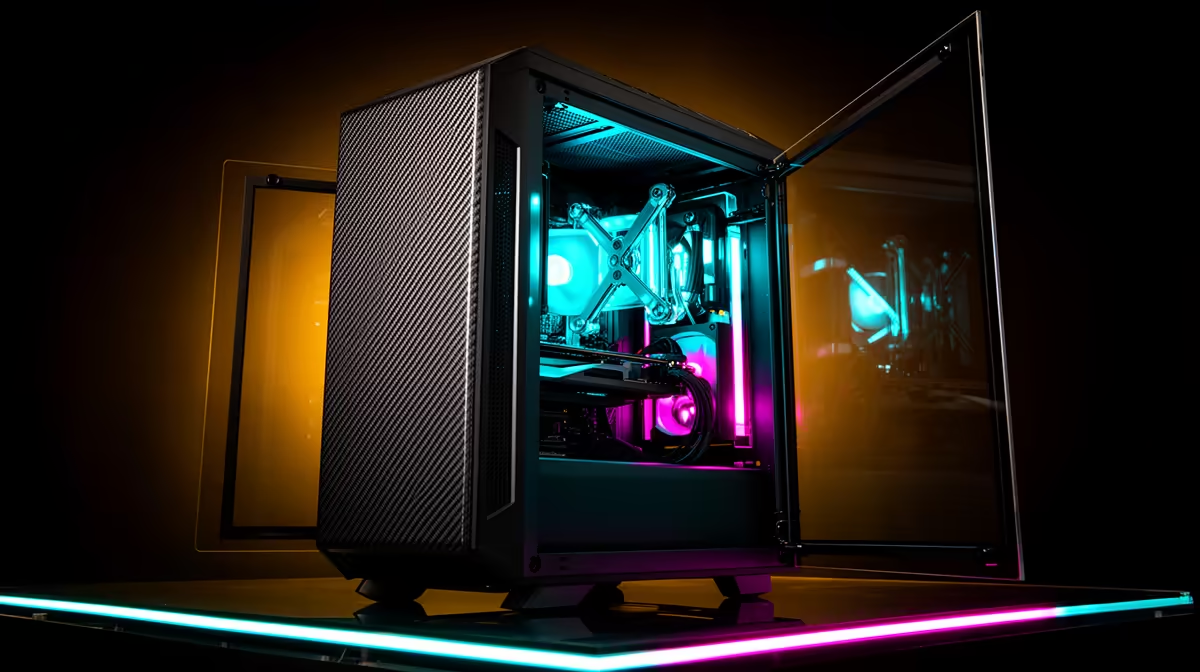
Modern PC cases use three main tool-free side panel approaches. Thumbscrew panels replace Phillips screws with hand-tightenable knurled screws that require no tools. They are reliable but still manually operated. Hinged latch systems use a spring-loaded release button or pull handle on the rear edge; pressing it releases a latch and the panel swings open like a door. Lian Li cases use a rear push button that releases a hinged tempered glass panel with a satisfying click. Magnetic snap panels are used mostly on mesh side panels; rare-earth magnets hold the panel flat and it pulls away with light finger pressure. The most premium approach combines a hinged design with a magnetic dampener controlling how quickly the panel swings, preventing glass from hitting the frame. All three allow dust cleaning and GPU access without any tool.
Practical Benefits for Regular Maintenance 🧹
South African homes generate significant dust, particularly on the Highveld where dry winter conditions and sandy soil produce airborne particulates that settle inside PC cases. A tool-free panel removes the psychological barrier to monthly cleaning. When opening the case takes 30 seconds, users are far more likely to actually do it. Dust buildup on GPU heatsinks is the most common cause of thermal throttling in ageing gaming PCs; a GPU cooler clogged with six months of Pretoria dust can raise GPU temperatures by 15 to 25 degrees Celsius. Cases with tool-free access combined with removable magnetic dust filters make cleaning genuinely painless. Quarterly compressed air purges of GPU heatsink, CPU cooler, and PSU filter take under five minutes.
Upgrade Frequency and Long-Term Value 💰
A gaming PC in SA typically sees a GPU upgrade every two to four years and a RAM or SSD upgrade every one to two years. Tool-free side access amortises its value across every upgrade event. When the RTX 60-series arrives or NVMe Gen 6 drives become standard, you will open that panel multiple times across the case's five-to-eight-year lifespan. Cases with tool-free panels from Lian Li, Corsair, and Fractal stocked at Evetech range from around R1,800 for a tempered-glass mid-tower to R6,000 for a full-tower with tool-free front and side access.
Lay the Case Down Before Opening the Panel ⚡
Tempered glass side panels are heavy (1.2 to 2kg in larger cases) and hinge from the rear. Before releasing the panel on a desk-mounted case, lay the case on its side so the glass cannot swing outward and fall. A glass panel dropped 80cm onto a hard floor almost always shatters, and replacement panels cost R400 to R900 with SA distributor lead times.
FAQ
Are tool-free side panels as secure as screwed panels?
Yes, in normal use. Latched and hinged panels handle the vibration of running fans without rattling loose. However, if you transport your PC to LAN events frequently, thumbscrew panels provide a slightly more secure closure for rough handling.
Do tool-free panels affect case rigidity and noise dampening?
Slightly. A screwed steel panel is stiffer than a magnetic snap panel and can reduce panel resonance. The difference in practice is minimal on well-built cases where panels are 4mm to 6mm tempered glass or 0.8mm steel with rubber gasket seals.
Can I add a tool-free mechanism to an existing case?
Not practically. The latch receivers and hinge pins are machined into the case chassis. Retrofitting requires metalworking. If tool-free access is important, select a case that includes it from the start.
Want a case that opens as fast as your reflexes?
Evetech stocks mid-tower and full-tower cases with tool-free tempered glass and mesh side panels from Lian Li, Corsair, Fractal, and more.