Quick Answer
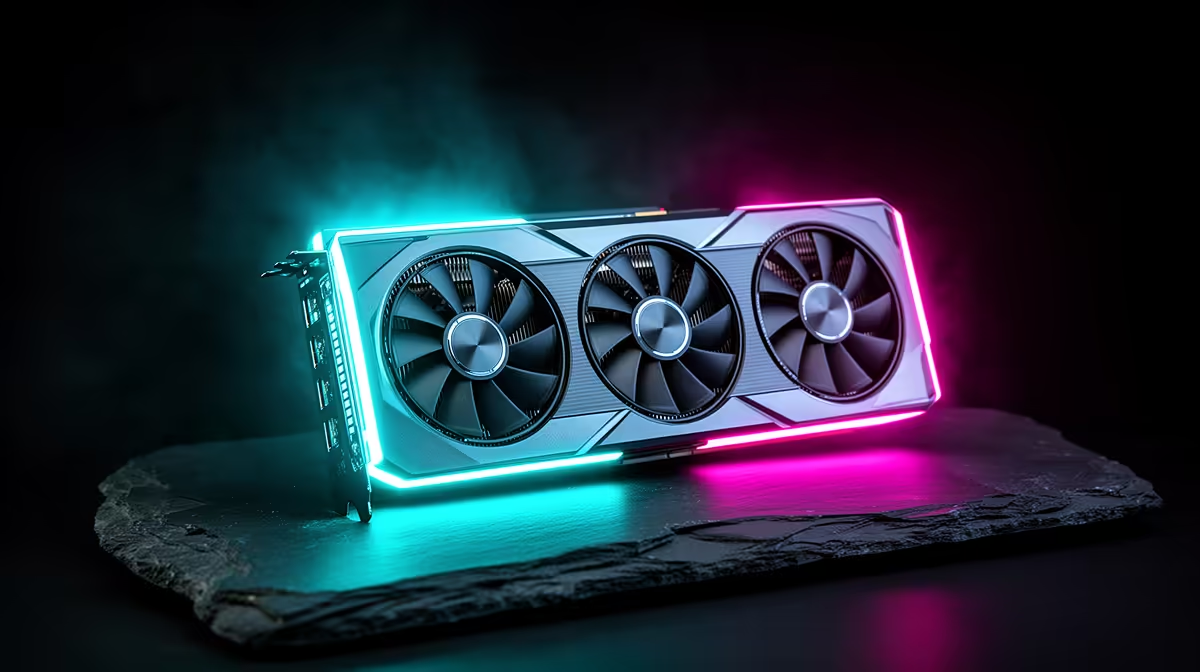
Yes, 430mm GPU clearance is more than enough for all current high-end graphics cards. The longest triple-fan RTX 5090 variants from board partners such as ASUS ROG and MSI measure around 358mm to 366mm, leaving a generous 60mm to 70mm of headroom in a 430mm-cleared chassis. You would need a card exceeding 430mm before this spec becomes a limitation, and no current consumer GPU reaches that length.
What 430mm Clearance Unlocks in Practice 🖥️
With 430mm GPU clearance, you can install any RTX 50-series or RX 9000-series card currently on the SA market without measuring or worrying about tight fits. Triple-fan RTX 5080 cards top out around 340mm to 346mm; RTX 5090 extreme edition models from ASUS or Gigabyte AORUS push to 358mm to 366mm. A 430mm case swallows all of these with room to spare. The real advantage of that extra clearance is cable routing: you can manage your 16-pin power connector with a right-angle adapter or a slack loop without pushing it against the side panel. On SA high-end builds, cases with 430mm clearance start from around R2,800 and represent a wide range from practical mid-towers to full panorama showcase chassis.
When Extra Clearance Matters Beyond Length 🔧
GPU clearance is not just about card length. Width matters too: some triple-slot RTX 5090 cards extend 65mm to 70mm across three PCIe slots, and a case with tight side-panel glass may contact the outer heat-sink fin stack if the panel bows inward. Tempered glass panels are rigid, but poorly fitting clips can place the glass within 1mm to 2mm of the card body. A case with 430mm length clearance typically also has the interior width to avoid this, but always check if there is a separate fan or shroud clearance spec listed alongside GPU length. Vertical GPU mount brackets add another variable: riser cables position the card sideways, and clearance measurements change depending on the riser bracket's offset from the glass panel.
Future-Proofing Your Case for Next-Gen GPUs 💡
GPU lengths have grown steadily over the past three generations. RTX 30-series founders cards measured 285mm to 313mm; RTX 40-series triple-fan models pushed to 325mm to 346mm; RTX 50-series continues that trend. Buying a case with 430mm clearance today means it is likely to fit the next one or two GPU generations as well, assuming form-factor growth continues at a similar pace. For SA builders who upgrade GPUs every two to four years, future-proofing the case is a cost-effective strategy because quality ATX mid-towers last through three or more hardware generations.
Measure Your 16-Pin Clearance Too ⚡
RTX 50-series cards use a 16-pin (12VHPWR) power connector that points straight up from the card's rear. Confirm the case has at least 40mm above the card's connector port when the card is seated, or use a right-angle 16-pin adapter to route the cable horizontally toward the PSU shroud. This prevents cable tension on the connector.
FAQ
Do all cases advertising 430mm clearance actually deliver that measurement?
Not always. Some manufacturers measure from the front of the case interior to the back of the PCIe bracket area, which can include a drive cage that physically reduces usable length. Read the full specification sheet and user reviews to confirm real-world clearance before purchasing.
Will an RTX 5090 fit in a case with 400mm GPU clearance?
Most RTX 5090 models from major board partners will fit in 400mm clearance, as their lengths range from 336mm to 366mm. However, extreme triple-fan variants from ASUS ROG or Gigabyte AORUS that reach 366mm would have only 34mm of clearance, leaving little room for cable routing or an angled power connector.
Is 430mm clearance overkill for a Radeon RX 9070 XT build?
Overkill is the wrong way to look at it. The RX 9070 XT triple-fan models measure around 310mm to 325mm, so 430mm is generous.
Fitting a triple-fan GPU in your next build?
Evetech stocks ATX mid-towers and full towers with 430mm and above GPU clearance, ready for RTX 50-series and RX 9000-series cards.