Quick Answer
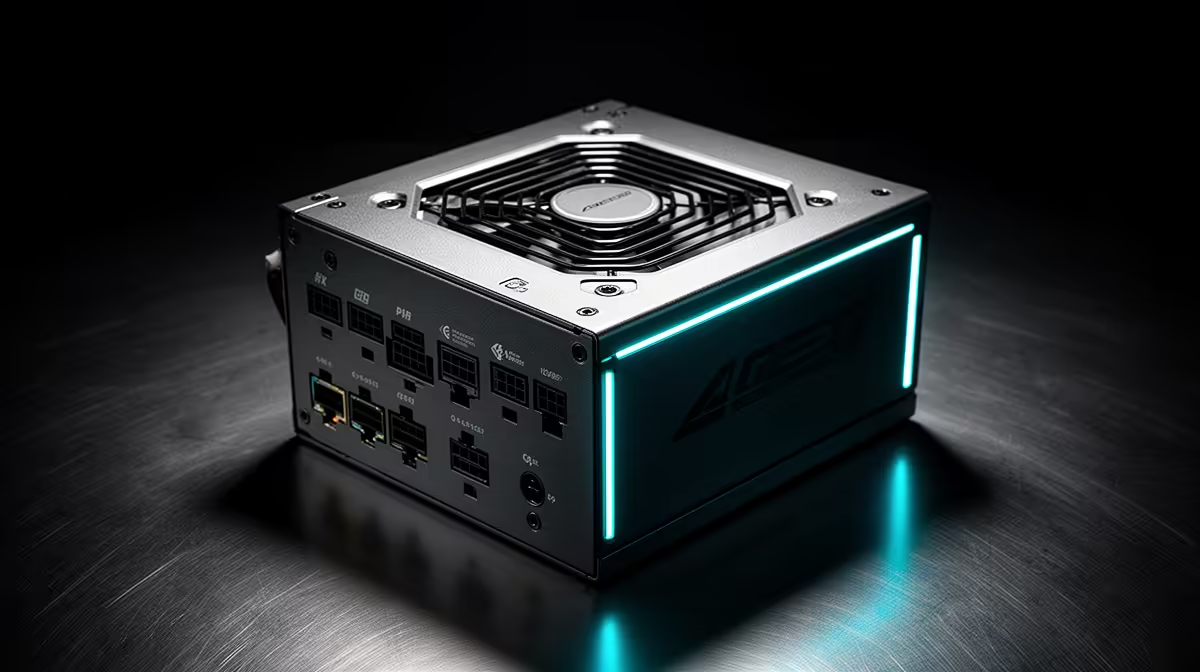
Yes, a 750W power supply is more than enough for an RTX 5060 gaming PC build. The RTX 5060 has a TDP of around 150W, and a full system with a Ryzen 7 or Core i7 CPU, storage, cooling, and peripherals typically draws 350W to 450W under full load, leaving substantial headroom on a 750W unit.
Understanding Power Draw in a Mid-Range Gaming Build 🔌
The RTX 5060 is a notably efficient GPU for its performance tier. Nvidia rates it at approximately 150W TDP, which is well below the 220W to 300W range of higher-end cards like the RTX 5070 and RTX 5080. A typical gaming build with a Ryzen 7 8700F draws around 65W to 90W under gaming load. Add 30W to 40W for storage, case fans, RGB, and other components, and the whole system sits comfortably between 280W and 360W at peak. A 750W PSU running at roughly 50 percent load operates in its most efficient zone, which also means cooler temperatures, less fan noise, and a longer component lifespan.
PSU Efficiency Ratings and Why They Matter in SA 💡
80 Plus Bronze, Silver, Gold, and Platinum ratings measure how efficiently a PSU converts mains power to DC power for your components. In South Africa, where electricity costs from Eskom continue to climb, a Gold-rated 750W unit wastes less energy as heat compared to a basic Bronze unit. At 50 percent load, an 80 Plus Gold PSU operates at around 92 percent efficiency. Over a year of daily gaming, the difference between a Bronze and Gold unit can amount to several hundred rand in electricity savings, making the small price premium for Gold worthwhile. Look for units from established brands that offer at least a five-year warranty, since PSU failures can damage other components.
Can You Upgrade Later Without Replacing the PSU? 🔧
One practical advantage of a 750W PSU in an RTX 5060 build is future-proofing. If you upgrade to an RTX 5070 or RTX 5080 in two to three years, a quality 750W unit will still have enough headroom for those GPUs combined with a current-generation CPU. Only the most power-hungry flagship cards like the RTX 5090 genuinely push a 750W unit to its limit. This makes a 750W PSU a smarter long-term choice than a 650W unit, which might leave you short on headroom after a GPU upgrade. Pre-built RTX 5060 systems in South Africa priced between R18,000 and R24,000 typically ship with 650W or 750W units; when the option is available, the 750W is worth prioritising.
Check Your PSU Cables Before First Boot ⚡
Modern GPUs including the RTX 5060 use a 16-pin 12VHPWR or 12V-2x6 connector. Confirm your PSU either ships with this cable natively or includes the adapter. Do not daisy-chain two 8-pin connectors into the adapter unless the PSU manual explicitly supports it; use separate cables from individual PCIe rails to ensure stable power delivery.
FAQ
What is the minimum PSU wattage for an RTX 5060 build?
Nvidia recommends a 650W PSU as the minimum for an RTX 5060 system. A 750W unit gives you extra headroom for overclocking, a full complement of case fans, and a future GPU upgrade without needing to replace the PSU.
Does PSU brand matter for an RTX 5060 build?
Yes. A cheaper no-name PSU rated at 750W may not deliver stable power under sustained load, which can cause crashes or damage components. Choosing a unit from a reputable brand with an 80 Plus Gold rating and a multi-year warranty protects the rest of your build investment.
Is a modular or semi-modular PSU worth it for a gaming build?
A modular or semi-modular PSU lets you run only the cables you need, which improves airflow inside the case and makes cable management much easier. For a mid-range build where you want clean airflow around your RTX 5060, the modest price premium for a semi-modular unit is a practical investment.
Need a quality PSU for your RTX 5060 build?
Evetech stocks a range of 650W and 750W power supplies including 80 Plus Gold-rated units. Browse the PSU category to find the right option for your build.