Quick Answer
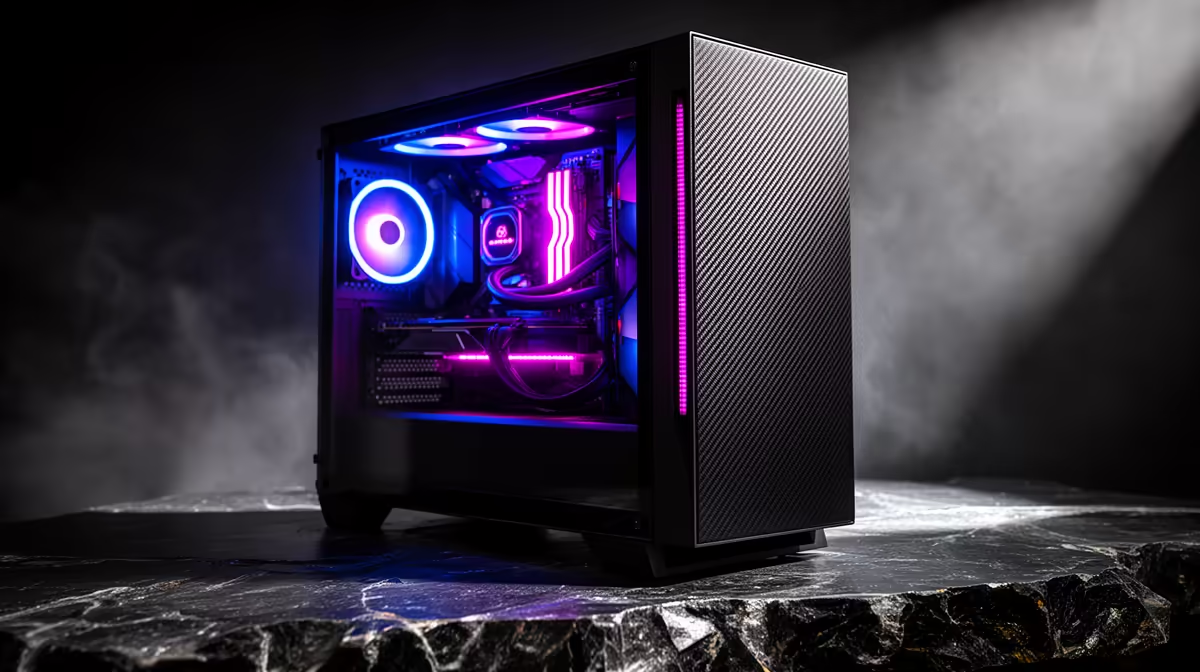
Yes, an E-ATX case is worth it when your motherboard is E-ATX format, typically a Threadripper, HEDT, or premium AM5 X870E board with extended I/O and multiple PCIe slots. For standard ATX gaming builds, even high-end ones, an ATX case gives equivalent or better value without the extra size and cost.
When E-ATX Is the Correct Choice 🖥️
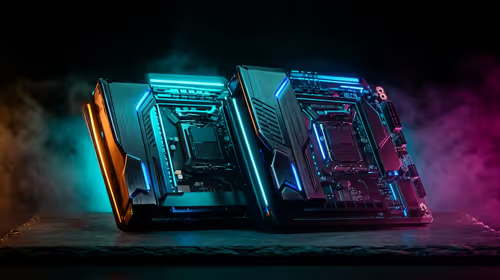
E-ATX motherboards exceed the standard ATX width of 244mm, reaching 330mm, which means they physically do not fit in a standard ATX case. If you have selected an AMD Threadripper 7000-series or Intel Xeon platform for a workstation that handles 3D rendering, scientific simulation, or multi-track video production alongside gaming, the E-ATX board is a design requirement, not a luxury. These boards offer 8 RAM slots for up to 256GB DDR5, four or more PCIe 5.0 x16 slots for multi-GPU or PCIe NVMe expansion, and dedicated management controllers that ATX boards do not include. The case must match the board footprint.
The Workstation Use Case: Real Benefits 🔧
For a South African creative professional or content studio using a single workstation for 8K video editing in DaVinci Resolve, simultaneous 3D rendering in Blender, and gaming downtime, an E-ATX platform provides headroom that a mainstream ATX build simply cannot match. The extra PCIe slots allow adding a dedicated video capture card, a high-speed 10GbE network card for NAS access, and a primary GPU all without sharing bandwidth. Local video production agencies in Johannesburg and Cape Town running multi-GPU Blender render farms typically use HEDT or Threadripper platforms for exactly this reason. The E-ATX case that houses this build costs more, but the alternative is two separate machines.
When to Stick With ATX Instead 💰
If your build centres on a Ryzen 9 9900X or Core Ultra 9 285K for gaming with a secondary use of streaming or photo editing, a top-tier ATX mid-tower with 420mm AIO support and strong airflow handles the workload without any E-ATX overhead. Flagship ATX cases in the R3,000 to R5,000 range match E-ATX case thermal performance for standard board sizes. The E-ATX premium in both case and motherboard costs adds R8,000 to R15,000 to a build for benefits that pure gaming workloads will not fully use. Redirect that budget to a faster GPU or more NVMe storage for better in-game performance.
Confirm E-ATX Support Before Ordering Your Case ⚡
-ATX is not a single standard: some boards described as E-ATX are 305mm by 277mm rather than the full 305mm by 330mm. Measure your specific board's dimensions from the manufacturer datasheet and confirm the case's listed maximum board size covers it before completing your purchase. A 10mm shortfall means the rear I O cutout does not align.
FAQ
Do E-ATX cases cost significantly more than ATX cases?
Yes. E-ATX cases in South Africa typically start R500 to R1,500 higher than comparable ATX designs at each quality tier. Flagship E-ATX cases exceed R5,000 at the top end, while premium ATX mid-towers top out around R4,000 to R5,500 for equivalent feature levels.
Are E-ATX cases harder to move or transport?
Yes. A full-tower E-ATX case with a loaded E-ATX board, 420mm AIO, and multiple GPUs can weigh 15 to 20kg. This is not a system for frequent LAN event participation unless you have transport suitable for the size and weight.
Can I upgrade an ATX build to E-ATX later without replacing everything?
No. Switching from ATX to E-ATX requires a new case and a new motherboard at minimum. RAM and storage carry over if compatible with the new platform. GPU, CPU cooler, and PSU typically survive the upgrade, but the case and board are full replacements.
Building a serious workstation or high-end gaming rig?
Browse Evetech's E-ATX case range and platform options to find the right enclosure for your board and build goals.