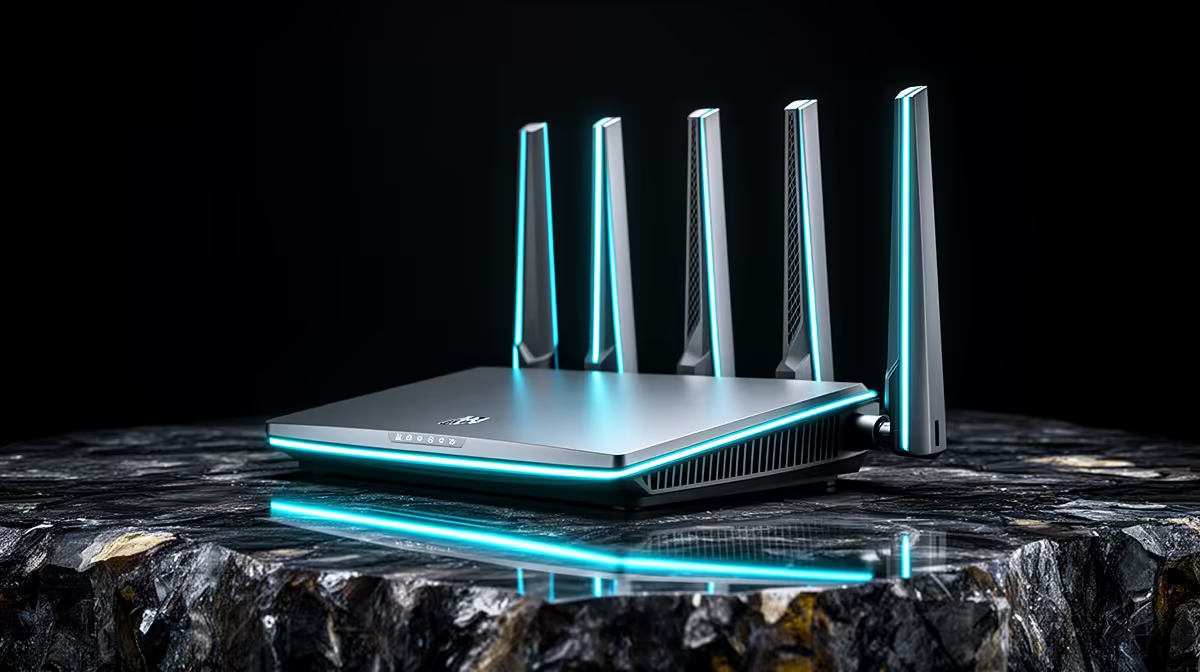
A brand-new fibre line or 5G fixed-wireless connection deserves a router that does not bottleneck it, and the temptation is to hold out for the next big Wi-Fi number. Resist that. If you have just got fibre or 5G, the right move is a Wi-Fi 7 router today, because Wi-Fi 8 reuses the exact same radio bands and will not be certified until 2028. Waiting buys you nothing on speed and costs you years of slower connection.
Quick Answer
Pair a new fibre or 5G fixed-wireless line with a Wi-Fi 7 router now. Wi-Fi 8 uses the same 2.4GHz, 5GHz, and 6GHz bands and the same 320MHz channels as Wi-Fi 7, with certification not expected until around 2028. Choose a Wi-Fi 7 model with a 2.5Gbps WAN port so the router can actually accept the full speed of a fast plan.
Why Wi-Fi 8 is not the upgrade it sounds like
It is easy to assume each new Wi-Fi number means more speed. Wi-Fi 8 breaks that pattern. In terms of raw bandwidth and the features that drive it, Wi-Fi 8 is essentially the same as Wi-Fi 7: identical bands, identical maximum channel width. What Wi-Fi 8 adds is reliability engineering, things like multi-access-point coordination, enhanced multi-link operation, and better power management, aimed at consistent performance in dense, congested environments rather than higher peak throughput.
That distinction matters for your decision. If you were waiting for Wi-Fi 8 to make your fibre faster, it will not. The peak speed your line can deliver is fully addressed by Wi-Fi 7 right now.
The timeline that settles it
Wi-Fi 8 was shown at trade events in 2026, but the standard is projected to finalise around 2028, with Wi-Fi Alliance certification expected to begin only in late 2027. Early hardware may appear before then, but mature, certified, widely supported Wi-Fi 8 gear is years away. Buying a router is not something you do every year. Holding a fast new connection back behind an older router for two or three years, waiting on a standard that delivers the same speed, is the wrong trade. Get the performance now.
The spec that actually matters: the WAN port
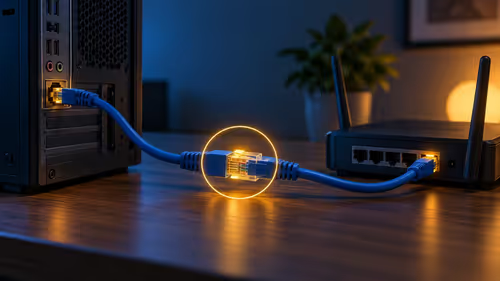
Here is the detail most people miss. The Wi-Fi standard governs the wireless side, but the port where your fibre or 5G feed plugs in, the WAN port, governs how much speed the router can accept in the first place. Many older routers cap that port at 1Gbps. If your plan exceeds 1Gbps, or you want headroom to upgrade, a 1Gbps WAN port becomes the bottleneck regardless of how good the Wi-Fi is.
A Wi-Fi 7 router with a 2.5Gbps WAN port removes that ceiling. It can ingest a faster plan in full and hand it to your devices over the wireless bands. When you shop, prioritise that 2.5Gbps WAN port as much as the Wi-Fi generation itself, because the fastest radios in the world cannot deliver speed the WAN port refused to let in.
Why South African homes get the full 6GHz benefit
Wi-Fi 7's headline gains lean heavily on the 6GHz band, which offers wide, clean channels free of the congestion that clogs 2.4GHz and 5GHz. That band is available for home use here, so a Wi-Fi 7 router delivers its full advantage today rather than waiting on regulatory changes. A modern fibre or fixed-wireless line paired with a 6GHz-capable Wi-Fi 7 router is a genuinely current setup, not a compromise.
Matching the router to your home, not just the line
The fastest WAN port in the world does not help if the Wi-Fi cannot carry that speed to the rooms where you use it. Coverage is the other half of the equation. A single router suits a flat or a compact home, where one well-placed unit blankets the space. A larger or multi-storey house, or one with thick walls, is where signal drops off before it reaches the far bedroom, and a single router leaves dead spots no matter how fast the line is.
For those homes, a mesh system of Wi-Fi 7 nodes spreads coverage evenly, with each node sharing the same fast backhaul so speed holds up across the property. The principle stays the same: Wi-Fi 7 now, a fast WAN port on the main unit, and enough nodes to cover the floor area you actually live in. Buying a single high-end router for a house that needs three nodes is a common way to feel let down by a connection that is, in fact, perfectly fast at the source.
Wired backhaul where it counts
One more detail rewards the effort: for devices that never move and demand the most, a desktop, a games console, a TV box, a wired connection straight to the router beats any wireless link for consistency. A new fast line plus a Wi-Fi 7 router gives you the headroom, but running a cable to the heaviest, stationary devices removes wireless variability entirely for them and frees up airtime for everything that genuinely needs to be wireless. It is the kind of small, unglamorous step that quietly makes a fast connection feel as fast as the plan promised.
Fixed-wireless 5G has the same logic
If your new connection is 5G fixed-wireless rather than fibre, the router question is identical. The 5G modem brings the internet into your home, but the Wi-Fi router distributes it to your devices. A Wi-Fi 7 router with a fast WAN port makes the most of whatever speed the 5G signal provides, and the same Wi-Fi 8 reasoning applies, no speed benefit, years away, not worth the wait. The current networking range at Evetech covers Wi-Fi 7 routers across price points, including models with 2.5Gbps WAN ports.
To finish a tidy install, the cabling, mounts, and adapters that make a clean setup are easy to add, and the accessories Evetech buyers pick up most often cover most of those small but necessary pieces.
Frequently Asked Questions
Should I wait for Wi-Fi 8 instead of buying Wi-Fi 7?
No. Wi-Fi 8 uses the same bands and channel widths as Wi-Fi 7, so it offers no peak-speed advantage, and it is not expected to be certified until around 2028. Waiting holds your new connection back for years with no speed gain.
What is so important about the WAN port?
The WAN port is where your fibre or 5G feed enters the router, and it caps how much speed the router can accept. A 1Gbps WAN port bottlenecks faster plans. A 2.5Gbps WAN port lets the router ingest a fast line in full.
Will a Wi-Fi 7 router work with my existing devices?
Yes. Wi-Fi 7 is backward compatible, so older phones and laptops connect normally, just at their own Wi-Fi generation's speed. Only Wi-Fi 7 devices get the newest features, but nothing you own stops working.
Do I need the 6GHz band?
It is where Wi-Fi 7's biggest gains live, offering wide, uncongested channels. The band is available for home use in South Africa, so a 6GHz-capable Wi-Fi 7 router delivers its full benefit today. It is worth prioritising for a future-proof setup.
Does this apply to 5G fixed-wireless the same way?
Yes. Whether your internet arrives by fibre or 5G, the router distributes it to your devices, so the same Wi-Fi 7-now logic and WAN-port advice apply. Match the router to the connection in both cases.
Just connected a new fibre or 5G line? Get the speed you are paying for by choosing a Wi-Fi 7 router with a fast WAN port from the networking range at Evetech.