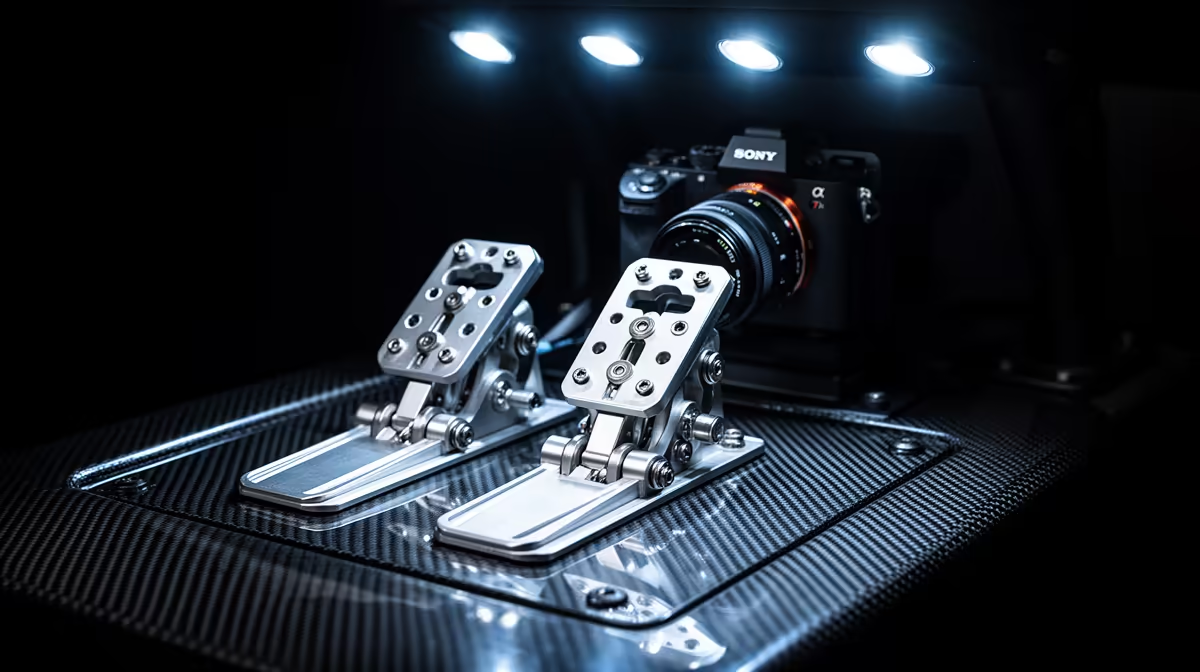
Load-cell pedals make sense after the seat and pedal tray can resist the pressure. The sensor measures force instead of pedal position, which can make threshold braking easier to repeat. A loose office chair turns that advantage into movement. Buy the structure and calibration before you buy the badge.
Quick Answer
Move to a load-cell brake when stock pedals are fixed in place, the PC and wheel are stable and brake variation still limits your laps. There is no universal rand threshold. Price the pedal, compatible mount and any adapter as one named July 2026 basket. Beginners can use load cells, but they should start with comfortable force and build technique.
Evetech's sim-racing range helps you compare pedal and mounting paths. A shared cockpit should leave room for rudder or other flight-simulator controls without changing the racing pedal geometry.
Position Pedals and Force Pedals
Many stock pedals measure how far the brake travels. Springs or elastomers create resistance, while the sensor reads position.
A load cell reads applied force. Your leg can learn a pressure target even when pedal travel is short.
Both systems can be driven well. The force signal offers a different repeatability tool, not an automatic lap-time gain.
Why the Rig Comes First
Pressing harder pushes the pedal base forward and the seat backwards. Flex in the tray changes the force and body position.
Bolt the pedals to a rated stand or cockpit. Link a separate chair to the stand or stop its castors.
A desk clamp holding the wheel does not solve the brake movement below it.
Set the Seating Geometry
Adjust distance so the knee keeps a slight bend at maximum pressure. Support the back and keep hips square.
An upright road-car position can use a different pedal angle from a formula seating position. Follow the pedal and cockpit adjustment guidance.
Any physical pain is a clear stop signal. Lower force and correct the position before practising again.
Calibrate the Load Cell
Install official drivers and firmware where required. Set minimum and maximum force in the pedal software, then calibrate inside the simulator.
Choose a maximum you can repeat late in a long stint. A heroic one-off press is not useful.
Add a small dead zone only when sensor noise or foot resting creates input. Do not erase useful travel by copying another driver's values.
Set the Brake Curve With Care
A linear curve makes equal force changes produce equal signal changes. A progressive software curve can soften early input or make the final range easier to reach.
Start linear so your leg learns the hardware. Change the curve only when telemetry shows a repeatable reason, such as difficulty reaching full brake without excessive force.
Save the original profile and change one control. A car's own brake system and assist settings can alter the result too.
Build Leg Comfort, Not Pain
Pressure braking uses muscles differently from a light travel pedal. Start with short sessions and moderate maximum force.
Keep the hip supported, knee aligned with the pedal and ankle in a comfortable range. Stop if pain or numbness appears.
Fatigue near the end of a stint can increase mistakes. Reduce force until the same braking target remains available on the final lap.
Measure the Improvement
Run repeated braking from the same speed and marker. Record stopping point, lockups and valid-lap spread.
Expect an adaptation period. Trail braking can feel different when pressure replaces travel as the main cue.
Judge a set of stints, not the first evening or one personal best.
When the Wheel Should Come First
A wheel that lacks game-driven force feedback or disconnects is the bigger problem. Fix the core control path before premium pedals.
A base that clips every corner may deserve better tuning or a stronger mechanism. It still needs secure mounting.
Choose pedals first when steering is informative and braking is the repeated limit.
Beginners Can Use Load Cells
There is no experience gate. A beginner with a rigid setup can learn pressure braking from day one.
Keep force moderate, use a stable car and practise one braking zone. Avoid changing pedal curves and car setup together.
The reason to delay is cost and mounting, not a belief that new drivers cannot understand force.
Console Compatibility Matters
On PC, pedals can often connect by USB. Consoles may require them to plug into a compatible licensed wheel base.
Check the exact pedal, base and platform combination. An adapter can add cost and may not provide official support.
Keep firmware paths documented for the full ecosystem.
Upgrade Kits and Complete Pedal Sets
Some stock pedal sets accept a load-cell brake kit. Others require a complete replacement.
Check model revision, connector and mounting hole pattern. A kit name that resembles your pedals is not enough.
Complete sets can improve throttle and clutch feel too. Buy those gains only when they serve the cars you drive.
Keep the Sensor and Mechanism Clean
Dust and loose fasteners can change pedal feel. Follow the maker's external cleaning and inspection guidance.
Do not lubricate elastomers, pivots or load-cell assemblies with an unknown product. Materials can swell or attract dirt.
Check calibration after moving the rig or changing mechanical adjustment. A saved software profile cannot correct a different physical stop.
Keep the old pedal profile until the new one survives several games and a long stint. Different simulators can read the axis and curve in different ways, so verify zero, maximum and brake release in each title.
Price the Whole Step
Include pedals, baseplate, heel rest, stand or cockpit work, USB or console adapter and delivery.
For any rand number, use the exact named product from the approved snapshot and state "as of July 2026". A broad pedal minimum can be an accessory.
The threshold is where the complete step fits without weakening the PC, wheel or structure.
FAQ
Why do load cells need a solid rig?
Force braking pushes the pedals and seat apart. Movement and flex make the input harder to repeat.
Can beginners use them?
Yes. Start with comfortable force, correct seating and repeated calibration drills.
Do load-cell pedals need calibration?
Yes. Set the physical range, software force and in-game axis, then test for a clean zero and full input.
Fix the seat and pedal tray, measure braking variation and buy the complete load-cell step only when pressure control is the next clear gain.