Quick Answer
Fluid dynamic bearing (FDB) fans require minimal direct maintenance because the bearing is sealed and self-lubricating, but longevity is significantly affected by operating temperature, orientation, and dust accumulation on the blades. Keeping fans clean and within their rated operating conditions extends FDB lifespan to the upper end of the 50,000 to 150,000 hour rated range.
How FDB Systems Work and Why They Degrade 🔬
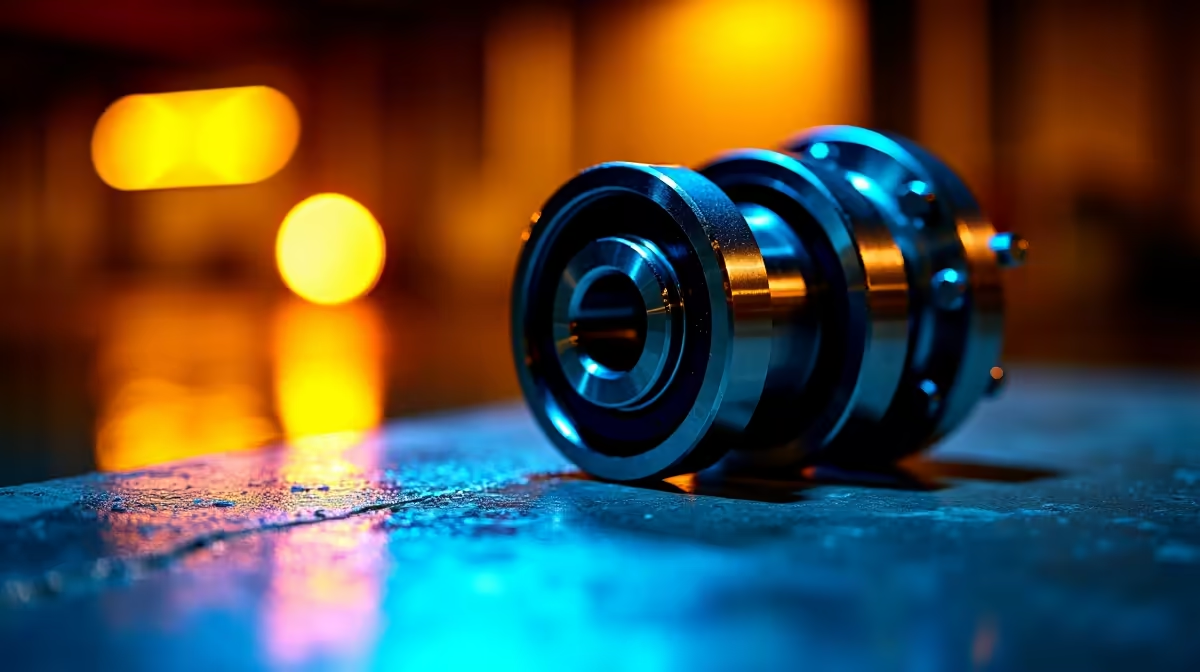
Fluid dynamic bearings replace the steel balls of dual-ball-bearing fans with a thin hydrodynamic oil film that suspends the rotating shaft. As the shaft spins, the oil film pressurises and centres the shaft without metal-on-metal contact, producing near-silent operation and very low friction. Degradation occurs in two ways: thermal breakdown of the oil film at sustained high temperatures (above 60 to 70 degrees Celsius in the bearing zone), and gradual oil migration along the shaft over years of operation, slowly reducing film thickness.
Practical Maintenance Steps for FDB Longevity 🔧
Clean your case fans every three to six months depending on your environment. SA homes near construction sites, industrial areas, or in dusty regions may need quarterly cleaning. Use a short burst of compressed air to dislodge blade dust while holding the fan blades stationary. Never allow compressed air to spin the fan freely at high speed, as this can overstress the bearing from external force rather than the motor's own driving mechanism. A soft brush around blade edges removes residual dust the air blast misses.
Mounting Orientation and Its Effect on FDB Life 🪛
FDB fans are typically rated for any mounting orientation, but vertical shaft orientation (fan mounted horizontally, blowing up or down) stresses the bearing slightly more than horizontal shaft orientation (fan mounted vertically, blowing forward or rearward). For builds using FDB fans as top exhaust or bottom intake, this orientation stress is minor and within the bearing's rated tolerance at normal temperatures.
Mark Your Fans with Installation Date ⚡
Write the installation date on a small piece of masking tape and attach it to the fan frame before installation. FDB fans rated for 50,000 hours running at eight hours per day have a theoretical service life of over 17 years, but real-world conditions vary. Knowing your installation date helps make informed replacement decisions if acoustic changes or subtle vibration develops after several years of service.
FAQ
Can you re-lubricate a fluid dynamic bearing fan that has become noisy?
In theory, a very small amount of compatible bearing oil applied at the shaft seal entry point can temporarily restore a worn FDB, but the sealed nature of most FDB designs makes this difficult without disassembly. For most SA builders, replacement is more practical than re-lubrication given the low cost of quality 120mm case fans.
How does FDB compare to sleeve bearings in the South African climate?
FDB significantly outperforms sleeve bearings in warm environments. Sleeve bearings rely on an oil film that degrades faster at higher temperatures, which matters in South African summer environments where ambient temperatures above 30 degrees Celsius are common. FDB's pressurised film is more temperature-stable across these conditions.
What is the acoustic difference between a new and an ageing FDB fan?
A new FDB fan produces only airflow-generated noise at rated speed. As the bearing wears over years, a faint low-frequency hum or intermittent ticking may develop, particularly at startup when the oil film has not fully pressurised. This change is gradual and typically only noticeable after three to seven years of continuous operation.
Looking for long-lasting, quiet fans for your SA build?
Evetech stocks a range of FDB and bearing-type case fans at competitive prices. Visit the PC cooling section to find fans that suit your airflow targets and lifespan requirements.