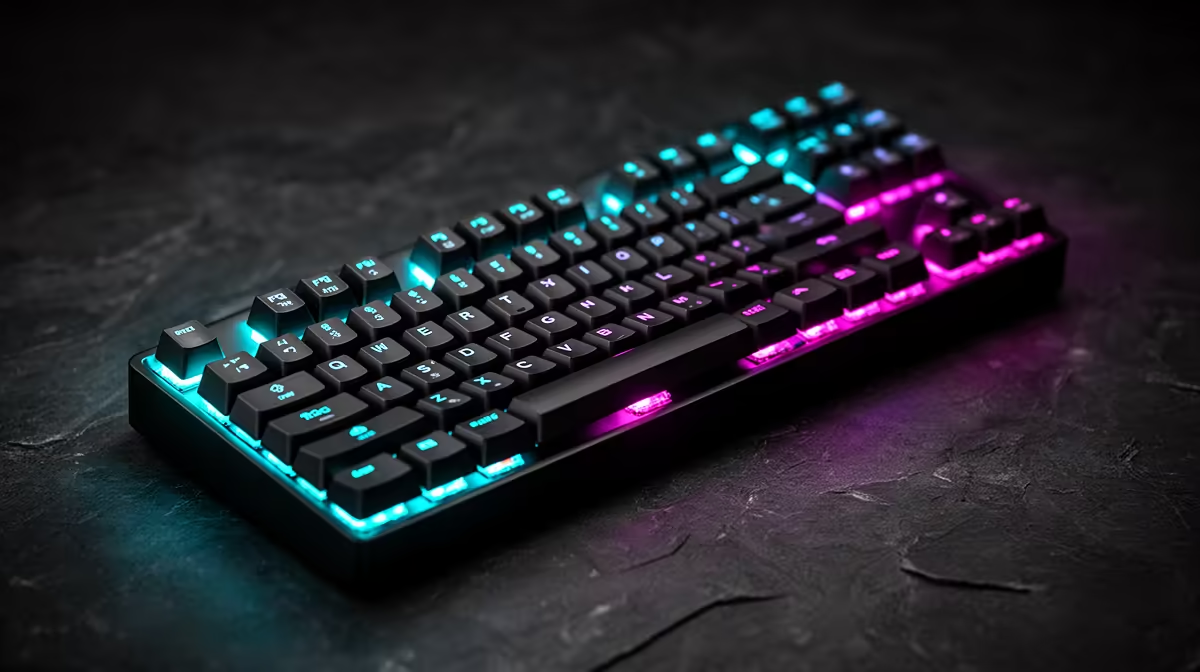
Mechanical keyboards are a popular SA upgrade, and buyers want to know which switch, size and price tier suits them. The short answer: linear reds for gaming, browns for mixed use, and a solid hot-swappable board from around R900 at Evetech covers most needs.
Quick Answer
A good mechanical keyboard in SA starts around R900 for an entry hot-swappable model and climbs past R3,000 for premium gasket-mounted boards stocked at Evetech. For gaming, linear red switches with a 1,000Hz polling rate and a TKL or 60% layout are the popular value choice; browns suit gaming plus typing.
Switches, Size And Features That Matter
Linear switches (Cherry MX Red, Gateron Red) are smooth and fast for gaming; tactile browns add a typing bump; clicky blues are loud and best avoided in shared spaces. A TKL (tenkeyless) layout frees desk and mouse space, while 60% boards go smaller still. Look for a 1,000Hz polling rate, N-key rollover, and hot-swappable sockets so you can change switches later without soldering.
SA Buying And Pairing Notes
Wired boards have the lowest latency and never need charging; wireless is convenient but adds a small input delay. Pair a fast keyboard with a high-refresh monitor and a capable GPU like an RTX 4060 or RX 7800 XT to feel the responsiveness in competitive play. Quality brands stocked at Evetech span entry to enthusiast, so match the switch type and layout to how you actually play and type.
FAQ
What mechanical switch is best for gaming?
Linear switches like Cherry MX Red or Gateron Red, which are smooth and fast with no tactile bump. They are the popular choice for competitive play; browns suit mixed gaming and typing.
How much does a good mechanical keyboard cost in SA?
Entry hot-swappable boards start around R900 at Evetech, mid-range models sit near R1,500 to R2,500, and premium gasket-mounted boards exceed R3,000. Hot-swap sockets add long-term value.
Is a wired or wireless mechanical keyboard better for gaming?
Wired offers the lowest latency and never needs charging, making it the choice for competitive play. Wireless is convenient for tidy desks but adds a small input delay.
hot-swappable board so you can try different switches later without soldering; pair linear reds with a 1,000Hz polling rate for the fastest competitive response.